I figured slapping a bit of miso on salmon would be a no-brainer for a quick dinner. It took about fifteen minutes for that to fall apart completely—in the best way possible. The glaze, sticky and sweet with that unmistakable umami punch, somehow transformed my kitchen into a cozy Asian bistro. Meanwhile, the sesame bok choy was supposed to be a last-minute side, but it stole the spotlight with its crunchy, garlicky charm. And the ginger rice? Well, it soaked up every bit of flavor like it was auditioning for a starring role.
Honestly, I wasn’t aiming for a culinary masterpiece that night—more like a fast, tasty meal that wouldn’t leave a mess or a pile of dishes. But this recipe surprised me. The salmon came out perfectly caramelized, the bok choy kept its vibrant snap, and the ginger-infused rice was just the kind of comforting carb accompaniment you didn’t realize you needed. It’s the kind of dinner that feels fancy without fuss, like you’re somehow cheating the system of complicated cooking. I still remember how the aroma of miso and toasted sesame seeds filled the air—the kind of scent that makes you pause and smile.
What stuck with me is how these simple ingredients, when combined thoughtfully, create a balanced plate that’s satisfying in the most genuine way. It’s not about perfection or plating for Instagram—just honest flavors and textures that hit the spot after a long day. I keep coming back to this miso glazed salmon recipe because it’s reliable, quick, and has that quiet magic of home cooking done right.
Why You’ll Love This Recipe
This flavorful miso glazed salmon recipe has been through the wringer in my kitchen, tested until it hits just the right notes. It’s approachable but doesn’t skimp on complexity—perfect for those who want a bit of flair without a recipe turning into a project.
- Quick & Easy: Ready in about 30 minutes, making it a lifesaver on busy weeknights when you want something tasty but can’t spend hours cooking.
- Simple Ingredients: No obscure Asian market finds needed here—just pantry staples like miso paste, soy sauce, and sesame oil, plus fresh bok choy and ginger. It’s a recipe that fits comfortably in any kitchen.
- Perfect for Dinner Parties: It looks impressive without the stress. The rich, glossy glaze and vibrant green bok choy make a plate that’s both colorful and inviting.
- Crowd-Pleaser: Even picky eaters tend to love this one. The salmon is tender and flavorful, and the ginger rice adds a nice aromatic touch that pairs beautifully with the rest.
- Unbelievably Delicious: The combination of sweet, salty, and umami in the miso glaze alongside the nutty sesame bok choy creates a layered flavor experience that feels satisfying and comforting.
What sets this recipe apart is the balance between the miso glaze’s sticky, caramelized finish and the freshness of the bok choy sautéed with toasted sesame seeds. Plus, the ginger rice is a subtle but essential player—its warm spice cuts through the richness and makes the whole meal feel complete. It’s not just another glazed salmon; it’s a home-cooked dish with personality and soul. After one bite, you’ll understand why I keep this recipe bookmarked for those nights when you want something a bit special but zero hassle.
What Ingredients You Will Need
This recipe uses simple, wholesome ingredients to deliver bold flavor and satisfying texture without the fuss. Most of these are pantry staples or easy to find in your local grocery store, and a few fresh items pull it all together beautifully.
- For the Miso Glazed Salmon:
- Salmon fillets, skin-on, about 6 oz (170 g) each – fresh or thawed
- White miso paste, 2 tablespoons (adds that umami depth)
- Soy sauce, 1 tablespoon (go for low sodium if preferred)
- Mirin or dry sherry, 1 tablespoon (sweetens and balances the glaze)
- Honey, 1 tablespoon (for caramelization)
- Fresh ginger, 1 teaspoon grated (adds zing)
- Garlic, 1 clove minced (for a subtle punch)
- Sesame oil, 1 teaspoon (to finish and add nuttiness)
- For the Sesame Bok Choy:
- Bok choy, 2 medium heads, washed and halved (baby bok choy works too)
- Sesame oil, 1 tablespoon (toasty flavor)
- Garlic, 2 cloves minced (keeps it aromatic)
- Toasted sesame seeds, 1 tablespoon (for crunch and nuttiness)
- Salt and pepper, to taste
- For the Ginger Rice:
- Jasmine rice, 1 cup (190 g) – rinsed well
- Fresh ginger, 1-inch piece, peeled and thinly sliced
- Water or low-sodium chicken broth, 2 cups (480 ml)
- Salt, ½ teaspoon
- Green onions, chopped, optional for garnish
I usually recommend brands like Marukin for miso paste because it’s smooth and not overly salty, which helps keep this glaze perfectly balanced. When picking bok choy, look for crisp, bright green leaves and firm white stalks—freshness makes a big difference here. If you want to go gluten-free, swap the soy sauce with tamari, and for a vegan take on the rice, use vegetable broth instead of chicken. The ingredients all come together in a way that’s flexible but reliable, so you can trust this recipe even on a rushed evening.
Equipment Needed
- Non-stick skillet or cast-iron pan – essential for getting that beautiful caramelization on the salmon without sticking.
- Medium saucepan with a lid – perfect for cooking the ginger rice evenly.
- Small mixing bowl – for whisking together the miso glaze ingredients.
- Sharp knife and cutting board – for prepping the bok choy, ginger, and garlic with ease.
- Measuring spoons and cups – to keep the seasoning balanced.
If you don’t have a cast-iron pan, a heavy-bottomed stainless steel skillet works well too, though you might want to add a touch more oil to avoid sticking. For those on a budget, a decent non-stick pan will do just fine. I’ve found that keeping your skillet well-seasoned makes a huge difference in the salmon’s finish and cleanup afterward. Also, a rice cooker can be used for the ginger rice if you prefer, just toss in the ginger slices and let it steam away.
Preparation Method
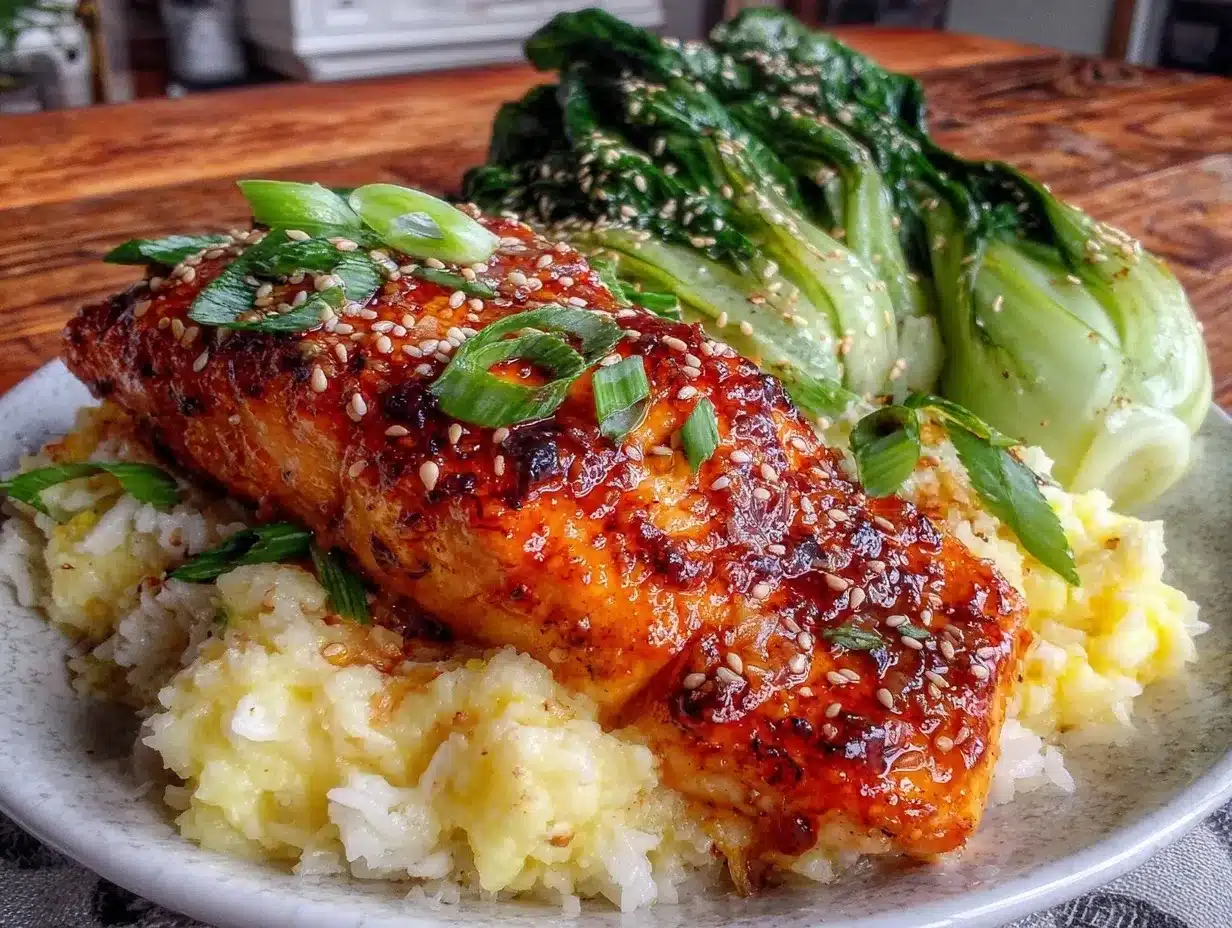
- Prepare the Miso Glaze: In a small bowl, whisk together 2 tablespoons white miso paste, 1 tablespoon soy sauce, 1 tablespoon mirin, 1 tablespoon honey, 1 teaspoon grated ginger, and 1 minced garlic clove until smooth. Set aside. This mix will be thick but spreadable.
- Cook the Ginger Rice: Rinse 1 cup jasmine rice under cold water until the water runs clear. In a medium saucepan, combine rinsed rice, 2 cups water or broth, thinly sliced 1-inch piece of ginger, and ½ teaspoon salt. Bring to a boil over medium-high heat, then reduce to a simmer and cover. Cook for 15 minutes, then remove from heat and let it steam covered for 10 minutes. Fluff with a fork and discard the ginger slices before serving.
- Prepare the Bok Choy: Heat 1 tablespoon sesame oil in a large skillet over medium heat. Add 2 minced garlic cloves and sauté for 30 seconds until fragrant. Add the halved bok choy, cut side down, and cook for 3–4 minutes until the stalks are tender but still crisp. Season with salt and pepper and sprinkle 1 tablespoon toasted sesame seeds on top. Toss gently and keep warm.
- Cook the Salmon: Pat the salmon fillets dry and spread a generous layer of the miso glaze on the skinless side. Heat a non-stick pan over medium-high heat and add a drizzle of oil. Place salmon fillets glaze-side down and cook for 3–4 minutes until the glaze caramelizes and the salmon starts to cook through. Flip carefully and cook for another 2–3 minutes or until salmon reaches desired doneness (about 125°F/52°C for medium-rare). Remove from heat and drizzle with a few drops of sesame oil.
- Plate and Serve: Spoon the ginger rice onto plates, arrange the sesame bok choy alongside, and top with the miso glazed salmon. Garnish with chopped green onions if desired.
Pro tip: Keep that heat steady when cooking the salmon. Too hot, and the glaze burns before the fish is cooked; too low, and you won’t get the signature caramelization. Also, don’t skip patting the salmon dry—that dry skin helps the glaze stick and crisp nicely. The ginger rice might seem simple but don’t rush the steaming step; it makes all the difference in fluffy, aromatic grains.
Cooking Tips & Techniques
Getting this miso glazed salmon just right is all about balance and timing. I learned this the hard way after a few burned batches. Here’s what helps every time:
- Use room temperature salmon: Let your fish sit out for 15 minutes before cooking. Cold salmon straight from the fridge can cook unevenly, messing with texture.
- Glaze thickness matters: A thick miso glaze clings better and caramelizes rather than runs off. If yours feels too watery, whisk in a tiny pinch of cornstarch.
- Don’t overcrowd the pan: Cook salmon in batches if needed. Crowding drops the pan temperature and results in steaming instead of searing.
- Toast your sesame seeds: Even if your package says “toasted,” a quick dry toast in a pan releases more aroma and crunch.
- Multi-tasking: Start the ginger rice first, then prep your glaze and bok choy while it simmers. This way, everything comes together hot and fresh.
One time, I tried baking the salmon with the glaze instead of pan-searing, and it just didn’t get that sticky, slightly charred finish I love. So stick to the stovetop for that authentic texture. Also, be patient with the bok choy—too little cooking leaves it tough; too much and it loses its snap and vibrant color.
Variations & Adaptations
This recipe is flexible and can be adjusted to suit different tastes and dietary needs without losing its charm.
- Vegetarian Adaptation: Swap salmon for thick slices of roasted eggplant or tofu marinated in the miso glaze. Pan-sear similarly for a meaty texture.
- Spicy Kick: Add a teaspoon of chili garlic sauce or a sprinkle of red pepper flakes to the miso glaze for heat that wakes up your palate.
- Low-Carb Option: Replace ginger rice with cauliflower rice cooked with grated ginger and scallions. It’s lighter but still flavorful.
- Seasonal Twist: In warmer months, swap bok choy for tender baby spinach or snap peas for a fresh crunch.
- Cooking Method Swap: If you prefer oven cooking, broil salmon on a foil-lined pan with the glaze for 7-9 minutes, watching closely to avoid burning.
Personally, I’ve made this dish with a quick pickled cucumber salad inspired by my garlic dill refrigerator pickles recipe, which adds a refreshing contrast to the rich salmon. It’s a combo that always surprises guests.
Serving & Storage Suggestions
Serve this miso glazed salmon meal hot, ideally straight from the pan to plate. The glossy glaze looks best when fresh and warm, and the bok choy retains its crunch.
Pair it with a light white wine like a Sauvignon Blanc or a crisp iced green tea to complement the flavors without overpowering them. For a side, simple steamed edamame or a fresh cucumber salad provide a cooling balance.
Leftovers keep well in an airtight container in the fridge for up to 2 days. Store the salmon separate from the bok choy and rice if possible to prevent sogginess. When reheating, gently warm the salmon in a skillet or oven at low heat to avoid drying it out. The ginger rice reheats nicely in the microwave with a sprinkle of water to keep it moist.
Flavors tend to mellow and blend a bit after resting, so sometimes I find the leftovers taste even better the next day—though the texture of the salmon is best fresh. If you want to prepare ahead, make the ginger rice and bok choy in advance, then quickly cook and glaze the salmon right before serving.
Nutritional Information & Benefits
This flavorful miso glazed salmon plate is a nutrient-rich meal that ticks many health boxes. A typical serving (one fillet with bok choy and rice) contains approximately 450-500 calories, rich in protein (about 35g), healthy fats, and complex carbs.
Salmon is packed with omega-3 fatty acids, which support heart and brain health. Miso paste adds probiotics and a savory depth while being relatively low in calories. Bok choy is a vitamin powerhouse, loaded with vitamins A, C, and K, plus fiber for digestion. The ginger in the rice adds anti-inflammatory benefits and aids digestion too.
This dish is naturally gluten-free if you use tamari instead of soy sauce and is suitable for pescatarian diets. The moderate sodium level is balanced by fresh ingredients, making it a smart choice for a wholesome dinner. I appreciate how this meal satisfies cravings for something rich and comforting without feeling heavy or overly processed.
Conclusion
To wrap it up, this flavorful miso glazed salmon with sesame bok choy and ginger rice is a recipe worth having in your culinary rotation. It’s straightforward but delivers complex flavors that feel both comforting and a little special. I love how it blends ease with elegance, making it a go-to for both weeknight meals and casual dinners with friends.
The best part? You can tweak it endlessly—whether that’s turning up the spice, swapping sides, or trying different cooking methods. It’s a recipe that invites you to make it your own while still promising a reliably delicious result. For me, it’s the kind of dish that feels like a small celebration on a regular Tuesday.
Give it a try, and if you experiment with your own twists or have a favorite side to pair, drop a comment below—I’d love to hear how you make this recipe yours!
Frequently Asked Questions
Can I use frozen salmon for this miso glazed salmon recipe?
Yes, you can. Just make sure to thaw it completely and pat dry before applying the glaze to avoid water diluting the caramelization.
What if I don’t have mirin for the glaze?
Dry sherry or a splash of rice vinegar with a pinch of sugar works well as a substitute to keep that sweet and tangy balance.
How do I know when the salmon is done?
Look for an opaque color throughout and a slight flake when pressed gently with a fork. Internal temperature should be about 125°F (52°C) for medium-rare.
Can I make the ginger rice ahead of time?
Absolutely! It reheats well and the ginger flavor can even intensify overnight. Just fluff it up and add a little water when reheating.
Is bok choy the only vegetable that works here?
Not at all! You can swap bok choy for baby spinach, snap peas, or even broccolini depending on what you have on hand.
For a refreshing side salad idea to accompany this dish, you might enjoy the fresh creamy dill cucumber salad—it’s light and bright, perfect for balancing the rich salmon flavors.
Pin This Recipe!
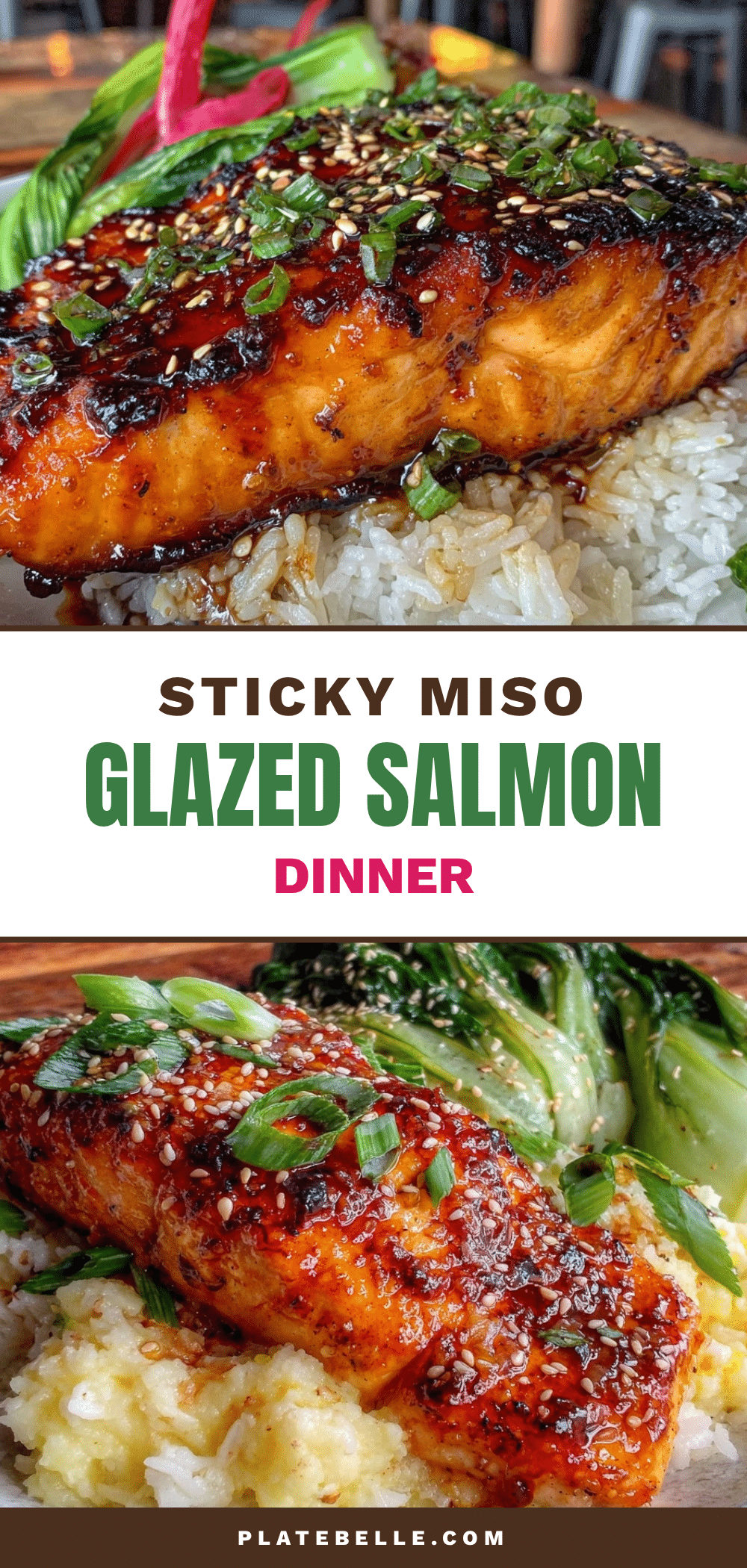
Flavorful Miso Glazed Salmon Recipe with Easy Sesame Bok Choy and Ginger Rice

A quick and tasty miso glazed salmon served with crunchy sesame bok choy and aromatic ginger rice, perfect for a comforting yet elegant weeknight dinner.
- Prep Time: 10 minutes
- Cook Time: 20 minutes
- Total Time: 30 minutes
- Yield: 2 servings 1x
- Category: Main Course
- Cuisine: Asian
Ingredients
- Salmon fillets, skin-on, about 6 oz (170 g) each – fresh or thawed
- 2 tablespoons white miso paste
- 1 tablespoon soy sauce (low sodium preferred)
- 1 tablespoon mirin or dry sherry
- 1 tablespoon honey
- 1 teaspoon fresh ginger, grated
- 1 clove garlic, minced
- 1 teaspoon sesame oil (to finish)
- 2 medium heads bok choy, washed and halved
- 1 tablespoon sesame oil (for bok choy)
- 2 cloves garlic, minced (for bok choy)
- 1 tablespoon toasted sesame seeds
- Salt and pepper, to taste
- 1 cup jasmine rice (190 g), rinsed
- 1-inch piece fresh ginger, peeled and thinly sliced
- 2 cups water or low-sodium chicken broth (480 ml)
- ½ teaspoon salt
- Chopped green onions, optional for garnish
Instructions
- Prepare the Miso Glaze: In a small bowl, whisk together 2 tablespoons white miso paste, 1 tablespoon soy sauce, 1 tablespoon mirin, 1 tablespoon honey, 1 teaspoon grated ginger, and 1 minced garlic clove until smooth. Set aside.
- Cook the Ginger Rice: Rinse 1 cup jasmine rice under cold water until clear. In a medium saucepan, combine rinsed rice, 2 cups water or broth, thinly sliced ginger, and ½ teaspoon salt. Bring to a boil over medium-high heat, then reduce to a simmer and cover. Cook for 15 minutes, then remove from heat and let steam covered for 10 minutes. Fluff with a fork and discard ginger slices.
- Prepare the Bok Choy: Heat 1 tablespoon sesame oil in a large skillet over medium heat. Add 2 minced garlic cloves and sauté for 30 seconds until fragrant. Add halved bok choy cut side down and cook for 3–4 minutes until stalks are tender but crisp. Season with salt and pepper and sprinkle toasted sesame seeds on top. Toss gently and keep warm.
- Cook the Salmon: Pat salmon fillets dry and spread a generous layer of miso glaze on the skinless side. Heat a non-stick pan over medium-high heat with a drizzle of oil. Place salmon glaze-side down and cook for 3–4 minutes until glaze caramelizes and salmon starts cooking through. Flip and cook another 2–3 minutes until desired doneness (about 125°F/52°C for medium-rare). Remove from heat and drizzle with a few drops of sesame oil.
- Plate and Serve: Spoon ginger rice onto plates, arrange sesame bok choy alongside, and top with miso glazed salmon. Garnish with chopped green onions if desired.
Notes
Use room temperature salmon for even cooking. Keep heat steady to avoid burning glaze. Pat salmon dry before glazing for better caramelization. Toast sesame seeds briefly for enhanced aroma. Do not overcrowd pan when cooking salmon. Ginger rice steaming step is important for fluffy texture. For gluten-free, substitute soy sauce with tamari. For vegan adaptation, replace salmon with roasted eggplant or tofu and use vegetable broth for rice.
Nutrition
- Serving Size: 1 salmon fillet with
- Calories: 475
- Sugar: 7
- Sodium: 550
- Fat: 18
- Saturated Fat: 3
- Carbohydrates: 35
- Fiber: 3
- Protein: 35
Keywords: miso glazed salmon, sesame bok choy, ginger rice, quick dinner, Asian recipe, healthy salmon, easy weeknight meal