Third time this week and I finally stopped overmixing. The crumb was open, the crust had that perfect tug, and the maple-pumpkin thing was actually balanced instead of one flavor screaming over the other. That was the moment this bread clicked for me—not when I found the recipe, but when I stopped treating it like a quick bread and started treating it like a sourdough that just happened to have pumpkin in it.
The discard jar was overflowing (again), and I had half a can of pumpkin left from making pumpkin cream cheese swirl muffins the day before. Seemed wasteful not to combine them. First attempt was dense. Edible, but dense. Second attempt was better but the maple got lost somewhere between the mixing bowl and the oven. Third time—that was the one. The kitchen smelled like October had exploded inside it, and when I sliced into that loaf the next morning, toasted it, and slathered butter on a warm piece, I actually said “okay, now we’re talking” out loud to nobody.
This isn’t complicated bread. It’s forgiving, honestly. The sourdough discard does the heavy lifting on flavor while the pumpkin keeps things tender. Maple adds warmth without making it sweet like dessert bread. It’s the kind of loaf that makes you look forward to breakfast, which—let’s face it—is exactly what fall baking should do.
Why You’ll Love This Recipe
I’ve tested this recipe more times than I care to admit, and here’s what I know for sure: it works with a stiff starter or a liquid one, it tolerates a slightly overripe pumpkin puree, and it freezes beautifully. That’s the kind of flexibility busy home bakers actually need.
- Uses sourdough discard : No need to feed your starter first. This is the perfect use for that jar sitting in your fridge.
- No complicated folds or stretch-and-coils : This is a simple mix-and-bake loaf. No stand mixer required.
- Deep fall flavor : Maple and pumpkin work together without being cloying. It’s subtly sweet, not dessert-sweet.
- Incredible texture : The pumpkin keeps the crumb tender and moist, while the sourdough gives it structure and that signature tang.
- Perfect for beginners and experienced bakers : If you’ve never baked with discard before, this is a great place to start. If you’re a pro, you’ll appreciate how forgiving the dough is.
- Makes your house smell amazing : Seriously. The combination of maple, pumpkin, and warm spices is pure aromatherapy.
This isn’t just another pumpkin bread recipe. It’s the one that uses up your discard, satisfies your fall baking itch, and produces a loaf that tastes like you spent hours on it when you really didn’t. That’s my favorite kind of recipe—the one that makes you look like a hero with minimal effort.
What Ingredients You Will Need
This recipe uses simple, wholesome ingredients that most bakers already have on hand. The magic happens when the sourdough discard meets the pumpkin and maple—they create a flavor profile that’s tangy, warm, and deeply comforting without being overly sweet.
- Sourdough discard : 1 cup (240g), unfed and at room temperature. This is the star ingredient. It adds tang, structure, and helps with browning. If your discard is very sour, use the lower end of the maple syrup measurement.
- Pumpkin puree : ¾ cup (170g), not pumpkin pie filling. I prefer Libby’s for consistent texture, but any 100% pure pumpkin works. If your puree is watery, pat it dry with paper towels before using.
- Maple syrup : ⅓ cup (80ml), pure maple syrup. Don’t use pancake syrup here—the flavor won’t be the same. Grade A dark amber is my go-to for deeper maple taste.
- All-purpose flour : 2 cups (250g), spooned and leveled. Bread flour works too but produces a slightly chewier crumb. Whole wheat pastry flour can replace half the all-purpose for a nuttier flavor.
- Baking powder : 1 teaspoon. This helps the bread rise since the discard isn’t active enough to do it alone.
- Baking soda : ½ teaspoon. Works with the acidity from the sourdough and maple for better lift.
- Salt : ½ teaspoon. Fine sea salt is best. It balances the sweetness and enhances the spices.
- Pumpkin pie spice : 1½ teaspoons. Store-bought is fine, but I make my own with cinnamon, ginger, nutmeg, allspice, and cloves. It’s fresher and you can adjust the ratios.
- Cinnamon : 1 teaspoon. Adds warmth and pairs beautifully with the maple.
- Butter : ¼ cup (57g), melted and slightly cooled. Unsalted butter gives you control over the salt level. Coconut oil works for a dairy-free version.
- Egg : 1 large, room temperature. Helps with structure and moisture. A flax egg works for vegan bakers.
- Vanilla extract : 1 teaspoon. Pure vanilla, not imitation. It rounds out the flavors.
- Optional add-ins : ½ cup chopped pecans or walnuts, ⅓ cup chocolate chips, or ¼ cup dried cranberries. I love adding pecans for texture contrast.
Equipment Needed
You don’t need a fancy bakery setup for this bread. Here’s what I use every time:
- 9×5-inch loaf pan : Standard size works best. Glass or metal both work, but metal gives a nicer crust. If using glass, reduce oven temperature by 25°F.
- Mixing bowls : One large, one medium. Stainless steel or glass is fine.
- Whisk : For combining dry ingredients and smoothing the wet mixture.
- Spatula : A rubber spatula is ideal for folding everything together without overmixing.
- Parchment paper : Lining the pan makes removal effortless. I leave overhang on two sides for easy lifting.
- Cooling rack : Essential for even cooling. Without it, the bottom gets soggy.
- Measuring cups and spoons : For accuracy. I prefer dry measuring cups for flour and liquid cups for maple syrup.
- Kitchen scale : Optional but recommended. Weighing ingredients, especially flour and discard, gives the most consistent results.
If you don’t have a loaf pan, you can bake this in an 8×8-inch square pan and adjust the time to about 35-40 minutes. Muffin tins work too—just fill them ¾ full and bake for 18-22 minutes.
Preparation Method
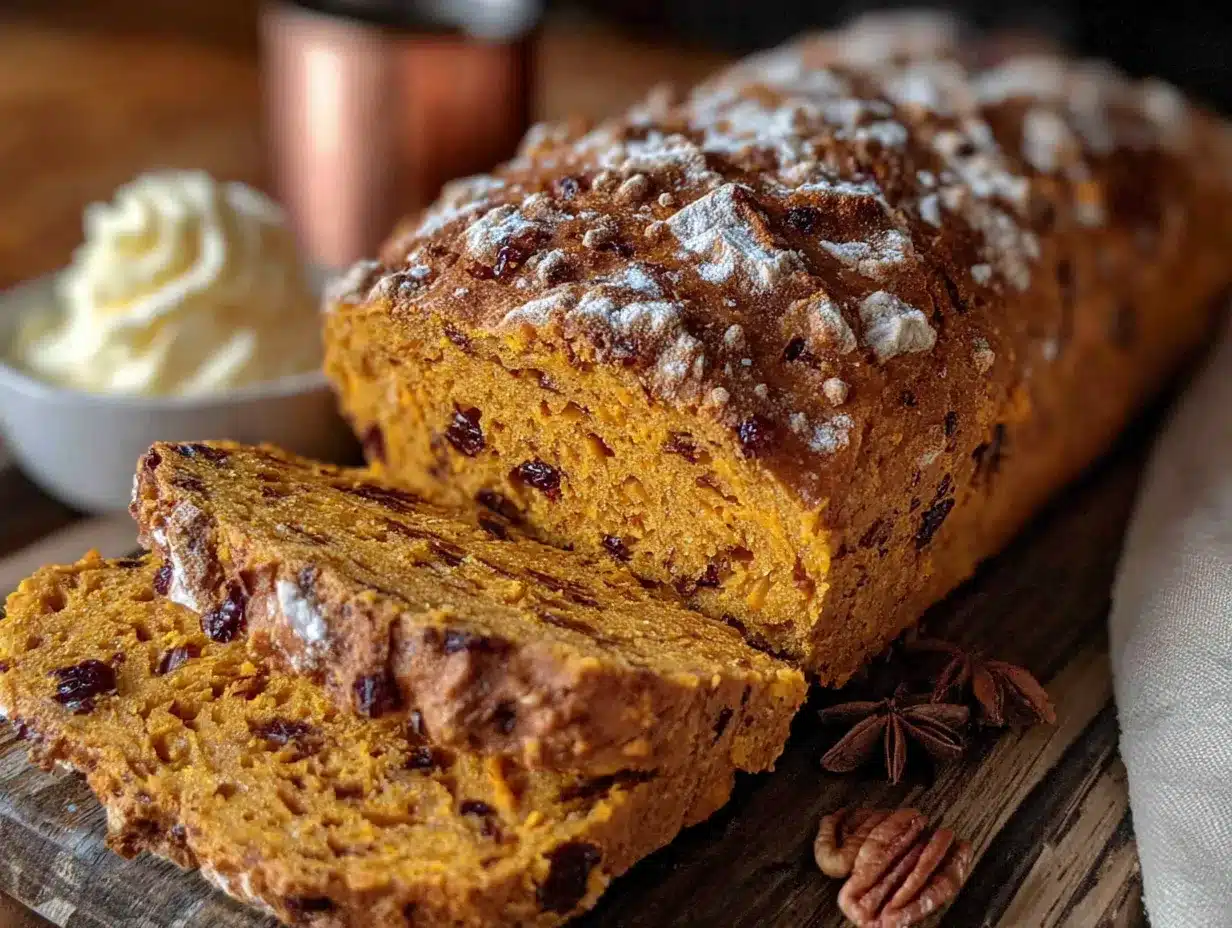
This is a straightforward recipe, but a few small details make a big difference. Follow these steps and you’ll get a tender, flavorful loaf every time.
- Preheat your oven to 350°F (175°C) . Position the rack in the center. Line your loaf pan with parchment paper, leaving overhang on the long sides. Lightly grease the exposed ends.
- Whisk the dry ingredients together . In a medium bowl, combine 2 cups all-purpose flour, 1 teaspoon baking powder, ½ teaspoon baking soda, ½ teaspoon salt, 1½ teaspoons pumpkin pie spice, and 1 teaspoon cinnamon. Whisk until evenly distributed. Set aside.
- Mix the wet ingredients . In a large bowl, whisk together 1 cup sourdough discard, ¾ cup pumpkin puree, ⅓ cup maple syrup, ¼ cup melted butter, 1 egg, and 1 teaspoon vanilla extract. Whisk until smooth. The mixture will look slightly curdled—that’s normal and fine.
- Combine wet and dry . Pour the dry ingredients into the wet mixture. Use a rubber spatula to fold gently. Stop as soon as you no longer see streaks of flour. A few small lumps are okay. Overmixing will make the bread tough. If you’re adding nuts or chocolate chips, fold them in at this stage.
- Transfer to the pan . Pour the batter into the prepared loaf pan. Spread it evenly with the spatula. Tap the pan gently on the counter a few times to release any air bubbles.
- Bake . Place the pan in the preheated oven. Bake for 50-60 minutes. Start checking at 50 minutes by inserting a toothpick into the center. If it comes out clean or with a few moist crumbs, it’s done. If the top is browning too quickly (after about 35 minutes), tent loosely with foil.
- Cool properly . Let the bread cool in the pan for 10 minutes. Then lift it out using the parchment overhang and transfer to a wire rack. Cool completely before slicing—at least 1 hour. I know it’s hard to wait, but slicing warm leads to gummy, crumbly pieces.
- Store or serve . Once completely cool, slice and enjoy. Store leftovers wrapped tightly at room temperature for up to 3 days, or refrigerate for up to a week.
Cooking Tips & Techniques
I’ve made this bread more times than I’ll admit, and I’ve learned a few things the hard way. Here’s what I wish someone had told me:
Don’t overmix the batter. This is the number one mistake. Sourdough discard doesn’t need much coaxing. Overmixing develops gluten and creates a tough, dense loaf. Fold just until the flour disappears. Lumps are your friends here.
Room temperature ingredients matter. Cold discard or cold eggs will seize the melted butter and create a lumpy batter. Let everything sit out for 30 minutes before you start. It makes a noticeable difference in how evenly the bread rises.
Check your discard’s hydration. If your discard is very liquid (100% hydration or higher), reduce the pumpkin puree by 2 tablespoons to compensate. If it’s stiff (like a stiff starter), you might need an extra tablespoon of milk or water. The batter should be thick but scoopable—like a thick muffin batter.
Use the toothpick test wisely. Insert it into the center of the loaf. If it comes out clean, you’re good. If it has wet batter, give it 5 more minutes. If it has moist crumbs but no batter, take it out—it will continue cooking from residual heat as it cools.
Let it cool completely. I know it’s tempting to slice into warm bread, but this loaf needs time to set. Cutting too early will result in a gummy, crumbly mess. Patience pays off. I usually bake it in the evening and slice it the next morning for breakfast.
Toast it for the best experience. This bread is amazing fresh, but it’s transcendent toasted. A light toast brings out the maple flavor and gives the crust a satisfying crunch. Slather with butter and a pinch of flaky salt—trust me.
Variations & Adaptations
One of the best things about this recipe is how flexible it is. Here are some ways I’ve adapted it depending on what I have on hand or who I’m baking for:
Gluten-free version : Replace the all-purpose flour with a 1:1 gluten-free baking blend that contains xanthan gum. Cup4Cup and Bob’s Red Mill both work well. The texture will be slightly more tender and less chewy, but still delicious.
Vegan version : Use a flax egg (1 tablespoon ground flaxseed + 3 tablespoons water, let sit for 5 minutes) and replace the butter with melted coconut oil or a neutral vegetable oil. The bread will be a bit denser but still moist and flavorful.
Dairy-free version : Swap the butter for melted coconut oil or a plant-based butter. I’ve used Miyoko’s with great results. The flavor changes slightly but remains delicious.
Lower sugar version : Reduce the maple syrup to ¼ cup and add 2 tablespoons of unsweetened applesauce for moisture. The bread will be less sweet but still have that warm maple undertone.
Spice it up : Add ¼ teaspoon of ground ginger, a pinch of cardamom, or ⅛ teaspoon of cloves for a more complex spice profile. I sometimes add a pinch of black pepper—it sounds weird but it really brings out the pumpkin flavor.
Chocolate version : Fold in ⅓ cup of dark chocolate chips and reduce the pumpkin pie spice to 1 teaspoon. The combination of chocolate, maple, and pumpkin is surprisingly good.
Nutty version : Toast ½ cup of chopped pecans or walnuts in a dry skillet for 3-4 minutes until fragrant, then fold them into the batter. The toasting step is worth it—it brings out their oils and adds crunch.
Serving & Storage Suggestions
This bread is incredibly versatile. Here’s how I serve and store it:
Serving temperature : Room temperature is ideal, but toasted is my personal favorite. A light toast in a toaster or under the broiler for 1-2 minutes per side brings out the maple flavor and gives the crust a satisfying crunch.
Toppings : Butter is classic, but cream cheese or maple butter takes it to another level. For a sweeter option, drizzle with extra maple syrup or a simple glaze made from powdered sugar and maple extract. A sprinkle of flaky salt on top is a game-changer.
Pairings : This bread pairs beautifully with a hot cup of coffee, chai tea, or apple cider. For a breakfast spread, serve it alongside brown butter apple cider snickerdoodles or a bowl of creamy butternut squash and apple soup for a cozy fall meal. It also works well as a side for a simple salad or soup lunch.
Storage : Wrap the cooled loaf tightly in plastic wrap or aluminum foil. Store at room temperature for up to 3 days. For longer storage, refrigerate for up to a week. The bread stays moist and flavorful.
Freezing : This bread freezes beautifully. Wrap the cooled loaf tightly in plastic wrap, then in foil, and place in a freezer bag. Freeze for up to 3 months. To thaw, leave it at room temperature for several hours or overnight. Toast slices directly from frozen for a quick breakfast.
Flavor development : Interestingly, the flavor improves after a day or two. The maple and pumpkin meld together, and the sourdough tang becomes more pronounced. I often bake this bread on a Saturday and enjoy it most on Monday morning.
Nutritional Information & Benefits
This bread is a treat, but it also offers some nutritional perks worth noting. Here’s an approximate breakdown per slice (based on 10 slices):
- Calories : ~220
- Fat : 7g
- Carbohydrates : 35g
- Fiber : 2g
- Sugar : 12g
- Protein : 4g
Pumpkin is rich in vitamin A, fiber, and antioxidants. It supports eye health and immune function. It also adds moisture without extra fat, which is a win for texture.
Maple syrup contains antioxidants and minerals like zinc and manganese. While it’s still sugar, it has a lower glycemic index than refined sugar and adds complex flavor.
Sourdough discard offers gut-friendly probiotics and prebiotics. The fermentation process breaks down some of the gluten and phytic acid, making the bread easier to digest for some people.
Dietary considerations : This recipe can be made gluten-free, vegan, and dairy-free with simple substitutions. It’s not low-carb, but it’s a more nutrient-dense option than many store-bought pumpkin breads.
Allergens : Contains wheat, dairy (butter), and eggs. See variations for substitutions.
Conclusion
This cozy maple pumpkin sourdough discard bread is exactly what fall baking should be—simple, forgiving, and deeply satisfying. It uses ingredients you probably already have, comes together in minutes, and fills your kitchen with the kind of warmth that makes everyone gravitate toward the oven.
What I love most about this recipe is how adaptable it is. You can dress it up with nuts and chocolate, keep it simple with just the basics, or experiment with different spice blends. It’s a canvas for your fall baking creativity, and it always delivers a tender, flavorful loaf that tastes like October in every bite.
I’d love to hear how yours turns out. Did you add anything fun? Did you serve it with something special? Drop a comment below or tag me in your photos—I genuinely love seeing your bakes. And if you’re looking for more cozy fall recipes, check out my maple pecan fall breakfast cookies or this apple cider doughnut holes for more seasonal goodness.
Happy baking, friends. May your kitchen smell like maple and your bread always rise.
Frequently Asked Questions
Can I use active sourdough starter instead of discard?
Yes, absolutely. Active starter works perfectly in this recipe. You may need to reduce the baking powder slightly (to about ¾ teaspoon) since the active starter provides more natural leavening. The flavor will be slightly milder.
Why is my bread dense and heavy?
The most common culprit is overmixing the batter. Sourdough discard breads are quick breads, not yeast breads—they don’t need kneading or extensive mixing. Fold just until the flour disappears. Another possibility is that your baking powder or baking soda is old. Check the expiration dates.
Can I make this bread without a loaf pan?
Definitely. You can bake the batter in an 8×8-inch square pan for about 35-40 minutes, or divide it into a muffin tin (fill cups ¾ full) and bake for 18-22 minutes. You can also use a 9-inch round cake pan and adjust the time to 30-35 minutes.
How do I know when the bread is done baking?
Use the toothpick test: insert a toothpick into the center of the loaf. If it comes out clean or with a few moist crumbs, it’s done. If it has wet batter, bake for another 5 minutes and check again. The internal temperature should be around 200-205°F if you have an instant-read thermometer.
Can I use canned pumpkin pie filling instead of pumpkin puree?
I don’t recommend it. Pumpkin pie filling contains added sugar and spices, which will throw off the balance of this recipe. Stick with 100% pure pumpkin puree for the best results. If you only have pie filling, reduce the maple syrup to 2 tablespoons and omit the pumpkin pie spice, but the texture may still be off.
Pin This Recipe!
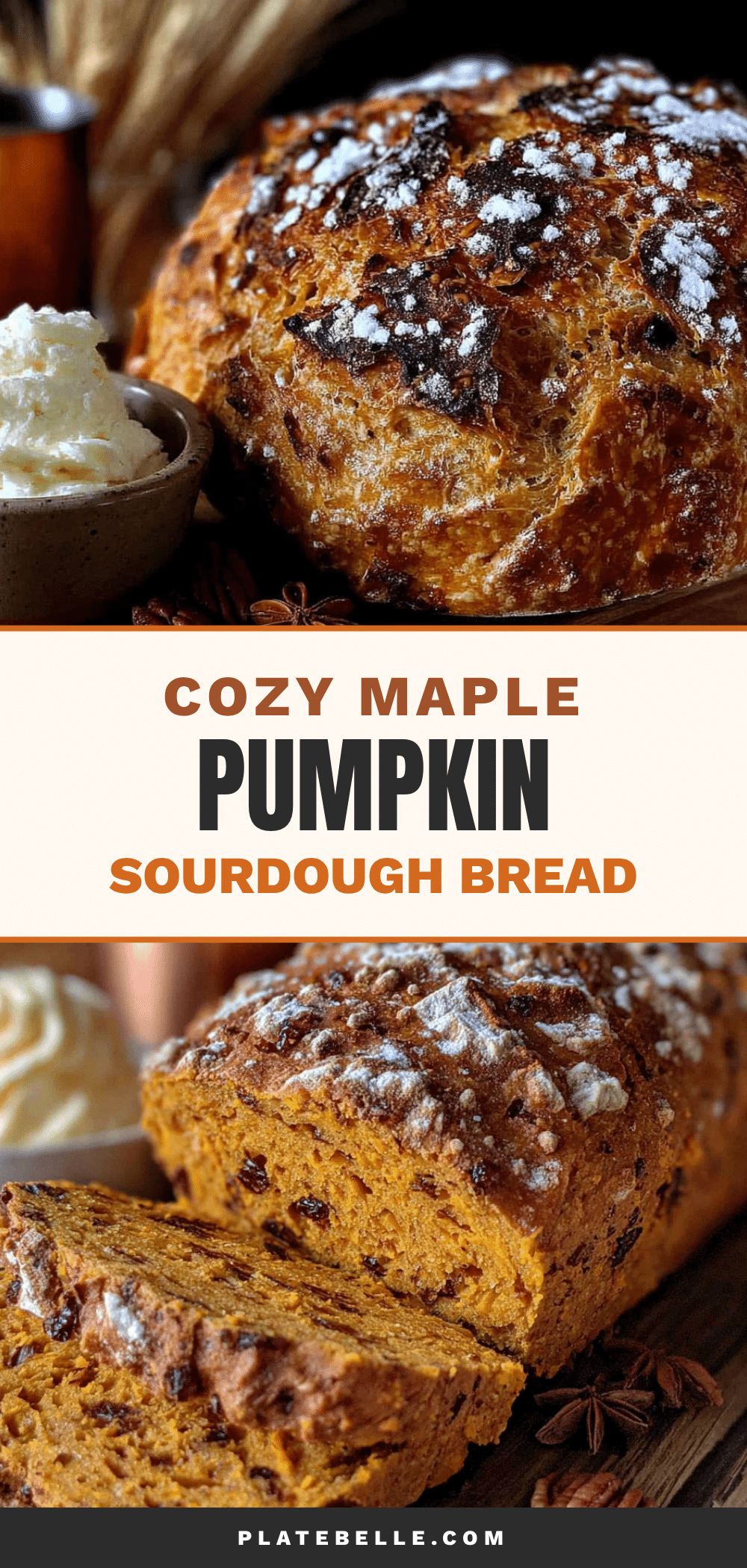
Cozy Maple Pumpkin Sourdough Discard Bread: Easy Fall Recipe
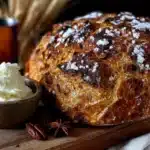
This cozy maple pumpkin sourdough discard bread is a simple, forgiving fall recipe that uses sourdough discard for tang, pumpkin for tenderness, and maple for warmth. It’s subtly sweet, incredibly moist, and perfect for breakfast or a snack.
- Prep Time: 15 minutes
- Cook Time: 55 minutes
- Total Time: 1 hour 10 minutes
- Yield: 10 servings 1x
- Category: Bread
- Cuisine: American
Ingredients
- 1 cup (240g) sourdough discard, unfed and at room temperature
- ¾ cup (170g) pumpkin puree (not pumpkin pie filling)
- ⅓ cup (80ml) pure maple syrup
- 2 cups (250g) all-purpose flour, spooned and leveled
- 1 teaspoon baking powder
- ½ teaspoon baking soda
- ½ teaspoon fine sea salt
- 1½ teaspoons pumpkin pie spice
- 1 teaspoon cinnamon
- ¼ cup (57g) unsalted butter, melted and slightly cooled
- 1 large egg, room temperature
- 1 teaspoon pure vanilla extract
- ½ cup chopped pecans or walnuts (optional)
- ⅓ cup chocolate chips (optional)
- ¼ cup dried cranberries (optional)
Instructions
- Preheat your oven to 350°F (175°C). Position the rack in the center. Line a 9×5-inch loaf pan with parchment paper, leaving overhang on the long sides. Lightly grease the exposed ends.
- In a medium bowl, whisk together 2 cups all-purpose flour, 1 teaspoon baking powder, ½ teaspoon baking soda, ½ teaspoon salt, 1½ teaspoons pumpkin pie spice, and 1 teaspoon cinnamon until evenly distributed. Set aside.
- In a large bowl, whisk together 1 cup sourdough discard, ¾ cup pumpkin puree, ⅓ cup maple syrup, ¼ cup melted butter, 1 egg, and 1 teaspoon vanilla extract until smooth. The mixture may look slightly curdled—that’s normal.
- Pour the dry ingredients into the wet mixture. Use a rubber spatula to fold gently until no streaks of flour remain. A few small lumps are okay. If adding nuts or chocolate chips, fold them in at this stage.
- Pour the batter into the prepared loaf pan and spread evenly. Tap the pan gently on the counter a few times to release air bubbles.
- Bake for 50-60 minutes. Start checking at 50 minutes by inserting a toothpick into the center. If it comes out clean or with a few moist crumbs, it’s done. If the top is browning too quickly (after about 35 minutes), tent loosely with foil.
- Let the bread cool in the pan for 10 minutes. Then lift it out using the parchment overhang and transfer to a wire rack. Cool completely before slicing—at least 1 hour.
- Once completely cool, slice and enjoy. Store leftovers wrapped tightly at room temperature for up to 3 days, or refrigerate for up to a week.
Notes
Don’t overmix the batter—fold just until the flour disappears. Room temperature ingredients matter for even rising. If your discard is very liquid (100% hydration or higher), reduce the pumpkin puree by 2 tablespoons. Let the bread cool completely before slicing to avoid a gummy texture. Toasting slices brings out the maple flavor. The flavor improves after a day or two.
Nutrition
- Serving Size: 1 slice
- Calories: 220
- Sugar: 12
- Sodium: 200
- Fat: 7
- Saturated Fat: 3
- Carbohydrates: 35
- Fiber: 2
- Protein: 4
Keywords: sourdough discard, pumpkin bread, maple, fall recipe, easy bread, sourdough discard recipe, pumpkin sourdough, fall baking