There used to be a tiny French bistro tucked away on a side street in Portland, called Le Petit Chêne, that made a Beef Wellington that I still dream about. When they closed their doors quietly three years ago—no fanfare, just a handwritten sign in the window—I honestly felt a little lost. That first bite of their Wellington was like a warm blanket on a rainy Tuesday. The pastry was impossibly flaky, the beef so tender it practically whispered, and that mushroom duxelles? Pure earthy magic.
After seventeen tries—seventeen!—I finally got it. The first few attempts were disasters, let me tell you. One time the pastry was so soggy it looked like a wet paper bag. Another time, I forgot to chill the beef before wrapping it, and the whole thing turned into a mushroom soup situation. But I kept going because that memory of Le Petit Chêne’s Wellington was worth chasing. Maybe you’ve been there—obsessing over a dish from a place that no longer exists, trying to capture lightning in a bottle again.
This recipe is my love letter to that little bistro. It’s the version I make every Thanksgiving now, and honestly, it’s better than the original. I know that sounds bold, but after all those trials, I’ve figured out the tricks that make it foolproof. The key is patience and a few smart shortcuts that don’t sacrifice flavor. The first time I served this to my family for Thanksgiving, my uncle—who never compliments anything—actually stopped mid-chew and said, “This is the best thing you’ve ever made.” That moment made every failed attempt worth it.
So if you’ve been wanting to tackle Beef Wellington but felt intimidated, this is your sign. It’s easier than you think, and the payoff is absolutely spectacular. Let me show you how to bring that cozy, restaurant-quality magic to your own Thanksgiving table.
Why You’ll Love This Recipe
This isn’t just another Beef Wellington recipe floating around the internet. I’ve tested this version more times than I care to count, tweaking every element until it was just right. Here’s why this one is different—and why you’ll fall head over heels for it.
- Surprisingly Simple: I know Beef Wellington sounds fancy and complicated, but I’ve broken it down into manageable steps that even a beginner can follow. The whole thing comes together in about two and a half hours, with plenty of resting time in between. No stress, just delicious results.
- Pantry-Friendly Ingredients: Aside from the beef tenderloin, you probably have most of these ingredients in your kitchen right now. Mushrooms, shallots, butter, puff pastry, and a few herbs—that’s really all it takes. No exotic shopping trips required.
- Perfect for Thanksgiving: This dish is showstopper central. When you bring that golden, flaky log to the table and slice into it, revealing that perfect rosy center, everyone loses their minds. It’s special enough for the holiday but cozy enough for a quiet Sunday dinner.
- Crowd-Pleaser Supreme: I’ve served this to picky eaters, food snobs, and kids, and every single person has asked for seconds. The combination of tender beef, savory mushrooms, and buttery pastry is basically irresistible.
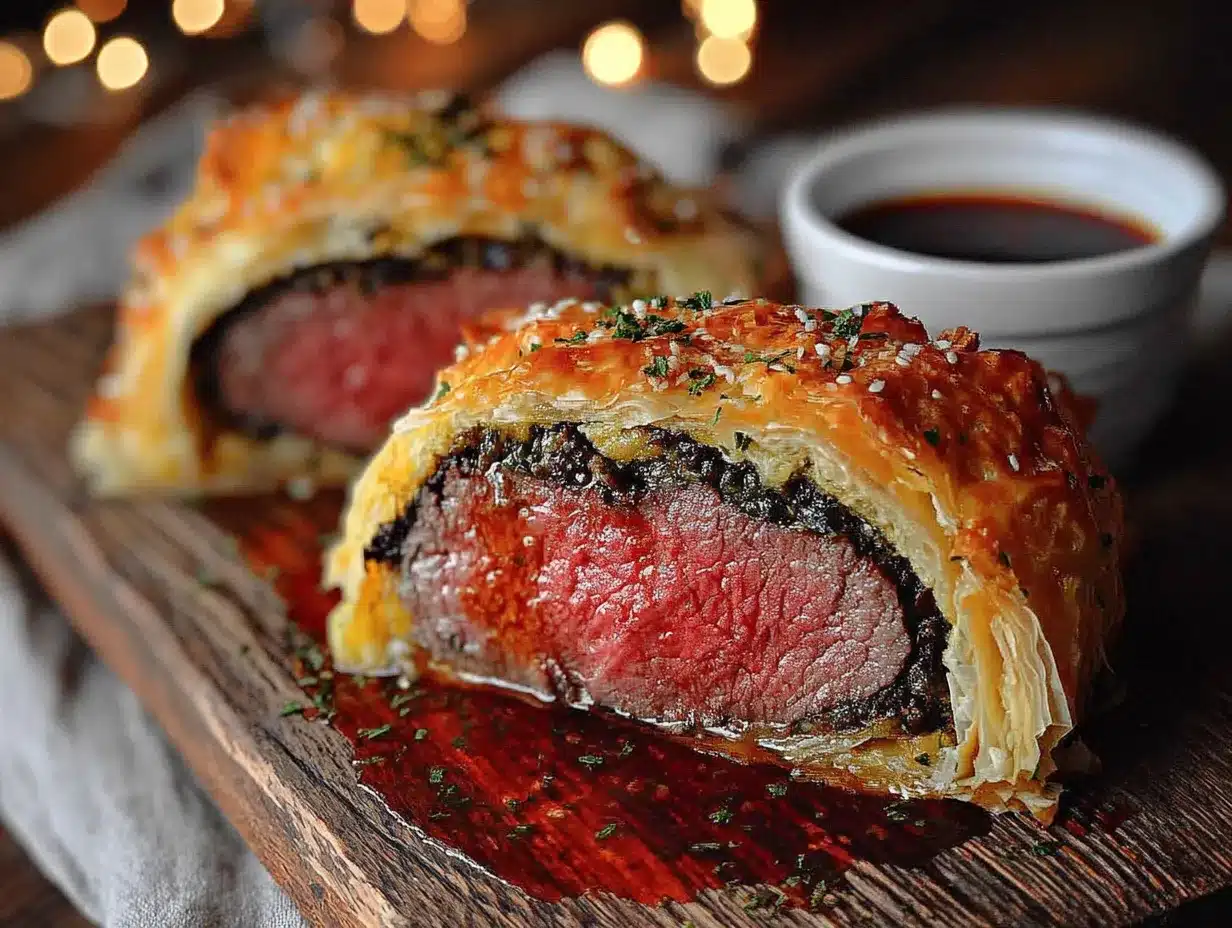
- Unbelievably Delicious: The texture here is next-level. The pastry shatters when you cut into it, the duxelles are rich and earthy, and the beef is so tender it practically melts. The first time I made this successfully, I actually closed my eyes after the first bite—it was that good.
What makes this recipe stand out from the rest is the technique I use for the duxelles. Most recipes tell you to just cook the mushrooms until dry, but I add a splash of Madeira wine and a pinch of thyme that takes the flavor to another dimension. Plus, I’ve figured out the perfect chilling time to prevent that dreaded soggy bottom. This isn’t just another version—it’s the version I’d serve to anyone I wanted to impress.
This recipe is comfort food at its finest—rich, warm, and soul-soothing. It’s the kind of meal that makes you forget about the chaos of the world for a little while. And honestly, isn’t that what Thanksgiving is all about?
What Ingredients You Will Need
This recipe uses simple, high-quality ingredients to create something truly magical. Most of these are pantry staples or easily found at any grocery store. Let me walk you through what you’ll need and why each ingredient matters.
For the Beef
- 2-pound beef tenderloin, center-cut (look for even thickness for uniform cooking)
- 2 tablespoons olive oil (I prefer extra virgin for flavor, but regular works fine)
- Salt and freshly ground black pepper (don’t skimp on the pepper—it adds a nice warmth)
- 2 tablespoons Dijon mustard (this adds a tangy layer that cuts through the richness)
For the Mushroom Duxelles
- 1 pound cremini mushrooms, finely chopped (you can use a food processor, but don’t overdo it—you want texture)
- 2 large shallots, minced (shallots are milder than onions and add a subtle sweetness)
- 3 cloves garlic, minced (fresh is non-negotiable here)
- 2 tablespoons unsalted butter (for richness and depth)
- 2 tablespoons Madeira wine (or dry sherry if you can’t find Madeira—both add complexity)
- 1 teaspoon fresh thyme leaves (dried works in a pinch, but fresh is better)
- Salt and pepper to taste
For the Assembly
- 1 sheet frozen puff pastry, thawed (I recommend Pepperidge Farm for consistent results)
- 8 thin slices prosciutto (this creates a barrier that keeps the pastry from getting soggy)
- 1 egg, beaten with 1 tablespoon water (for that gorgeous golden glaze)
- Flour for dusting (just a little for rolling)
Ingredient Tips and Substitutions
For the beef, look for a center-cut tenderloin that’s evenly thick—about 2 to 3 inches in diameter. If you can only find a whole tenderloin, just trim it down. I’ve used filet mignon steaks in a pinch, but a whole tenderloin really does work best for that dramatic presentation.
The mushrooms are the heart of this dish, so don’t skip them. Cremini mushrooms have the best flavor, but white button mushrooms work too. If you’re feeling fancy, you can mix in some shiitake or porcini for extra depth. Just make sure you chop them very fine—you want a paste-like consistency after cooking.
For a dairy-free version, use olive oil instead of butter in the duxelles and skip the prosciutto (or use a dairy-free alternative). For a gluten-free option, you can try gluten-free puff pastry, though the texture will be slightly different. I’ve tested this with a few brands, and they work reasonably well.
The Madeira wine is worth seeking out—it adds a nutty, slightly sweet flavor that complements the mushrooms beautifully. But if you can’t find it, dry sherry or even a good marsala wine will do the trick. Just avoid anything too sweet.
Equipment Needed
You don’t need a professional kitchen to make this recipe, but a few key tools will make your life much easier. Here’s what I recommend:
- Large skillet: A 12-inch skillet is ideal for searing the beef and cooking the duxelles. Cast iron works beautifully if you have it.
- Food processor: This makes chopping the mushrooms a breeze. If you don’t have one, just chop everything by hand—it’ll take a little longer, but the texture will be more rustic.
- Meat thermometer: This is non-negotiable for perfect doneness. I use a digital instant-read thermometer and it’s never let me down.
- Baking sheet: A rimmed baking sheet lined with parchment paper is perfect for baking the Wellington.
- Plastic wrap: You’ll need this for wrapping and chilling the beef at various stages.
- Sharp knife: A good chef’s knife makes slicing the beef and chopping ingredients so much easier.
- Rolling pin: For rolling out the puff pastry, though you can use a wine bottle in a pinch (I’ve done it!).
If you’re on a budget, skip the food processor and just chop everything by hand. It’s a little more work, but honestly, the texture is better. And if you don’t have a meat thermometer, you can test doneness by feel—but I really recommend getting one. It takes the guesswork out completely.
I’ve been using the same cast iron skillet for years, and it just gets better with age. If you don’t have one, any heavy-bottomed skillet will work. Just make sure it’s large enough to sear the beef without crowding.
Preparation Method
Alright, let’s get cooking! I’ve broken this down into clear steps so you can follow along without any stress. Take your time, and remember—every step matters, but none of them are hard.
Step 1: Prepare the Beef (15 minutes + 30 minutes resting)
Take your beef tenderloin out of the fridge about 30 minutes before you start cooking. This lets it come to room temperature, which ensures even cooking. Pat it completely dry with paper towels—this is crucial for a good sear. Season generously all over with salt and pepper. Don’t be shy here; the beef needs that seasoning.
Heat the olive oil in your large skillet over high heat until it’s shimmering. Carefully place the beef in the hot pan and sear for 2 minutes on each side, including the ends. You want a deep brown crust all over. This takes about 8 to 10 minutes total. Once done, transfer the beef to a plate and let it cool for 10 minutes.
While the beef is cooling, brush it all over with the Dijon mustard. This might seem like a small step, but trust me—the mustard adds a tangy depth that balances the richness of the beef and pastry. Set the beef aside while you make the duxelles.
Step 2: Make the Mushroom Duxelles (20 minutes)
In the same skillet you used for the beef (don’t clean it—all those browned bits are flavor!), melt the butter over medium heat. Add the minced shallots and cook for 3 to 4 minutes until they’re soft and translucent. Add the garlic and cook for another minute until fragrant.
Add the finely chopped mushrooms to the pan. Cook, stirring occasionally, for about 8 to 10 minutes. The mushrooms will release a lot of liquid—keep cooking until that liquid has completely evaporated and the mixture looks dry and paste-like. This is the most important part of the duxelles. If there’s any moisture left, it will make your pastry soggy.
Pour in the Madeira wine and let it cook off, about 2 minutes. Stir in the fresh thyme, salt, and pepper. Taste and adjust seasoning—you want the duxelles to be savory and rich. Transfer to a bowl and let it cool completely. You can pop it in the fridge to speed this up.
Step 3: Assemble the Wellington (15 minutes + 1 hour chilling)
Lay a large piece of plastic wrap on your work surface. Arrange the prosciutto slices in a slightly overlapping rectangle, big enough to wrap around your beef. Spread the cooled duxelles evenly over the prosciutto, leaving a 1-inch border around the edges.
Place the mustard-coated beef in the center of the duxelles. Using the plastic wrap, carefully lift the prosciutto and duxelles over the beef, wrapping it tightly. Twist the ends of the plastic wrap to secure it, like a giant candy wrapper. Refrigerate for at least 30 minutes—this helps everything hold its shape.
While that chills, lightly flour your work surface and roll out the puff pastry into a rectangle about 12 by 14 inches. It should be big enough to wrap the beef completely. Place the pastry on a fresh piece of plastic wrap.
Unwrap the beef and place it in the center of the pastry. Fold the pastry over the beef, brushing the edges with the egg wash to seal. Trim any excess pastry from the ends and fold them under, tucking them neatly. Wrap the whole thing in plastic wrap again and refrigerate for at least 30 minutes, or up to 24 hours. This chilling step is crucial for a flaky pastry.
Step 4: Bake the Wellington (40-45 minutes + 10 minutes resting)
Preheat your oven to 400°F (200°C). Line a baking sheet with parchment paper.
Remove the Wellington from the fridge and unwrap it. Place it seam-side down on the prepared baking sheet. Brush the entire surface with the egg wash—this gives it that gorgeous golden color. Using a sharp knife, make a few small slits on top to allow steam to escape.
Bake for 40 to 45 minutes for medium-rare, or until the internal temperature reaches 125°F (52°C) for medium-rare. For medium, aim for 135°F (57°C). The pastry should be deep golden brown and flaky.
Remove from the oven and let it rest for 10 to 15 minutes before slicing. This is the hardest part—I know you’ll want to dig in immediately—but resting allows the juices to redistribute and makes slicing much cleaner.
When you slice it, use a sharp serrated knife and cut in gentle sawing motions to keep the pastry intact. Each slice should reveal that beautiful rosy center surrounded by the dark duxelles and flaky pastry. Honestly, it’s a thing of beauty.
Cooking Tips & Techniques
After seventeen attempts (and a few spectacular failures), I’ve learned a thing or two about what makes this recipe work. Here are my best tips to ensure your Beef Wellington turns out perfectly every time.
Don’t skip the chilling steps. I know it’s tempting to rush through, but each chill serves a purpose. The first chill firms up the prosciutto wrap so it holds together. The second chill ensures the pastry stays cold when it hits the hot oven, which creates those beautiful flaky layers. I once skipped the second chill because I was in a hurry, and the pastry turned out soggy and flat. Never again.
Get the duxelles really dry. This is the number one mistake people make. If your mushroom mixture has any moisture left, it will steam inside the pastry and create a soggy mess. Keep cooking until the mixture looks like a thick paste and starts to stick together. When you think it’s done, cook it for another 2 minutes. Trust me.
Use a meat thermometer. I cannot stress this enough. Beef Wellington is too expensive to guess at doneness. Insert the thermometer through the end of the pastry into the center of the beef. For medium-rare, pull it at 125°F (52°C)—it will rise another 5 degrees while resting. My first few attempts were overcooked because I relied on timing alone.
Let the beef rest after searing. This might seem like an extra step, but it prevents the beef from continuing to cook while you assemble. Plus, it gives the mustard time to soak in a little. I usually sear the beef, then make the duxelles while it cools—perfect multitasking.
Don’t overwork the pastry. Puff pastry is delicate. Handle it as little as possible, and keep it cold. If it starts to feel sticky or warm, pop it back in the fridge for 10 minutes. I keep a second sheet of pastry in the freezer just in case I mess up the first one—it’s happened more times than I’d like to admit.
Slice with a serrated knife. A straight blade will crush the flaky layers. Use a serrated knife and gentle sawing motions. I learned this the hard way after ruining a beautiful Wellington with a dull chef’s knife. The slices came out looking like a train wreck.
Variations & Adaptations
One of the best things about this recipe is how adaptable it is. Here are some variations I’ve tried and loved—each one brings something different to the table.
Vegetarian Mushroom Wellington
Swap the beef for a mixture of roasted root vegetables and extra mushrooms. I’ve made this for vegetarian friends, and it’s always a hit. Use a mix of portobello mushrooms, sweet potatoes, and carrots, all roasted until tender. Wrap them in the duxelles and prosciutto (or skip the prosciutto for a fully vegetarian version). The cooking time is shorter—about 25 to 30 minutes—since the filling is already cooked.
Individual Beef Wellingtons
Instead of one large Wellington, make individual portions using 6-ounce filet mignon steaks. This is perfect for dinner parties where everyone wants their own little package. Adjust the cooking time to about 20 to 25 minutes for medium-rare. I did this for a New Year’s Eve dinner once, and everyone felt so fancy.
Herb-Crusted Variation
Add a layer of fresh herbs to the duxelles for extra flavor. I’ve tried a mix of rosemary, sage, and parsley, and it adds a lovely aromatic quality. Just chop the herbs finely and stir them into the cooled duxelles before spreading. This variation is especially nice for Thanksgiving—the herbs give it that holiday feel.
Dairy-Free Adaptation
Use olive oil instead of butter in the duxelles, and skip the prosciutto. The duxelles will still be rich and flavorful without the dairy. For the egg wash, you can use a little plant-based milk mixed with maple syrup for a similar golden finish. I tested this for a friend with dairy allergies, and honestly, I couldn’t tell the difference.
Spicy Kick Version
Add a teaspoon of red pepper flakes or a minced chipotle pepper in adobo sauce to the duxelles. The heat cuts through the richness beautifully. I tried this on a whim one night, and it’s become my secret weapon for when I want something a little different. Just be careful—a little goes a long way.
Serving & Storage Suggestions
This Beef Wellington is a showstopper, so let’s make sure you serve it right. Here’s everything you need to know about presenting, storing, and reheating this beauty.
Serving Temperature and Presentation: Serve the Wellington warm, not hot. Let it rest for 10 to 15 minutes after baking, then slice into 1-inch thick rounds. Arrange the slices on a platter with the cut sides facing up so everyone can see that gorgeous interior. I like to garnish with a sprinkle of fresh thyme or a few microgreens for a pop of color.
What to Serve With It: This dish pairs beautifully with simple sides that don’t compete for attention. I love serving it with roasted asparagus, mashed potatoes, or a simple green salad with a tangy vinaigrette. For Thanksgiving, it goes perfectly with creamy mashed potatoes and roasted Brussels sprouts with balsamic glaze. A glass of full-bodied red wine, like a Cabernet Sauvignon or Merlot, is the perfect finishing touch.
Storage Instructions: Leftover Wellington keeps well in the refrigerator for up to 3 days. Wrap it tightly in plastic wrap or aluminum foil to prevent the pastry from drying out. I’ve also frozen whole, uncooked Wellington for up to a month—just wrap it well and bake straight from frozen, adding about 10 minutes to the cooking time.
Reheating Methods: The best way to reheat is in a 350°F (175°C) oven for about 10 to 15 minutes. This keeps the pastry crispy. Avoid the microwave—it will turn the pastry into a soggy mess. I learned this the hard way when I tried to reheat a slice for lunch the next day. Never again.
How Flavors Develop: Honestly, this dish is even better the next day. The flavors meld together overnight, and the beef becomes even more tender. If you can resist eating it all on Thanksgiving, save some for leftovers—you won’t regret it.
Nutritional Information & Benefits
While Beef Wellington isn’t exactly health food, it does have some redeeming qualities. Here’s a rough breakdown per serving (based on 6 servings):
| Nutrient | Amount Per Serving |
|---|---|
| Calories | 620 |
| Protein | 38g |
| Fat | 42g |
| Carbohydrates | 22g |
| Fiber | 2g |
| Sugar | 3g |
| Sodium | 780mg |
Health Benefits: Beef is an excellent source of high-quality protein, iron, and B vitamins, especially B12, which supports energy and brain function. Mushrooms are packed with antioxidants and beta-glucans that support immune health. Shallots and garlic contain compounds that may help reduce inflammation and support heart health.
Dietary Considerations: This recipe contains gluten (from the puff pastry), dairy (from the butter), and eggs (from the wash). For a gluten-free version, use gluten-free puff pastry. For dairy-free, use olive oil instead of butter. It’s naturally nut-free and can be made soy-free by checking your ingredients.
Potential Allergens: This recipe contains wheat, dairy, and eggs. The prosciutto is cured pork, so it’s not suitable for those avoiding pork. Always check your ingredients for hidden allergens.
My Personal Take: Look, this isn’t a weekday dinner. It’s a special occasion dish, and that’s okay. I believe in balance—most of the time I eat simple, healthy meals, but for Thanksgiving? I go all out. And honestly, the joy this dish brings is worth every calorie.
Conclusion
This Beef Wellington is more than just a recipe—it’s a experience. It’s the dish that makes Thanksgiving feel truly special, the one that gets people talking and asking for seconds. After all those failed attempts, I can honestly say this version is worth every bit of effort.
I love this recipe because it reminds me of that little bistro in Portland, but also because it’s become my own. It’s the dish I make when I want to show someone I care, when I want to create a memory around the table. There’s something deeply satisfying about pulling that golden, flaky log out of the oven and watching everyone’s eyes light up.
Don’t be afraid to make this your own. Add your favorite herbs, try different mushrooms, or make individual portions. The beauty of cooking is that every version tells a different story. I’d love to hear how yours turns out—drop a comment below and let me know what variations you tried, or tag me in your photos. Happy Thanksgiving, friends. May your Wellington be flaky, your beef be tender, and your table be full of love.
Frequently Asked Questions
Can I make Beef Wellington ahead of time?
Absolutely! You can assemble the Wellington completely up to 24 hours in advance and keep it wrapped in the fridge. Just brush on the egg wash right before baking. If you’re baking from cold, add about 5 to 10 minutes to the cooking time.
What if I can’t find beef tenderloin?
You can use a thick-cut filet mignon or even a top sirloin roast in a pinch. Just adjust the cooking time based on the thickness. The key is to use a tender cut of beef that will cook relatively quickly.
Why is my pastry soggy?
Soggy pastry is usually caused by too much moisture in the duxelles or not chilling the Wellington long enough before baking. Make sure your mushroom mixture is completely dry, and don’t skip the chilling steps. Also, make sure your oven is fully preheated before you put the Wellington in.
Can I freeze Beef Wellington?
Yes! You can freeze the unbaked Wellington for up to a month. Wrap it tightly in plastic wrap and then foil. When you’re ready to bake, place it straight from the freezer onto a baking sheet and bake at 400°F (200°C) for about 50 to 55 minutes, or until the internal temperature reaches 125°F (52°C) for medium-rare.
What’s the best way to slice Beef Wellington without crushing the pastry?
Use a sharp serrated knife and slice with a gentle sawing motion. Let the Wellington rest for at least 10 minutes before slicing—this firms up the structure. If you’re having trouble, you can even chill it for 15 minutes after baking to make slicing easier, then reheat slices briefly in the oven.
Pin This Recipe!

Easy Beef Wellington for a Cozy Thanksgiving
A foolproof Beef Wellington recipe inspired by a beloved Portland bistro, featuring tender beef tenderloin, rich mushroom duxelles, and flaky puff pastry. Perfect for Thanksgiving or any special occasion.
- Prep Time: 30 minutes
- Cook Time: 45 minutes
- Total Time: 2 hours 30 minutes
- Yield: 6 servings 1x
- Category: Main Course
- Cuisine: French
Ingredients
- 2-pound beef tenderloin, center-cut
- 2 tablespoons olive oil
- Salt and freshly ground black pepper
- 2 tablespoons Dijon mustard
- 1 pound cremini mushrooms, finely chopped
- 2 large shallots, minced
- 3 cloves garlic, minced
- 2 tablespoons unsalted butter
- 2 tablespoons Madeira wine (or dry sherry)
- 1 teaspoon fresh thyme leaves
- Salt and pepper to taste
- 1 sheet frozen puff pastry, thawed
- 8 thin slices prosciutto
- 1 egg, beaten with 1 tablespoon water
- Flour for dusting
Instructions
- Take the beef tenderloin out of the fridge 30 minutes before cooking to bring to room temperature. Pat dry with paper towels and season generously with salt and pepper.
- Heat olive oil in a large skillet over high heat until shimmering. Sear the beef for 2 minutes on each side, including the ends, until a deep brown crust forms (about 8-10 minutes total). Transfer to a plate and let cool for 10 minutes.
- Brush the cooled beef all over with Dijon mustard. Set aside.
- In the same skillet, melt butter over medium heat. Add shallots and cook for 3-4 minutes until soft. Add garlic and cook for 1 minute until fragrant.
- Add the chopped mushrooms and cook, stirring occasionally, for 8-10 minutes until all liquid has evaporated and the mixture is dry and paste-like.
- Pour in the Madeira wine and cook for 2 minutes until evaporated. Stir in thyme, salt, and pepper. Transfer to a bowl and let cool completely.
- Lay a large piece of plastic wrap on a work surface. Arrange prosciutto slices in a slightly overlapping rectangle. Spread the cooled duxelles evenly over the prosciutto, leaving a 1-inch border.
- Place the mustard-coated beef in the center. Using the plastic wrap, lift the prosciutto and duxelles over the beef, wrapping tightly. Twist the ends of the plastic wrap to secure. Refrigerate for at least 30 minutes.
- Lightly flour a work surface and roll out the puff pastry into a 12×14-inch rectangle. Place on a fresh piece of plastic wrap.
- Unwrap the beef and place it in the center of the pastry. Fold the pastry over the beef, brushing edges with egg wash to seal. Trim excess pastry from ends and fold under. Wrap in plastic wrap and refrigerate for at least 30 minutes (up to 24 hours).
- Preheat oven to 400°F (200°C). Line a baking sheet with parchment paper.
- Remove Wellington from fridge, unwrap, and place seam-side down on the baking sheet. Brush entire surface with egg wash. Make a few small slits on top for steam to escape.
- Bake for 40-45 minutes for medium-rare (internal temperature 125°F/52°C) or until pastry is deep golden brown. For medium, aim for 135°F (57°C).
- Remove from oven and let rest for 10-15 minutes before slicing with a serrated knife.
Notes
Don’t skip the chilling steps—they ensure flaky pastry. Make sure the duxelles is completely dry to avoid soggy pastry. Use a meat thermometer for perfect doneness. Let the Wellington rest before slicing. For best results, use a serrated knife to slice.
Nutrition
- Serving Size: 1 slice (1/6 of Well
- Calories: 620
- Sugar: 3
- Sodium: 780
- Fat: 42
- Saturated Fat: 15
- Carbohydrates: 22
- Fiber: 2
- Protein: 38
Keywords: Beef Wellington, Thanksgiving, beef tenderloin, puff pastry, mushroom duxelles, holiday recipe, special occasion