The sticky-sweet, concentrated smell of tomatoes slowly collapsing in a low oven. That’s the whole reason I make this small-batch slow-roasted tomato sauce every single year. Everything else—the garlic cloves turning jammy in their skins, the olive oil pooling into little golden puddles around the fruit—is just supporting cast. I first stumbled onto this method not out of ambition, but out of desperation. A pint of cherry tomatoes had been sitting on my counter for five days, looking a little wrinkled and deeply unappealing. I couldn’t eat another one raw, and tossing them felt wasteful. So I halved them, threw them in a dish with some garlic and herbs, and forgot about them for two and a half hours. What came out of that oven changed how I think about tomato sauce forever.
This isn’t a sauce you simmer on the stovetop. It’s a sauce you coax into existence. The oven does the heavy lifting—concentrating, sweetening, deepening every single tomato into something that tastes like August in a jar. I make a batch every couple of weeks during peak tomato season, and I freeze it in portions that save me on busy weeknights. You don’t need a garden or a farmers market haul. Even grocery store Roma tomatoes turn into liquid gold with enough time and heat. Honestly, this recipe is less about skill and more about patience. And the payoff? It’s the kind of sauce that makes you want to eat it straight from the spoon. (I won’t tell if you do.)
The best part is there’s no chopping drama, no stirring vigil. You toss things in a dish, walk away, and let the heat do the talking. This small batch recipe is designed for people who want real, deeply flavored tomato sauce without committing to a full day of canning. It freezes beautifully, it tastes better than anything from a jar, and it makes your kitchen smell like the best Italian restaurant you’ve never been to. Trust me on this one.
Why You’ll Love This Recipe
Let me tell you why this small-batch slow-roasted tomato sauce has become my secret weapon. First off, it’s almost laughably easy. You don’t need to stand over a hot stove stirring for an hour. The oven does all the work while you go fold laundry, read a book, or just sit on the couch and enjoy the smell. That’s my kind of cooking.
- Simple Ingredients : You likely already have everything you need. Tomatoes, garlic, olive oil, salt, maybe some herbs. No fancy trips to specialty stores required.
- Perfect for Freezing : This is a small batch recipe designed specifically for your freezer. Portion it into jars or bags, and you’ve got homemade sauce ready for pasta night, pizza, or dipping crusty bread.
- Deep, Concentrated Flavor : Slow roasting transforms even bland winter tomatoes into something rich, sweet, and intensely tomatoey. You won’t believe it came from your own oven.
- No Canning Equipment Needed : No water baths, no sterilizing jars, no complicated sealing processes. Just roast, blend, and freeze.
- Crowd-Pleaser : Every time I serve this sauce, people ask for the recipe. It’s that good. Kids love the sweetness, adults appreciate the depth.
What makes this recipe different from every other tomato sauce out there? It’s the roasting. That dry heat caramelizes the natural sugars in the tomatoes in a way stovetop simmering never can. You get concentrated umami, a hint of smokiness, and a velvety texture without adding cream or butter. I’ve tested this with Roma tomatoes, cherry tomatoes, and even heirlooms. Each variety brings something slightly different, but the method stays bulletproof. This isn’t just another version of tomato sauce. It’s your best version.
This recipe is the kind that makes you close your eyes after the first bite. It’s comfort food reimagined—simpler, slower, but with the same soul-soothing satisfaction. Perfect for impressing dinner guests without breaking a sweat, or turning a Tuesday night pasta bowl into something memorable.
What Ingredients You Will Need
This recipe uses simple, honest ingredients to deliver bold flavor and satisfying texture without the fuss. Most of these are pantry staples you probably already have on hand. Here’s what you’ll need:
- Roma tomatoes (2 pounds) – These are my go-to for sauce because they have fewer seeds and thicker flesh, which means more concentrated flavor after roasting. (Look for firm, deep red tomatoes that feel heavy for their size.) You can use plum tomatoes or even cherry tomatoes in a pinch—just adjust roasting time slightly.
- Garlic cloves (6-8, peeled) – Whole cloves roast into sweet, buttery softness. Don’t chop them. They’ll break down naturally when you blend the sauce. I recommend using fresh garlic, not pre-minced from a jar. The flavor difference is night and day.
- Extra virgin olive oil (¼ cup) – Good olive oil matters here because it’s a major flavor component. I prefer California Olive Ranch for everyday cooking—it’s affordable and reliable. The oil helps the tomatoes caramelize and adds richness to the finished sauce.
- Fresh basil leaves (a handful) – Adds that classic Italian aroma. You can use dried basil in a pinch (about 1 teaspoon), but fresh really shines here. If basil isn’t available, try fresh oregano or thyme.
- Kosher salt (1 teaspoon, plus more to taste) – Diamond Crystal is my preferred brand because it’s less salty by volume, giving you more control. Salt draws out moisture and intensifies flavor.
- Black pepper (½ teaspoon, freshly ground) – Adds a subtle warmth. Skip if you’re sensitive to pepper, but I think it rounds out the flavor nicely.
- Optional: Red pepper flakes (¼ teaspoon) – For a gentle kick of heat. Totally optional, but I love the little warmth it adds. (Adds a subtle layer of complexity.)
- Optional: Balsamic vinegar (1 tablespoon) – A tiny splash at the end brightens everything up. Don’t skip this if you have it—it’s not traditional, but it works wonders.
Substitution Guidance : If you’re avoiding nightshades, this recipe isn’t for you, unfortunately. For a lower-acid version, add a pinch of baking soda after blending. For a dairy-free sauce, you’re already there—this recipe is naturally vegan. If you want a chunkier sauce, pulse the blender instead of running it full speed. And if you’re out of fresh herbs, dried Italian seasoning works beautifully (use 1 teaspoon).
Equipment Needed
You don’t need a fancy kitchen to make this sauce. Here’s what you’ll actually use:
- Baking sheet or roasting dish – A rimmed baking sheet works perfectly. I use a half-sheet pan (18×13 inches) because it gives the tomatoes room to breathe without overcrowding. If they’re too crowded, they’ll steam instead of roast. (Ask me how I learned this the hard way.)
- Parchment paper or silicone baking mat – Not strictly necessary, but makes cleanup infinitely easier. The caramelized tomato juices can stick to the pan, and nobody wants to scrub that.
- Blender or immersion blender – A regular countertop blender gives you the smoothest sauce. An immersion blender works too, but you’ll get a slightly chunkier texture. I actually prefer the immersion blender for a more rustic sauce.
- Sharp knife and cutting board – For halving the tomatoes. Nothing fancy needed.
- Freezer-safe containers – Mason jars (leave headspace for expansion), freezer bags, or silicone freezer molds. I use 8-ounce wide-mouth mason jars for single-serving portions. (Pro tip: let the sauce cool completely before freezing to avoid thermal shock.)
- Measuring spoons – For salt, pepper, and optional add-ins.
Budget-friendly options: No blender? No problem. Mash the roasted tomatoes with a potato masher or fork for a chunky sauce. No parchment paper? Lightly oil your baking sheet instead. No roasting dish? A cast iron skillet works beautifully.
Preparation Method
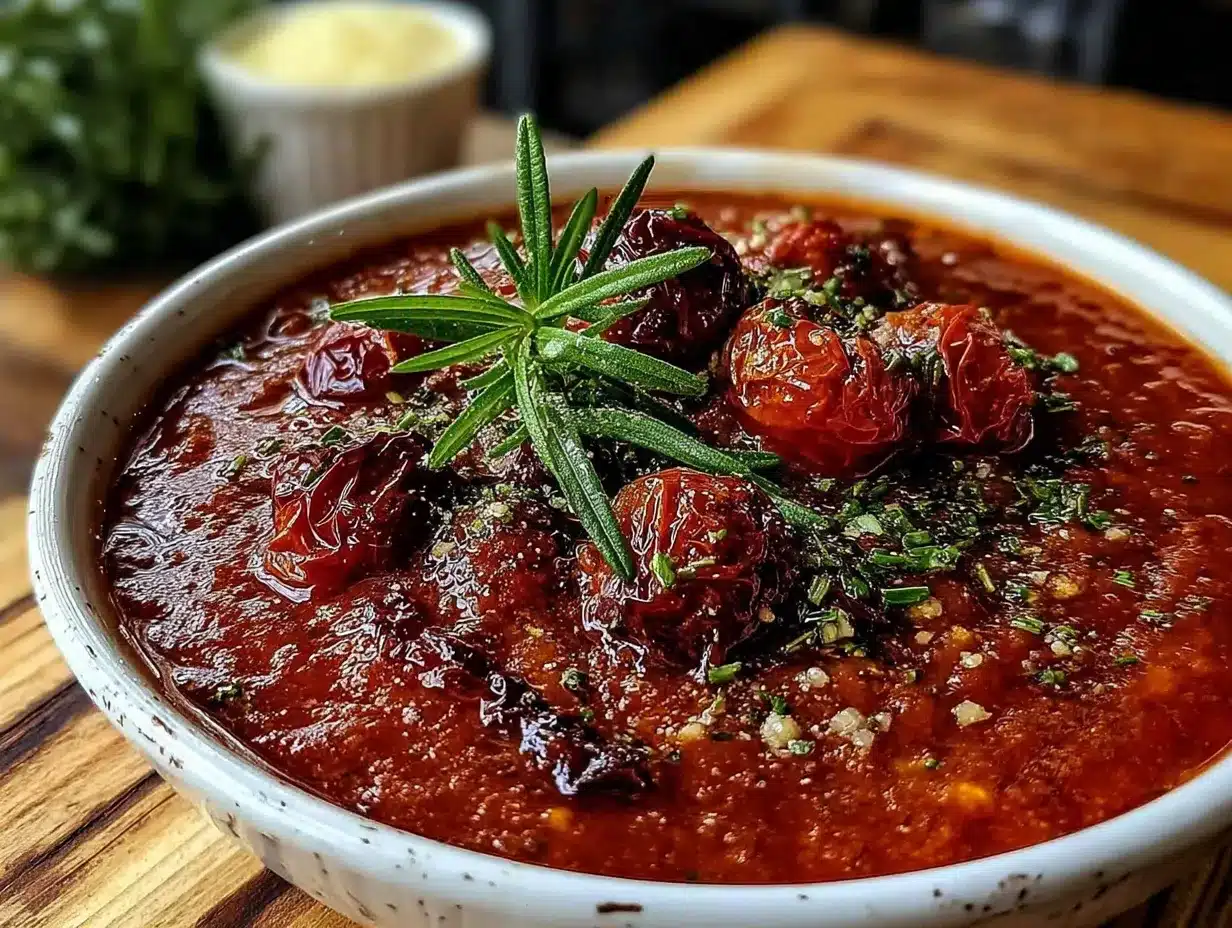
Let’s get cooking. This method is forgiving, so don’t stress about exact timing.
- Preheat your oven to 300°F (150°C). Yes, 300°F. Not higher. Low and slow is the secret here. While the oven heats, line your baking sheet with parchment paper for easy cleanup.
- Prepare the tomatoes. Rinse your 2 pounds of Roma tomatoes and pat them dry. Cut each tomato in half lengthwise. If you’re feeling fancy, you can remove the seeds, but I never bother—they add flavor and the sauce gets blended anyway. Arrange the tomato halves cut-side up on the prepared baking sheet. Don’t overcrowd them; give each piece a little personal space.
- Add the aromatics. Scatter the peeled garlic cloves (6-8 of them) around the tomatoes. Tuck a handful of fresh basil leaves in between the tomatoes. Drizzle everything with ¼ cup of extra virgin olive oil. Sprinkle with 1 teaspoon kosher salt and ½ teaspoon black pepper. If you’re using red pepper flakes, sprinkle those over now too.
- Roast low and slow. Place the baking sheet in the preheated oven and roast for 2 to 2.5 hours. The tomatoes should look shrunken, slightly browned around the edges, and the garlic should be soft enough to mash with a fork. Halfway through, give the pan a gentle shake to redistribute the oil. Your kitchen will start smelling incredible around the 45-minute mark.
- Cool slightly. Remove the baking sheet from the oven and let everything cool for about 10 minutes. This makes handling safer and allows the flavors to settle. (Don’t skip this—hot liquid in a blender can explode. I learned this lesson the messy way.)
- Blend the sauce. Transfer the roasted tomatoes, garlic, basil, and all those delicious pan juices into your blender. If you’re using an immersion blender, you can do this right in a large bowl or pot. Pulse a few times to break everything down, then blend until you reach your desired consistency. I like mine smooth but with a tiny bit of texture. Taste and adjust salt if needed. If you’re using balsamic vinegar, stir it in now.
- Cool completely. Let the sauce cool to room temperature before transferring to freezer containers. This usually takes about 30-45 minutes. Stir occasionally to help it cool evenly.
- Portion and freeze. Ladle the sauce into your freezer-safe containers, leaving about ½ inch of headspace for expansion. Label each container with the date and contents. I write “Slow-Roasted Tomato Sauce – August 2024” so I know when I made it. Freeze for up to 6 months for best flavor.
Prep Notes : The sauce will thicken slightly as it cools. If you want a thinner sauce, add a splash of water or vegetable broth when reheating. If you want it thicker, simmer it in a saucepan for a few minutes after blending. The sensory cue you’re looking for at the end: the sauce should look glossy, smell intensely sweet and savory, and coat the back of a spoon.
Cooking Tips & Techniques
After making this sauce about twenty times (and messing it up a few times too), here’s what I’ve learned:
Don’t rush the temperature. I once tried roasting at 400°F to save time. The tomatoes charred on the outside before they softened inside, and the sauce had a bitter, burnt flavor. Stick to 300°F. Low heat is your friend here. It gently concentrates the sugars without scorching them.
Keep the garlic whole. Chopped garlic burns faster than whole cloves during long roasting. Whole cloves turn into sweet, spreadable jam. If you love garlic (like I do), you can add a few extra cloves—just keep them whole.
Use the pan juices. Those brown bits stuck to the parchment paper? That’s pure flavor. When you transfer the tomatoes to the blender, scrape every last drop of oil and juice into the blender. I use a silicone spatula for this and get every bit.
Common mistake: blending too hot. I cannot stress this enough. Hot liquid in a sealed blender creates steam pressure that can blow the lid off. Let the tomatoes cool for at least 10 minutes. If you’re impatient, crack the blender lid slightly to let steam escape while blending (cover with a kitchen towel to avoid splatters).
Timing tip : Roast the tomatoes while you’re doing other things around the house. This sauce is perfect for multitasking. I often start it right after lunch, and by the time I’ve cleaned the kitchen and answered emails, it’s ready to blend.
For consistent results : Weigh your tomatoes if you have a kitchen scale. Two pounds is the sweet spot for this recipe. Too many tomatoes and they’ll steam instead of roast. Too few and you won’t have enough sauce to justify the effort.
Variations & Adaptations
This recipe is endlessly adaptable. Here are some of my favorite twists:
Herb Garden Variation – Swap the basil for fresh oregano, thyme, or rosemary. I made a version with fresh thyme and a sprig of rosemary, and it was incredible on roasted vegetables. Each herb brings a different personality to the sauce.
Roasted Pepper Addition – Add 1-2 red bell peppers (halved and seeded) to the baking sheet alongside the tomatoes. Roast them together, then blend everything. The peppers add sweetness and a silky texture. This is my go-to for a creamier sauce without any dairy.
Spicy Arrabbiata Style – Double the red pepper flakes and add a small dried chili (like arbol) to the roasting pan. The heat infuses into the oil and gives the sauce a lovely kick. Perfect for pasta alla arrabbiata or spicy pizza sauce.
Dairy-Free Creamy Sauce – After blending, stir in ¼ cup of cashew cream or full-fat coconut milk. It sounds unusual, but coconut milk with roasted tomatoes is surprisingly delicious. The richness balances the acidity beautifully.
Oven-Free Version – No oven? You can make a stovetop version by cooking the halved tomatoes in a heavy-bottomed pot over medium-low heat for about 45 minutes, stirring occasionally. It won’t have the same caramelized depth, but it’s still a solid sauce. (I’ve done this while camping—it works.)
Personal Variation : Last summer, I added a handful of roasted carrots to the blender along with the tomatoes. It added natural sweetness and a gorgeous orange color. My kids didn’t even notice the vegetables, and the sauce was the best I’ve ever made. Sometimes the best experiments happen by accident.
Serving & Storage Suggestions
Serving : This sauce is incredibly versatile. Serve it warm over your favorite pasta—I love it with pappardelle or rigatoni because the sauce clings to the ridges. It’s also amazing spread on pizza dough, spooned over grilled chicken or fish, or served as a dipping sauce for crusty bread. For a simple meal, toss it with cooked pasta, a handful of fresh basil, and a sprinkle of Parmesan. (If you’re looking for a complete dinner idea, this sauce pairs beautifully with creamy balsamic chicken thighs for a cozy weeknight meal.)
Storage : In the refrigerator, the sauce keeps for up to 5 days in an airtight container. The flavor actually deepens after a day or two—those roasted notes become even more pronounced. I often make this sauce on Sunday and use it throughout the week for quick lunches.
Freezing : This is where the recipe shines. Portion the cooled sauce into freezer-safe containers. I use 8-ounce mason jars for single servings (enough for one pasta dinner for two people). You can also freeze in ice cube trays for smaller portions—perfect for adding to soups or stews. Thaw overnight in the refrigerator or reheat directly from frozen in a saucepan over low heat.
Reheating : Warm the sauce gently in a saucepan over medium-low heat, stirring occasionally. If it’s too thick, add a splash of pasta water or broth. Avoid boiling, which can dull the roasted flavor. The sauce will taste almost as fresh as the day you made it.
Flavor development : Like many slow-cooked things, this sauce tastes even better after a day or two in the fridge. The flavors meld and mellow. If you can resist eating it immediately, you’ll be rewarded.
Nutritional Information & Benefits
This sauce is naturally vegan, gluten-free, and dairy-free. Here’s a rough estimate per ½-cup serving:
- Calories : ~90
- Fat : 7g (mostly from heart-healthy olive oil)
- Carbohydrates : 7g
- Fiber : 2g
- Sugar : 4g (natural, no added sugar)
- Protein : 1g
- Sodium : 300mg (adjust with salt to taste)
Health Benefits : Tomatoes are rich in lycopene, a powerful antioxidant linked to heart health and reduced inflammation. Cooking tomatoes actually increases the bioavailability of lycopene, so this sauce is packed with goodness. Olive oil adds healthy monounsaturated fats, which help your body absorb the fat-soluble nutrients. Garlic is known for its immune-boosting properties. This sauce is a nutritional powerhouse disguised as comfort food.
Dietary Considerations : This recipe is naturally Whole30-friendly, Paleo, and Keto-friendly (in moderation). It contains no common allergens like nuts, dairy, eggs, or soy. If you’re on a low-sodium diet, reduce or omit the added salt.
Personal Wellness Perspective : I love that this sauce lets me eat something deeply satisfying while knowing I’m nourishing my body. It’s real food, made from real ingredients, with nothing artificial. That feels good.
Conclusion
This small-batch slow-roasted tomato sauce is one of those recipes that makes you feel like a kitchen genius with almost zero effort. It’s forgiving, adaptable, and produces a depth of flavor that feels completely out of proportion to the amount of work involved. Whether you’re a seasoned cook or someone who’s just starting to explore homemade sauces, this one will become a staple in your rotation.
I love that this recipe lets me capture the taste of summer and stash it away for gray winter days. It’s a little jar of sunshine in the freezer, ready to transform a simple pasta dinner into something special. And because it’s a small batch, there’s no pressure to use it all at once. You can experiment with different herbs, adjust the seasoning to your taste, and truly make it your own.
If you give this recipe a try, I’d love to hear how it goes. Did you add something unexpected? Did you serve it with something amazing? Drop a comment below and let me know. And if you’re looking for another cozy meal to pair with this sauce, try this slow cooker Tuscan chicken thighs for a dinner that practically cooks itself. Happy cooking, friends—you’ve got this.
Frequently Asked Questions
Can I use canned tomatoes instead of fresh?
You can, but the texture and flavor will be different. Canned tomatoes are already cooked, so they won’t caramelize the same way. If you’re in a pinch, drain a 28-ounce can of whole peeled tomatoes, spread them on a baking sheet, and roast for about 1 hour at 300°F. It’s not quite the same, but it’s still good.
How long does this sauce last in the freezer?
For best quality, use within 6 months. The sauce will still be safe to eat after that, but the flavor may start to fade. Always label your containers with the date so you know what’s what. (I learned this the hard way with a mystery jar of brown sauce.)
Can I double this recipe?
Absolutely. Just use two baking sheets and rotate them halfway through roasting. Make sure the tomatoes are in a single layer—crowding them leads to steaming instead of roasting. You’ll end up with a bigger batch to freeze, which is never a bad thing.
Why is my sauce watery?
This usually happens if the tomatoes weren’t roasted long enough. The slow roasting process evaporates excess moisture, concentrating the flavor. If your sauce is watery, return it to the oven for another 20-30 minutes, or simmer it on the stovetop until it thickens. Also, make sure you’re using Roma tomatoes—they’re naturally less watery than other varieties.
Can I leave the skin on the tomatoes?
Yes! The skin softens during roasting and blends completely smooth. There’s no need to peel the tomatoes. In fact, the skin contains fiber and nutrients, so leaving it on is actually healthier. Plus, it saves you a tedious step. Win-win.
Pin This Recipe!
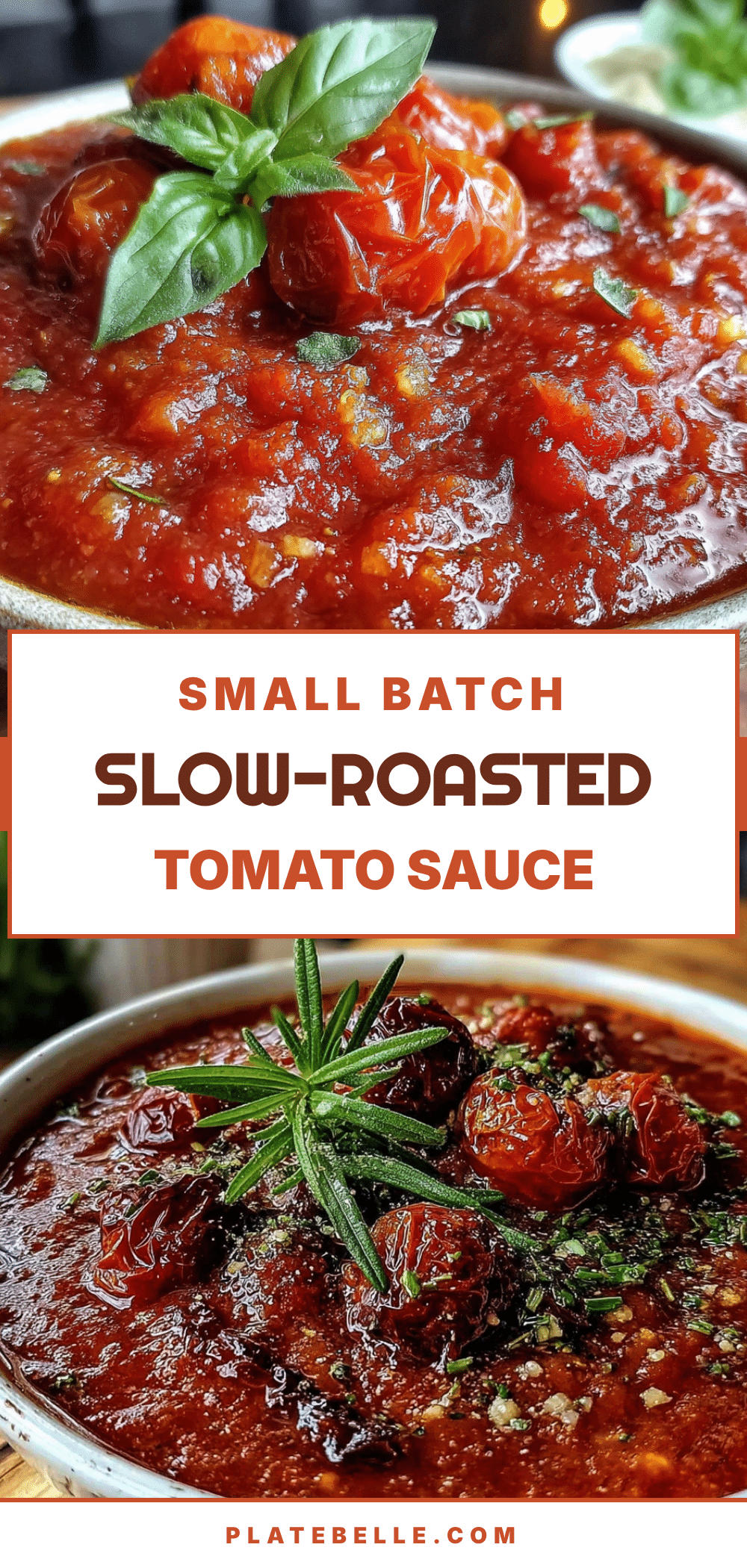
Best Easy Small-Batch Tomato Sauce for Freezing
This small-batch slow-roasted tomato sauce is almost laughably easy—the oven does all the work while you go about your day. It transforms simple ingredients into a deeply flavored, freezer-friendly sauce that tastes like August in a jar.
- Prep Time: 15 minutes
- Cook Time: 2 hours 30 minutes
- Total Time: 2 hours 45 minutes
- Yield: 4 servings 1x
- Category: Sauce
- Cuisine: Italian
Ingredients
- 2 pounds Roma tomatoes (halved lengthwise)
- 6–8 garlic cloves (peeled, whole)
- ¼ cup extra virgin olive oil
- A handful fresh basil leaves
- 1 teaspoon kosher salt (plus more to taste)
- ½ teaspoon freshly ground black pepper
- ¼ teaspoon red pepper flakes (optional)
- 1 tablespoon balsamic vinegar (optional)
Instructions
- Preheat your oven to 300°F (150°C). Line a rimmed baking sheet with parchment paper.
- Rinse and pat dry 2 pounds of Roma tomatoes. Cut each tomato in half lengthwise. Arrange cut-side up on the prepared baking sheet in a single layer, not overcrowded.
- Scatter 6-8 peeled garlic cloves and a handful of fresh basil leaves around the tomatoes. Drizzle everything with ¼ cup extra virgin olive oil. Sprinkle with 1 teaspoon kosher salt and ½ teaspoon black pepper. Add red pepper flakes if using.
- Roast for 2 to 2.5 hours, until tomatoes are shrunken and slightly browned around the edges, and garlic is soft enough to mash with a fork. Halfway through, gently shake the pan to redistribute oil.
- Remove from oven and let cool for about 10 minutes (important: hot liquid in a blender can explode).
- Transfer roasted tomatoes, garlic, basil, and all pan juices to a blender. Pulse a few times, then blend until desired consistency. Taste and adjust salt. Stir in balsamic vinegar if using.
- Let sauce cool completely to room temperature (about 30-45 minutes), stirring occasionally.
- Ladle into freezer-safe containers, leaving ½ inch headspace. Label with date and contents. Freeze for up to 6 months.
Notes
Don’t rush the temperature—stick to 300°F to avoid burning. Keep garlic whole to prevent burning. Use all pan juices and browned bits for maximum flavor. Let tomatoes cool at least 10 minutes before blending to avoid pressure buildup. For a thinner sauce, add water or broth when reheating; for thicker, simmer after blending. The sauce thickens slightly as it cools. Flavor deepens after a day or two in the fridge.
Nutrition
- Serving Size: ½ cup
- Calories: 90
- Sugar: 4
- Sodium: 300
- Fat: 7
- Saturated Fat: 1
- Carbohydrates: 7
- Fiber: 2
- Protein: 1
Keywords: small-batch tomato sauce, slow-roasted tomato sauce, freezer tomato sauce, homemade tomato sauce, easy tomato sauce, Roma tomato sauce, vegan tomato sauce, gluten-free tomato sauce


