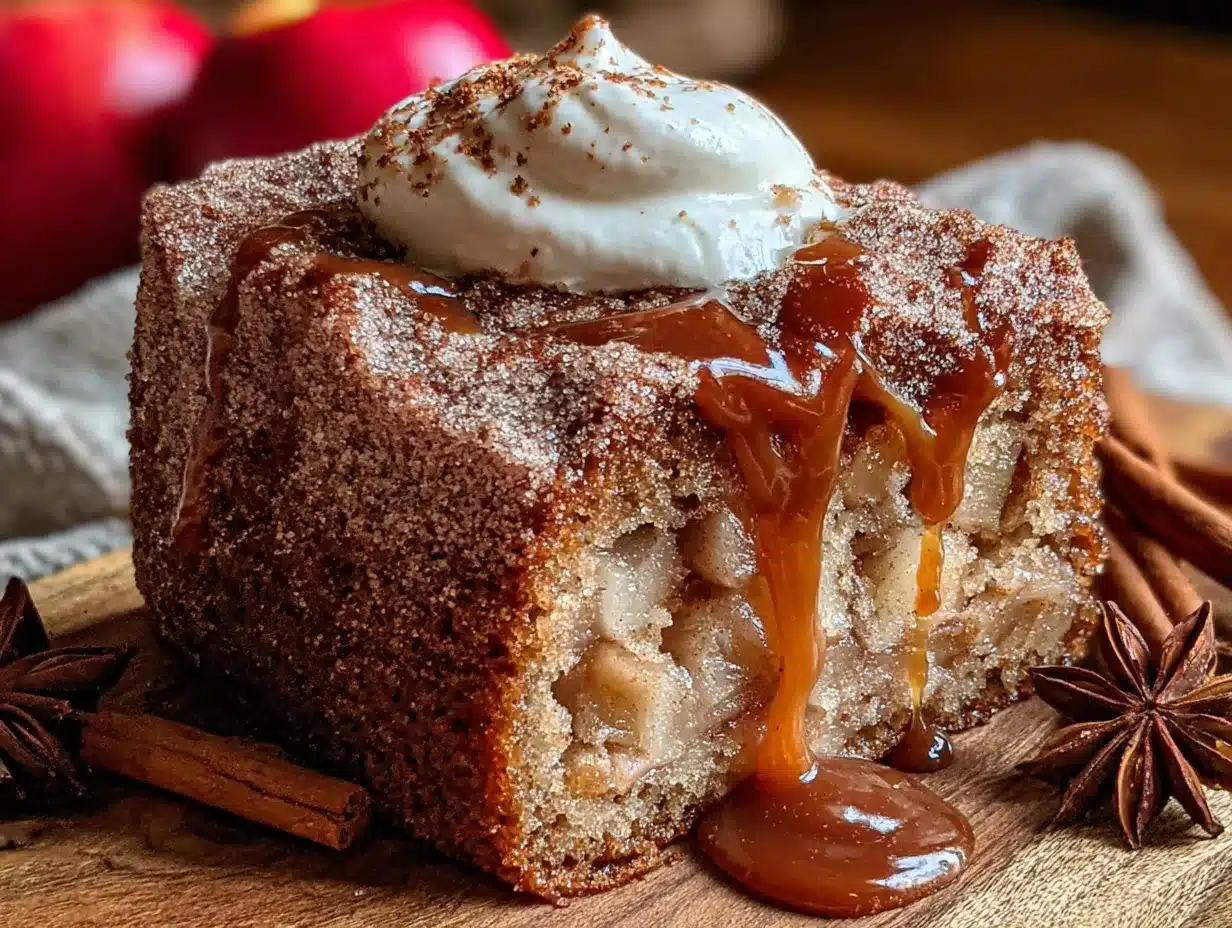
The edges, honestly. That’s what I was after the first time I made this. Not the whole cake, not the crumb—just that outer ring where the cinnamon sugar meets the pan and turns into something between a crust and a candy. I stood there at the counter, pulling off pieces while it was still warm, telling myself I was just “checking the texture.” And the texture, let me tell you, is the whole point.
I’d been trying to capture the feeling of a fresh apple cider donut from the orchard—the kind that comes in a brown paper bag and leaves sugar all over your shirt—but in cake form. Because sometimes you don’t want to stand over a fryer, you know? Sometimes you want the same cozy, spiced, cinnamony experience without the oil splatter or the guilt. This cake gives you that. It gives you the tender, apple-cider-soaked crumb, the crackly cinnamon sugar shell, and that undeniable fall feeling without having to leave your kitchen.
It’s not fancy. It’s not fussy. It’s the kind of cake you make on a Sunday afternoon when the air gets that crisp edge and you just want something warm in the oven. And honestly? It’s the kind of cake you eat for breakfast the next day too. No judgment here.
Why You’ll Love This Recipe
This isn’t just another apple cake. It’s the cake that tastes like a trip to the apple orchard, minus the hayride. Here’s why it works:
- One Bowl, No Mixer: You don’t need a stand mixer or even a hand mixer. Just a whisk and a bowl. Less cleanup, more cake.
- Real Apple Cider Flavor: We’re using reduced apple cider, which concentrates the flavor into something almost caramel-like. It’s not subtle—it’s the star.
- That Cinnamon Sugar Crust: The cake gets baked in a buttered, sugared pan, then gets another coating of cinnamon sugar right out of the oven. It’s like a donut’s crunchy exterior, but on a cake.
- Perfect for Fall Gatherings: Bring this to a Friendsgiving, a pumpkin carving party, or just your own cozy couch. It fits everywhere. It even pairs beautifully with a bowl of cozy roasted tomato basil soup for a sweet-savory fall spread.
- Better the Next Day: I’m serious. The flavors meld overnight, and the texture gets even more tender. If you can wait that long.
This recipe is the one that makes people close their eyes after the first bite. It’s comfort food, reimagined into a cake that’s somehow both rustic and refined. And it’s so simple, you’ll wonder why you haven’t been making it for years.
What Ingredients You Will Need
This recipe uses simple, wholesome ingredients that come together to deliver that unmistakable fall flavor. Most of these are pantry staples, but a few key players make all the difference.
- Apple Cider (2 cups / 480 ml): This is the heart of the recipe. You’ll reduce it down to about ½ cup to concentrate the flavor. Don’t skip this step—it’s what gives the cake that deep, almost tangy apple taste. I recommend using a fresh, unfiltered cider if you can find it. The flavor is noticeably brighter.
- Unsalted Butter (½ cup / 113 g, melted and slightly cooled): Butter gives the cake its rich, tender crumb. I always use unsalted so I can control the salt level. If you only have salted, just reduce the added salt by ¼ teaspoon.
- Granulated Sugar (1 cup / 200 g): For sweetness and structure. You’ll also use extra for coating the pan and the finished cake.
- Light Brown Sugar (½ cup / 100 g, packed): This adds moisture and a hint of molasses that plays beautifully with the apple cider. Dark brown sugar works too, for an even deeper flavor.
- Large Eggs (2, at room temperature): They bind everything together and help the cake rise. Room temperature eggs emulsify better into the batter, giving you a smoother texture.
- Vanilla Extract (2 teaspoons): A must for rounding out the flavors. Use pure vanilla extract if you can—it makes a difference.
- All-Purpose Flour (2 cups / 250 g): The backbone of the cake. Spoon and level your flour—don’t scoop straight from the bag, or you’ll end up with a dry cake.
- Baking Powder (1½ teaspoons) & Baking Soda (½ teaspoon): These work together to give the cake lift and a tender crumb. Make sure they’re fresh—old leavening agents will leave you with a dense cake.
- Salt (½ teaspoon): Just enough to balance the sweetness and make the other flavors pop.
- Ground Cinnamon (2 teaspoons): The dominant spice here. It’s warm, sweet, and unmistakably fall.
- Ground Nutmeg (¼ teaspoon): A little goes a long way. It adds that subtle, nutty warmth that makes apple desserts taste complete.
- Ground Cloves (⅛ teaspoon): Optional, but I love the tiny bit of depth it adds. Just a pinch—cloves are strong.
- Whole Milk or Buttermilk (½ cup / 120 ml): Buttermilk gives the cake a slightly tangy flavor and a super tender crumb. If you don’t have buttermilk, you can sour regular milk by adding 1½ teaspoons of lemon juice or vinegar and letting it sit for 5 minutes.
- For the Cinnamon Sugar Coating (¼ cup / 50 g granulated sugar + 1½ teaspoons ground cinnamon): This is what gives the cake that signature donut-like crust. You’ll toss the warm cake in it, so it sticks and creates that crackly layer.
Equipment Needed
You don’t need a fully stocked bakery to make this cake. Here’s what you’ll need:
- 9-inch Round Cake Pan or 10-inch Bundt Pan: I prefer a standard 9-inch round pan for this recipe—it gives you a nice, tall cake with plenty of surface area for the cinnamon sugar. A Bundt pan also works, but you’ll need to adjust the baking time slightly.
- Small Saucepan: For reducing the apple cider. A heavy-bottomed pan works best to prevent scorching.
- Large Mixing Bowl: For the wet ingredients and the dry ingredients. One bowl is all you need.
- Whisk: For mixing the batter. A balloon whisk works great.
- Rubber Spatula: For scraping down the sides of the bowl and folding the batter.
- Cooling Rack: Essential for letting the cake cool evenly before coating it in sugar.
- Parchment Paper: Optional, but it makes removing the cake from the pan a breeze. I always line the bottom of my round pan.
- Pastry Brush: For brushing the melted butter onto the warm cake before coating it in cinnamon sugar. A silicone brush is my go-to.
Preparation Method
- Reduce the Apple Cider: Pour 2 cups of apple cider into a small saucepan. Bring it to a boil over medium-high heat, then reduce the heat to medium-low and let it simmer. You’re looking for it to reduce down to about ½ cup. This takes about 15-20 minutes. Keep an eye on it—it can go from perfectly syrupy to burnt in a flash. You’ll know it’s ready when it’s thick enough to coat the back of a spoon and smells intensely of apples. Set it aside to cool slightly while you prep the rest.
- Preheat and Prep the Pan: Preheat your oven to 350°F (175°C). Grease your 9-inch round cake pan generously with butter or non-stick spray. Then, sprinkle about 2 tablespoons of granulated sugar into the pan and tilt it around to coat the bottom and sides. This creates a sugary crust that will turn into that golden, slightly caramelized exterior. Set the pan aside.
- Mix the Wet Ingredients: In a large mixing bowl, whisk together the melted butter, granulated sugar, and brown sugar until well combined. It will look a bit grainy—that’s fine. Add the eggs one at a time, whisking well after each addition. Stir in the vanilla extract and the cooled, reduced apple cider. The mixture will be smooth and fragrant.
- Combine the Dry Ingredients: In a separate medium bowl, whisk together the flour, baking powder, baking soda, salt, cinnamon, nutmeg, and cloves. This ensures the spices and leavening agents are evenly distributed throughout the batter.
- Combine Wet and Dry: Gradually add the dry ingredients to the wet ingredients, stirring with a rubber spatula or whisk until just combined. Be careful not to overmix—a few lumps are totally fine. Overmixing will develop the gluten and make the cake tough. Finally, gently fold in the milk or buttermilk until the batter is smooth and uniform. The batter will be thick and slightly sticky.
- Bake the Cake: Pour the batter into the prepared pan and spread it evenly. Bake for 35-45 minutes, or until a toothpick inserted into the center comes out clean or with a few moist crumbs. The top should be golden brown and spring back when lightly touched. If the top is browning too quickly, tent the pan loosely with foil after 30 minutes.
- Cool and Coat: Let the cake cool in the pan for 10 minutes. Then, run a knife around the edges to loosen it, and turn it out onto a cooling rack. While the cake is still warm (but not hot), use a pastry brush to coat the top and sides with a thin layer of melted butter. Then, generously sprinkle or toss the cake with the cinnamon sugar mixture, making sure every surface is covered. The warmth will help the sugar stick and create that signature crackly crust.
- Let it Rest: Allow the cake to cool completely on the rack before slicing. This is the hard part—the smell will be intoxicating. But trust me, it’s worth the wait. The texture sets perfectly as it cools.
Cooking Tips & Techniques
I’ve made this cake at least a dozen times, and I’ve learned a few things the hard way. Here’s what I wish I knew from the start:
- Don’t Rush the Cider Reduction: This is the most important step. If you don’t reduce the cider enough, your cake will be too wet and won’t have that concentrated apple flavor. If you reduce it too much, it can turn into a sticky, sugary mess. Aim for a syrupy consistency—think maple syrup, not honey. And keep the heat low once it starts simmering to avoid scorching.
- Room Temperature Ingredients Matter: I know, I know—it’s an extra step. But cold eggs and cold milk can seize the melted butter and create a lumpy batter. Let your eggs and milk sit on the counter for 30 minutes before you start. Your cake will thank you with a lighter, more even crumb.
- Use a Kitchen Scale for Flour: If you have one, use it. Measuring flour by volume (scooping from the bag) can easily add an extra 20-30 grams, leading to a dry, dense cake. One cup of all-purpose flour should weigh about 125 grams. If you don’t have a scale, spoon the flour into your measuring cup and level it off with a knife.
- The Butter-Sugar Pan Trick: Don’t skip coating the pan with sugar. It’s not just for flavor—it creates a barrier that helps the cake release cleanly. I’ve had cakes stick to the pan when I forgot this step, and it’s heartbreaking. Trust the process.
- Let it Cool Before Slicing: The cake is incredibly tender when it’s warm. If you try to slice it too soon, it will crumble and fall apart. Let it cool completely on the rack—about 1-2 hours. The cinnamon sugar crust will also set and become that perfect, crunchy shell.
Variations & Adaptations
This cake is a wonderful base for all kinds of tweaks. Here are a few of my favorites:
- Gluten-Free Version: Substitute the all-purpose flour with a high-quality 1:1 gluten-free baking flour blend (like Bob’s Red Mill or King Arthur). Add an extra tablespoon of milk or buttermilk to compensate for the drier flour. The texture will be slightly more delicate, but it’s still delicious.
- Dairy-Free Adaptation: Use a plant-based butter (like Miyoko’s) and a dairy-free milk (like oat or almond milk). For the buttermilk substitute, add 1½ teaspoons of lemon juice to the dairy-free milk and let it sit for 5 minutes. The cake won’t be quite as rich, but it’s still wonderfully tender.
- Spiced-Up Version: Add ¼ teaspoon of ground ginger and a pinch of cardamom to the dry ingredients. It adds a warm, almost chai-like complexity that pairs beautifully with the apple cider. I made this version for a fall brunch and it was gone in 20 minutes.
- Apple Chunk Addition: Fold 1 cup of finely diced fresh apple (like Honeycrisp or Granny Smith) into the batter before baking. Toss the apple pieces in a tablespoon of flour first to prevent them from sinking to the bottom. This gives the cake little pockets of soft, sweet apple.
- Bundt Pan Version: If you want to use a Bundt pan, grease and sugar the pan thoroughly. Bake at 350°F for 45-55 minutes. The coating step is a bit trickier with a Bundt—I like to brush the outside with butter and sprinkle the cinnamon sugar over it while it’s still on the cooling rack.
Serving & Storage Suggestions
This cake is incredibly versatile when it comes to serving. Here’s how I like to enjoy it:
- Serving Temperature: It’s best served at room temperature or slightly warm. If you want to reheat a slice, pop it in a 300°F oven for 5-7 minutes, or microwave it for 15 seconds. The cinnamon sugar crust will soften slightly, but it’s still amazing.
- Presentation: Dust the top with a little extra cinnamon sugar before serving. A dollop of lightly sweetened whipped cream or a scoop of vanilla bean ice cream takes it over the top. For a truly decadent treat, drizzle with a simple caramel sauce.
- Complementary Dishes: This cake pairs beautifully with a hot cup of coffee, a spiced chai latte, or a glass of cold milk. For a full fall spread, serve it alongside a bowl of cozy crockpot tuscan white bean and sausage soup for a sweet-savory pairing.
- Storage: Store the cake in an airtight container at room temperature for up to 3 days. The cinnamon sugar crust will soften over time, but the cake itself stays incredibly moist. If you live in a humid environment, it’s best to keep it in a cool, dry place.
- Freezing: This cake freezes beautifully. Wrap the cooled, uncoated cake tightly in plastic wrap, then in a layer of foil. It will keep for up to 3 months. When you’re ready to serve, thaw it at room temperature, then brush with butter and coat with the cinnamon sugar. The crust will be just as crackly as the day you baked it.
- Flavor Development: Honestly, this cake tastes even better on day two. The apple cider flavor deepens and the spices meld together. If you can resist eating it all on day one, you’re in for a real treat.
Nutritional Information & Benefits
While this is definitely a treat, it’s made with real, whole ingredients. Here’s the estimated nutritional breakdown per slice (based on 10 servings):
| Nutrient | Amount Per Serving |
|---|---|
| Calories | 320 |
| Total Fat | 14g |
| Saturated Fat | 8g |
| Cholesterol | 65mg |
| Sodium | 220mg |
| Total Carbohydrates | 47g |
| Dietary Fiber | 1g |
| Sugars | 32g |
| Protein | 4g |
- Health Benefits: Apple cider is rich in antioxidants and polyphenols, which can support gut health and reduce inflammation. The cinnamon in the coating has anti-inflammatory properties and can help regulate blood sugar. And while this cake isn’t health food, it’s made without artificial preservatives or processed oils.
- Dietary Considerations: This recipe is vegetarian. For a gluten-free version, use a 1:1 gluten-free flour blend. For a dairy-free version, use plant-based butter and milk as noted in the variations section.
- Potential Allergens: Contains wheat (gluten), dairy, and eggs. Please check your specific ingredient labels if you have allergies.
Conclusion
This apple cider donut cake is more than a recipe—it’s a feeling. It’s the smell of fall in your kitchen, the warmth of a slice in your hands, and the joy of sharing something homemade with the people you love. It’s simple enough for a weekday baking session but special enough for any gathering.
I hope you make this cake and fall in love with it the way I did. Don’t be afraid to tweak it—add more cinnamon, throw in some chopped pecans, or double the batch for a crowd. Baking is about making something your own. And honestly, the best version of this cake is the one you make with your own hands.
If you try it, I’d love to hear how it turned out. Leave a comment below, share a photo, or tag me on social media. Your feedback makes this whole thing worthwhile. And if you’re looking for more cozy fall recipes, don’t miss my cozy brown butter pumpkin chocolate chip cookies—they’re the perfect companion to this cake.
Happy baking, friends. 🍎
Frequently Asked Questions
Can I use apple juice instead of apple cider?
Technically yes, but the flavor won’t be as rich or complex. Apple cider is unfiltered and has a deeper, more authentic apple taste. Apple juice is thinner and sweeter, and it will lack that tangy, slightly tart note that makes this cake so special. If you’re in a pinch, go ahead, but I really recommend using real cider.
Why did my cake turn out dense and heavy?
This usually happens from overmixing the batter. Once you add the flour, mix just until the streaks disappear—a few lumps are okay. Overmixing develops the gluten, which makes the cake tough. Another culprit could be old baking powder or baking soda. Make sure they’re fresh (less than 6 months old).
Can I make this recipe into muffins?
Absolutely! Grease a 12-cup muffin tin and fill each cup about ¾ full. Bake at 350°F for 18-22 minutes, or until a toothpick comes out clean. Let them cool for 5 minutes, then brush with butter and roll in the cinnamon sugar. They’re perfect for grab-and-go breakfasts or snacks.
How do I know when the apple cider is reduced enough?
You’re looking for it to reduce to about ½ cup. It should be thick enough to coat the back of a spoon, and it will smell intensely of cooked apples. If you swirl the pan, the liquid should leave a trail on the bottom for a second before disappearing. Don’t let it go past a syrup consistency—it can burn quickly.
Can I skip the cinnamon sugar coating?
You can, but it’s really what makes this cake taste like a donut. The coating creates that signature crackly, sweet crust that contrasts with the tender crumb. If you want to skip it, the cake is still delicious—it just won’t have that same nostalgic, orchard-fresh feel. If you’re short on time, you can dust it with powdered sugar instead.
Pin This Recipe!
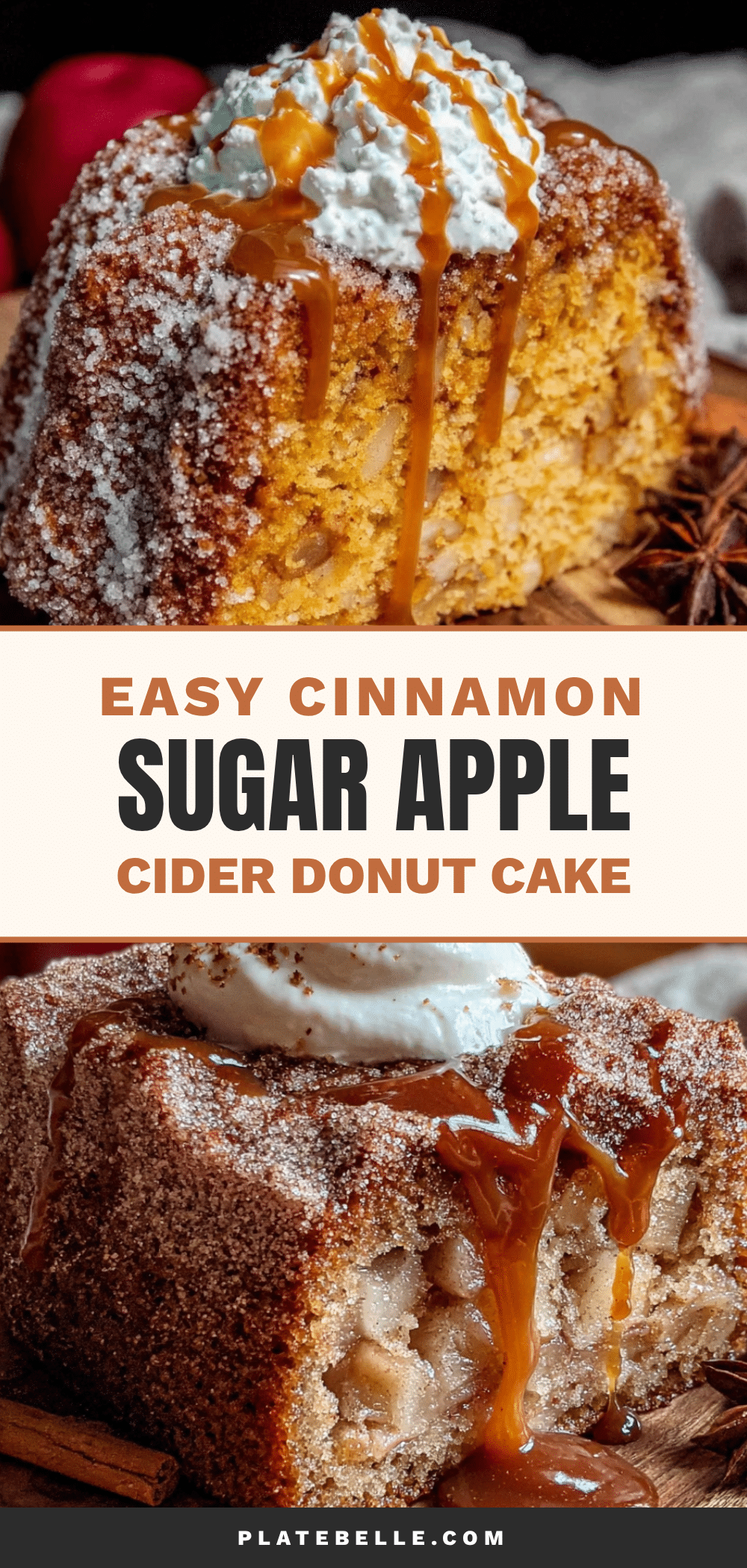
Cozy Apple Cider Donut Cake with Easy Cinnamon Sugar

This apple cider donut cake captures the cozy, spiced flavor of a fresh orchard donut in an easy, one-bowl cake form. With a tender, apple-cider-soaked crumb and a crackly cinnamon sugar crust, it’s the perfect fall treat.
- Prep Time: 15 minutes
- Cook Time: 35-45 minutes
- Total Time: 1 hour 10 minutes (including cooling)
- Yield: 10 servings 1x
- Category: Dessert
- Cuisine: American
Ingredients
- 2 cups (480 ml) apple cider
- ½ cup (113 g) unsalted butter, melted and slightly cooled
- 1 cup (200 g) granulated sugar
- ½ cup (100 g) light brown sugar, packed
- 2 large eggs, at room temperature
- 2 teaspoons vanilla extract
- 2 cups (250 g) all-purpose flour
- 1½ teaspoons baking powder
- ½ teaspoon baking soda
- ½ teaspoon salt
- 2 teaspoons ground cinnamon
- ¼ teaspoon ground nutmeg
- ⅛ teaspoon ground cloves (optional)
- ½ cup (120 ml) whole milk or buttermilk
- For the cinnamon sugar coating: ¼ cup (50 g) granulated sugar + 1½ teaspoons ground cinnamon
Instructions
- Reduce the apple cider: Pour 2 cups of apple cider into a small saucepan. Bring to a boil over medium-high heat, then reduce heat to medium-low and simmer until reduced to about ½ cup, about 15-20 minutes. Set aside to cool slightly.
- Preheat and prep the pan: Preheat oven to 350°F (175°C). Grease a 9-inch round cake pan generously with butter or non-stick spray. Sprinkle about 2 tablespoons of granulated sugar into the pan and tilt to coat the bottom and sides. Set aside.
- Mix the wet ingredients: In a large mixing bowl, whisk together melted butter, granulated sugar, and brown sugar until well combined. Add eggs one at a time, whisking well after each. Stir in vanilla extract and the cooled reduced apple cider.
- Combine the dry ingredients: In a separate medium bowl, whisk together flour, baking powder, baking soda, salt, cinnamon, nutmeg, and cloves.
- Combine wet and dry: Gradually add dry ingredients to wet ingredients, stirring with a rubber spatula or whisk until just combined. Gently fold in milk or buttermilk until smooth. Do not overmix.
- Bake the cake: Pour batter into prepared pan and spread evenly. Bake for 35-45 minutes, or until a toothpick inserted into the center comes out clean or with a few moist crumbs. If top browns too quickly, tent with foil after 30 minutes.
- Cool and coat: Let cake cool in pan for 10 minutes. Run a knife around edges, then turn out onto a cooling rack. While still warm, brush top and sides with melted butter, then generously sprinkle or toss with cinnamon sugar mixture.
- Let it rest: Allow cake to cool completely on rack before slicing.
Notes
Don’t rush the cider reduction; it should be syrupy. Use room temperature ingredients for best texture. Let cake cool completely before slicing to avoid crumbling. The cake tastes even better the next day.
Nutrition
- Serving Size: 1 slice
- Calories: 320
- Sugar: 32
- Sodium: 220
- Fat: 14
- Saturated Fat: 8
- Carbohydrates: 47
- Fiber: 1
- Protein: 4
Keywords: apple cider donut cake, cinnamon sugar cake, fall cake, apple cider recipe, easy cake, one bowl cake


