I was at the farmers’ market last spring, staring down a pile of the most beautiful, knobby, locally-grown garlic scapes I’d ever seen. The woman running the stall, a cheerful older farmer named Carol, watched me pick one up and put it down, clearly unsure what to do with them. She didn’t say anything at first. Then she leaned over the table and said, “Just treat ’em like garlic, but greener. And don’t you dare cook ’em more than a minute.” That was it. She turned to help another customer, and I was left holding the scapes, a head of spring garlic, and a mission. That conversation, as brief as it was, is the exact reason this Spring Garlic Butter Shrimp Pasta exists in my kitchen today. It wasn’t a formal lesson; it was a tiny, generous exchange that completely changed how I thought about spring produce.
Honestly, I went home that day and threw together a pasta that was, well, a bit of a mess at first. I overdid the garlic (yes, there is a limit) and the shrimp got a little rubbery. But the *idea* was there. The brightness of the scapes, the mellow heat of the fresh spring garlic, the sweet pop of the shrimp, all swimming in a buttery, lemony sauce. It was a lightbulb moment. Over the next few weeks, I refined it. I figured out the exact timing so the shrimp stays perfectly plump, and I learned that the key is letting the garlic butter sauce do the heavy lifting. This recipe is the final, foolproof version of that first happy accident. It’s the taste of the season, and it’s on your table in just 15 minutes. Maybe you’ve had one of those days where you want something incredible but have zero time? This is for you.
Why You’ll Love This Recipe
This isn’t just another quick pasta recipe. It’s a dish that tastes like you spent all day in the kitchen, when really, you spent more time waiting for the water to boil than anything else. It’s the perfect solution for busy weeknights, lazy weekend lunches, or when you just need a bowl of something that feels special without the fuss. Here’s why it’s a total game-changer:
- Quick & Easy: From start to finish, this comes together in under 15 minutes. It’s faster than takeout and twice as delicious.
- Simple Ingredients: No crazy grocery store hunts. You’ll find everything you need at your local market, especially in the spring.
- Perfect for Spring: It’s designed to celebrate the best of the season—tender garlic scapes, sweet peas, and bright lemon. It’s spring on a plate.
- Crowd-Pleaser: Seriously, everyone loves this. It’s elegant enough for guests but simple enough for a Tuesday night.
- Unbelievably Delicious: The combination of sweet shrimp, nutty browned butter, and fresh, aromatic spring garlic is a flavor bomb. It’s comfort food that feels light and bright.
What makes this recipe different from the rest is the technique of slowly browning the butter with the spring garlic. It creates a nutty, savory base that you just can’t get from a simple sauté. It’s not just garlic butter; it’s toasted garlic butter, and that makes all the difference. This is the kind of recipe that makes you close your eyes after the first bite. It’s that good.
What Ingredients You Will Need
This recipe relies on a handful of fresh, high-quality ingredients to create something truly special. The beauty is in the simplicity, so each component really gets a chance to shine. Here’s what you’ll need to grab:
- 8 oz (225g) linguine or spaghetti: I love a long, thin pasta here. It catches the sauce beautifully. De Cecco is my go-to brand for the perfect al dente texture, but any good quality pasta works.
- 1 lb (450g) large shrimp, peeled and deveined: Look for shrimp that are 21-25 count per pound. Fresh or frozen (thawed) both work. Pat them super dry with paper towels for the best sear.
- 4 tablespoons (60g) unsalted butter: Use good butter. It’s the base of the sauce. Kerrygold or Plugrà are fantastic, but any unsalted butter will do.
- 4-5 cloves spring garlic, thinly sliced: Spring garlic is milder and sweeter than regular garlic. If you can’t find it, use 3 regular garlic cloves. The scapes are the real star here.
- 1/2 cup (60g) fresh or frozen peas: A pop of sweetness and color. If using frozen, don’t thaw them first—just toss them in straight from the freezer.
- 1/4 cup (60ml) dry white wine or chicken broth: The wine adds a lovely acidity that cuts through the butter. A good Pinot Grigio or Sauvignon Blanc is perfect. No wine? Use a good quality low-sodium chicken broth.
- 1/4 cup (60ml) fresh lemon juice (about 1 lemon): Fresh is non-negotiable here. Bottled lemon juice will make it taste flat. Zest the lemon first for extra flavor.
- 1/4 cup (15g) fresh parsley, chopped: For freshness and color. Flat-leaf parsley is best.
- Salt and freshly ground black pepper: To taste. Don’t be shy with the salt—it seasons the pasta water and the shrimp.
- Red pepper flakes (optional): For a tiny kick of heat. I always add a pinch.
- Grated Parmesan cheese (optional): For serving. A little salty, nutty finish.
Ingredient Tips: For the shrimp, I always look for wild-caught American shrimp if I can find them. They have a better flavor and texture. If you’re using frozen shrimp, thaw them overnight in the fridge or in a bowl of cold water for about 15 minutes. And for the spring garlic, if the scapes are a bit thick, you can slice them in half lengthwise so they cook evenly. You can also swap the peas for asparagus tips, cut into 1-inch pieces, for a different spring twist.
Equipment Needed
You don’t need any fancy gadgets for this one. It’s a simple, one-pan (well, one-pot and one-pan) meal that comes together in a flash. Here’s what you’ll need to have ready:
- Large pot: For boiling the pasta. Make sure it’s big enough so the pasta has room to move.
- Large skillet or sauté pan: A 12-inch pan is ideal. You want enough surface area to cook the shrimp in a single layer and toss everything together.
- Colander: For draining the pasta. Don’t forget to save that pasta water!
- Chef’s knife and cutting board: For prepping the garlic, lemon, and parsley.
- Measuring cups and spoons: For accuracy.
- Tongs: For tossing the pasta with the sauce. So much easier than a spoon.
- Microplane or zester: For zesting the lemon (optional, but highly recommended).
If you don’t have a large skillet, a deep-sided frying pan or even a wok will work. The key is having enough room to toss everything without it spilling over. And honestly, a good pair of tongs is worth its weight in gold for this recipe. They make mixing the pasta and sauce a breeze.
Preparation Method
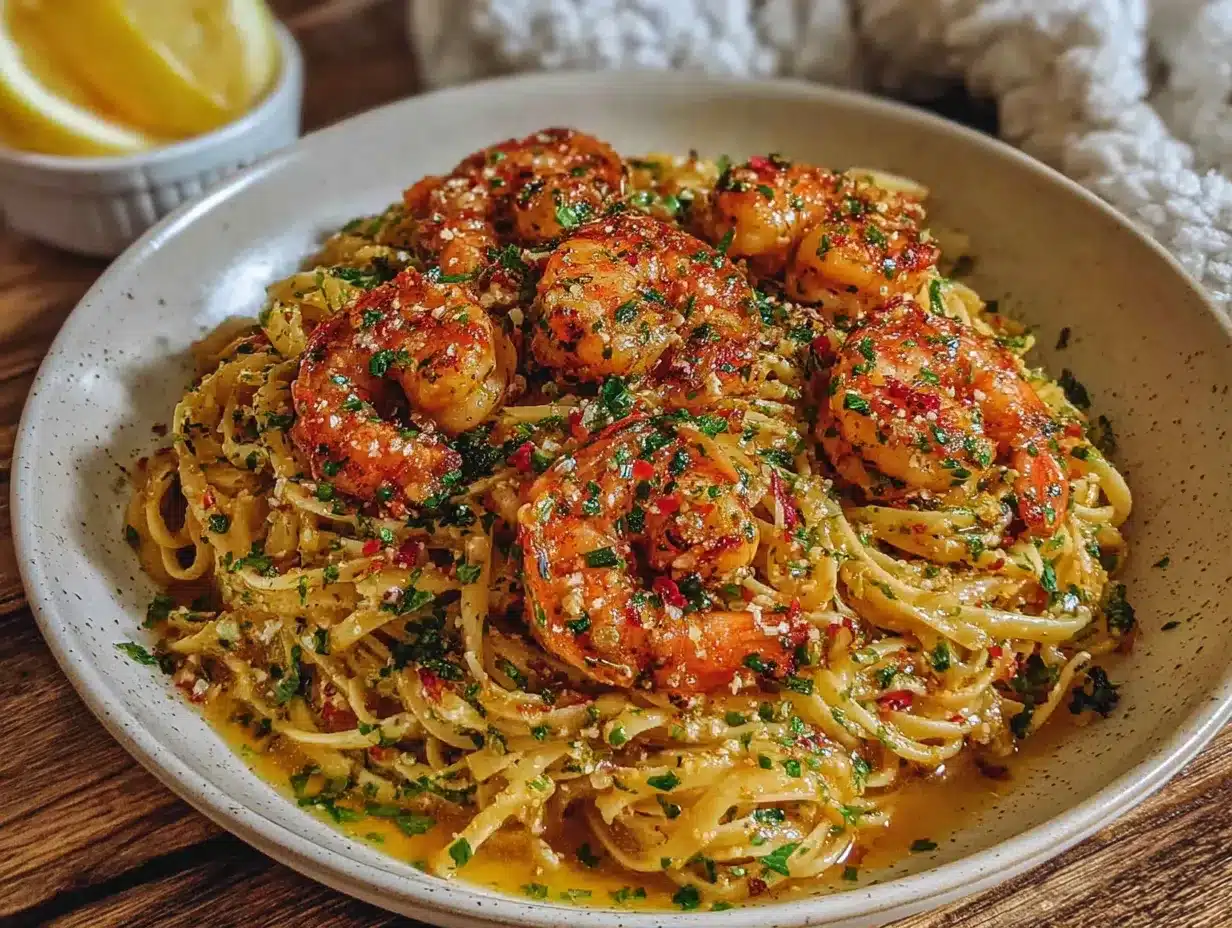
This is where the magic happens. The key is to have all your ingredients prepped and ready to go before you start cooking because this moves fast. Let’s get cooking!
- Get the pasta going. Bring a large pot of generously salted water to a rolling boil. Add your linguine or spaghetti and cook according to package directions until al dente. While the pasta is cooking, get your sauce started. Before you drain the pasta, reserve about 1 cup (240ml) of the starchy pasta water. You’ll use this to thicken the sauce later.
- Start the garlic butter. While the pasta boils, place your large skillet over medium heat. Add the 4 tablespoons of unsalted butter. Let it melt and start to foam. Swirl the pan occasionally. You want the butter to turn a light golden brown and smell nutty—this takes about 2-3 minutes. Don’t walk away! Burnt butter is a sad thing.
- Cook the spring garlic. Once the butter is browned and fragrant, add the sliced spring garlic (and scapes if you’re using them) to the pan. Sauté for 30-60 seconds, just until they become fragrant and slightly softened. You don’t want them to brown too much, just to wake up in the butter.
- Sear the shrimp. Add the shrimp to the pan in a single layer. Season them with a pinch of salt and pepper. Cook for 1-2 minutes per side, until they turn pink and are just cooked through. They should be opaque and firm to the touch. Be careful not to overcook them or they’ll get rubbery. Remove the shrimp from the pan and set them aside on a plate.
- Deglaze the pan. Pour in the 1/4 cup of dry white wine (or broth). Use a wooden spoon to scrape up any browned bits from the bottom of the pan—that’s pure flavor. Let it bubble and reduce for about 1 minute.
- Add the peas and lemon. Stir in the peas (frozen or fresh) and the fresh lemon juice. Let it cook for another minute until the peas are bright green and warmed through.
- Bring it all together. Add the cooked, drained pasta directly to the skillet. Add the shrimp back in. Pour in about 1/2 cup (120ml) of the reserved pasta water. Toss everything together with your tongs. The pasta water will help create a silky, emulsified sauce that coats every strand. If it seems a little dry, add more pasta water a tablespoon at a time until it’s perfect.
- Finish and serve. Remove the pan from the heat. Toss in the fresh parsley and a pinch of red pepper flakes (if using). Give it one last good toss. Taste and adjust seasoning with salt and pepper. Serve immediately in warm bowls, with a sprinkle of Parmesan cheese and a little extra lemon zest, if you like.
Cooking Tips & Techniques
I’ve made this pasta more times than I can count, and I’ve definitely learned a few things the hard way. Here are my best tips to make sure yours turns out perfectly every single time.
- Don’t skip the pasta water. This is the single most important tip. The starchy water is the secret to a restaurant-quality sauce. It helps the butter and lemon juice emulsify into a smooth, velvety coating instead of a greasy puddle. Trust me on this.
- Pat your shrimp dry. Wet shrimp will steam instead of sear. Take a few extra seconds to pat them completely dry with paper towels before they hit the pan. This guarantees a beautiful, golden-brown crust.
- Don’t overcook the shrimp. This is my biggest rookie mistake. Shrimp cook incredibly fast. As soon as they turn pink and curl into a loose “C” shape, they’re done. An overcooked shrimp is a rubbery shrimp. When in doubt, take them out.
- Brown the butter slowly. Use medium heat and keep an eye on it. The butter will foam up, then the foam will subside, and you’ll see little brown specks forming at the bottom. That’s the milk solids toasting. The second you smell that nutty aroma, add the garlic. It happens fast.
- Taste as you go. This is the best advice I can give any cook. Taste the sauce before you add the pasta. Does it need more salt? More lemon? A pinch of red pepper? Adjust it to your liking. You’re the boss of your dinner.
Variations & Adaptations
This recipe is a wonderful base, and it’s so easy to adapt to what you have on hand or what you’re craving. Don’t be afraid to make it your own. Here are some of my favorite twists.
- Make it Gluten-Free: Simply swap the regular pasta for your favorite gluten-free pasta. Brown rice pasta or lentil pasta work beautifully. Just be sure to cook it al dente, as gluten-free pasta can get mushy if overcooked.
- Add Some Veggies: This is a great way to use up leftover vegetables. Toss in some chopped asparagus, sugar snap peas, or even some halved cherry tomatoes along with the peas. For a heartier version, add a handful of fresh spinach at the end and let it wilt into the sauce.
- Try a Different Protein: Not a shrimp fan? No problem! This sauce is fantastic with scallops, diced chicken breast, or even firm tofu. Just adjust the cooking time for your chosen protein. For chicken, cook it through before adding the garlic.
- Spice It Up: If you like heat, add a whole chopped red chili pepper along with the garlic. Or, stir in a teaspoon of chili crisp at the end for a punch of flavor and crunch. My personal favorite is a pinch of Calabrian chili flakes.
- Dairy-Free Version: Use a high-quality vegan butter or a good olive oil in place of the butter. The flavor will be different, but still delicious. You can also add a splash of full-fat coconut milk for creaminess.
Serving & Storage Suggestions
This pasta is best enjoyed immediately, straight from the pan, while it’s hot and the sauce is perfectly emulsified. But here’s how to serve it up right and handle any leftovers.
Serving: Serve this pasta in shallow bowls to show off all that beautiful sauce. A sprinkle of fresh parsley and a generous grating of Parmesan cheese is all the garnish you need. A side of crusty bread is essential for sopping up any leftover garlic butter sauce from the bottom of the bowl. For a complete meal, pair it with a simple arugula salad with a lemon vinaigrette. A crisp, cold glass of Sauvignon Blanc or a light, hoppy IPA would be a dream alongside it.
Storage: If you have leftovers (which is rare in my house!), let the pasta cool completely. Store it in an airtight container in the refrigerator for up to 2 days. The flavors will actually meld together a bit, making it even more delicious the next day.
Reheating: The best way to reheat this is in a skillet over medium-low heat. Add a splash of water or chicken broth to loosen up the sauce. Stir gently until it’s heated through. You can also microwave it, but be careful not to overcook the shrimp. The texture of the shrimp will change a bit upon reheating, so it’s best enjoyed fresh if you can manage it.
Nutritional Information & Benefits
This dish is not only delicious but also packs a surprising nutritional punch. It’s a balanced meal with protein, healthy fats, and complex carbohydrates. Here’s a general idea of the nutritional value per serving (based on 4 servings).
| Nutrient | Amount per Serving |
|---|---|
| Calories | ~450-500 |
| Protein | ~30g |
| Fat | ~18g |
| Carbohydrates | ~50g |
| Fiber | ~4g |
Health Benefits: Shrimp is an excellent source of lean protein and selenium, a powerful antioxidant. Spring garlic is rich in allicin, a compound known for its immune-boosting properties. The peas add a dose of fiber and vitamin C. And the lemon juice provides a good hit of vitamin C as well. This is a feel-good meal that nourishes your body while satisfying your soul. It’s a great option for a balanced, satisfying dinner that won’t leave you feeling heavy.
Conclusion
This Spring Garlic Butter Shrimp Pasta is more than just a recipe; it’s a celebration of the season. It’s proof that you don’t need hours in the kitchen or a long list of complicated ingredients to create something truly memorable. It’s fast, it’s fresh, and it’s absolutely packed with flavor. The nutty browned butter, the sweet shrimp, the bright pop of lemon and peas—it’s a perfect symphony of spring.
I honestly make this at least once a week from April through June. It’s my go-to for a quick, satisfying dinner that makes me feel like I’m eating something special. I love how it comes together in the time it takes to boil pasta, and how the whole kitchen smells like garlic and lemon. I really hope you give it a try. Don’t be afraid to tweak it, add your favorite veggies, or swap in a different protein. Make it your own! And when you do, I’d love to hear about it. Leave a comment below and tell me how it turned out, or share a photo on Pinterest. Happy spring cooking!
Frequently Asked Questions
Can I use regular garlic instead of spring garlic?
Absolutely! Spring garlic is milder and sweeter, but regular garlic works perfectly. Just use 3 regular cloves instead of 4-5 spring garlic cloves, and add them a little later in the cooking process so they don’t burn.
Can I make this ahead of time?
This dish is best served fresh, right after cooking. The sauce is at its silkiest, and the shrimp are at their most tender. However, you can prep all your ingredients (peel shrimp, chop garlic, zest lemon) a few hours ahead of time to make the cooking process even faster.
What can I use instead of white wine?
No wine? No problem! You can easily substitute the white wine with an equal amount of low-sodium chicken broth or vegetable broth. For a little extra acidity, add an extra squeeze of lemon juice at the end.
How do I know when the shrimp is cooked?
Perfectly cooked shrimp will turn from a grayish-blue to a vibrant pink and white. They will also curl into a loose “C” shape. If they curl into a tight “O” shape, they are likely overcooked. They should feel firm to the touch but still have a little give.
Can I add more vegetables to this pasta?
Yes, please do! This recipe is very adaptable. Toss in some chopped asparagus, sugar snap peas, or halved cherry tomatoes along with the peas. A handful of fresh spinach stirred in at the very end is also a wonderful addition.
Pin This Recipe!
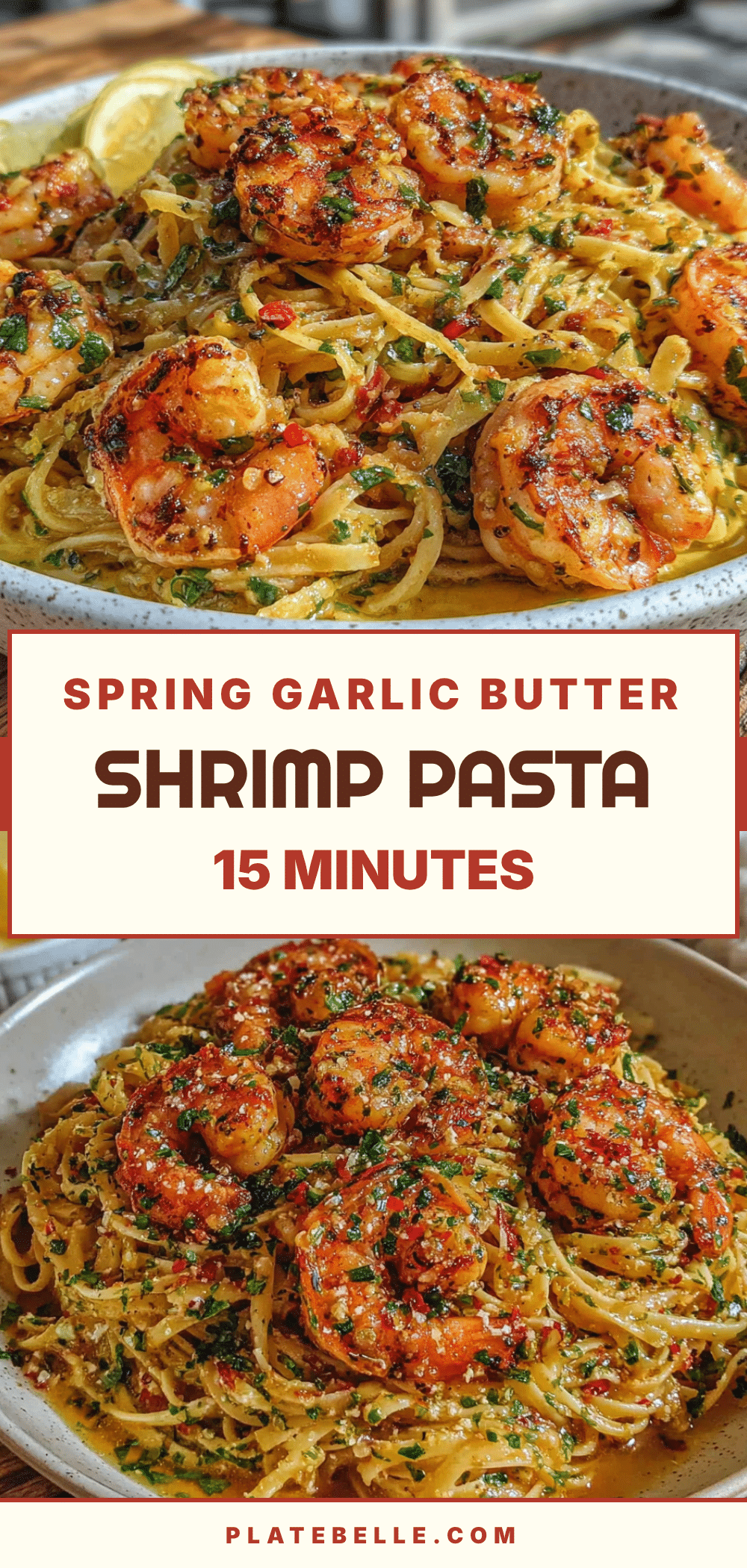
Easy 15-Minute Spring Garlic Butter Shrimp Pasta
A quick and delicious spring pasta featuring tender shrimp, nutty browned butter, and fresh spring garlic. Ready in just 15 minutes, it’s perfect for busy weeknights.
- Prep Time: 5 minutes
- Cook Time: 10 minutes
- Total Time: 15 minutes
- Yield: 4 servings 1x
- Category: Main Course
- Cuisine: Italian-American
Ingredients
- 8 oz (225g) linguine or spaghetti
- 1 lb (450g) large shrimp, peeled and deveined
- 4 tablespoons (60g) unsalted butter
- 4–5 cloves spring garlic, thinly sliced
- 1/2 cup (60g) fresh or frozen peas
- 1/4 cup (60ml) dry white wine or chicken broth
- 1/4 cup (60ml) fresh lemon juice (about 1 lemon)
- 1/4 cup (15g) fresh parsley, chopped
- Salt and freshly ground black pepper, to taste
- Red pepper flakes (optional)
- Grated Parmesan cheese (optional)
Instructions
- Bring a large pot of generously salted water to a rolling boil. Add linguine or spaghetti and cook according to package directions until al dente. Reserve about 1 cup (240ml) of starchy pasta water before draining.
- While pasta boils, place a large skillet over medium heat. Add 4 tablespoons unsalted butter. Let it melt and foam, swirling occasionally, until it turns light golden brown and smells nutty (about 2-3 minutes).
- Add sliced spring garlic to the browned butter. Sauté for 30-60 seconds until fragrant and slightly softened.
- Add shrimp to the pan in a single layer. Season with salt and pepper. Cook for 1-2 minutes per side until pink and just cooked through. Remove shrimp and set aside.
- Pour in 1/4 cup dry white wine or chicken broth. Scrape up browned bits from the pan. Let bubble and reduce for about 1 minute.
- Stir in peas and fresh lemon juice. Cook for 1 minute until peas are bright green and warmed through.
- Add cooked, drained pasta to the skillet. Return shrimp to the pan. Pour in about 1/2 cup (120ml) reserved pasta water. Toss everything together with tongs. Add more pasta water if needed for a silky sauce.
- Remove from heat. Toss in fresh parsley and red pepper flakes (if using). Taste and adjust seasoning with salt and pepper. Serve immediately with Parmesan cheese and extra lemon zest if desired.
Notes
Pat shrimp dry for best sear. Don’t overcook shrimp; they are done when pink and curled into a loose ‘C’ shape. Brown butter slowly over medium heat. Taste and adjust seasoning as you go. For gluten-free, use gluten-free pasta. For dairy-free, use vegan butter or olive oil.
Nutrition
- Serving Size: 1 serving (about 1/4
- Calories: 450500
- Sugar: 4
- Sodium: 600
- Fat: 18
- Saturated Fat: 10
- Carbohydrates: 50
- Fiber: 4
- Protein: 30
Keywords: spring garlic, shrimp pasta, quick pasta, 15-minute meal, garlic butter shrimp, spring recipe