Marta, the woman who runs the little Italian deli on the corner, watched me fumbling with a jar of anchovies last spring. I was trying to get the little paper-wrapped tin open, and I was losing the battle, honestly. She didn’t say anything at first, just reached over the counter, took the jar from my hands, and had it open in one smooth twist. Then she looked at my basket—flour, a jar of my murky sourdough starter, some sad-looking rosemary from the grocery store—and she just nodded.
“You’re making bread,” she said. It wasn’t a question. I admitted I was trying to, but my starter was being a diva, and I had a whole jar of discard I didn’t know what to do with. She leaned on the counter, wiped her hands on her apron, and told me about her Nonna’s focaccia. “The secret,” she said, “is not to be precious with it. It’s a forgiving bread. It wants to be touched.” She didn’t give me a formal recipe. She just told me the ratios—a handful of this, a glug of that—while she sliced prosciutto for another customer. I scribbled it down on a napkin, and honestly, I was pretty sure I’d mess it up.
I got home, and my kitchen was a wreck. There were dirty dishes from breakfast, and the cat was meowing for his lunch. I almost gave up. But I had that napkin, and I had a bowl of sourdough discard that felt like it was staring at me, begging to be used. So I just went for it. I dumped the discard into a bowl, added some warm water, and stirred. It looked like a sad, gray puddle. I almost tossed it. But I kept going, adding the flour and salt, and then came the part Marta emphasized: the stretch and fold. You don’t knead it, she said. You coax it. You grab a corner, stretch it up, and fold it over itself. You do this four times, waiting fifteen minutes between each fold. It felt weird, honestly, like I was giving the dough a weird massage. But after the fourth fold, the dough had gone from a shaggy mess to a smooth, springy ball. It was alive.
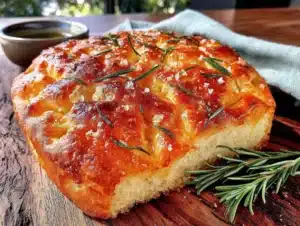
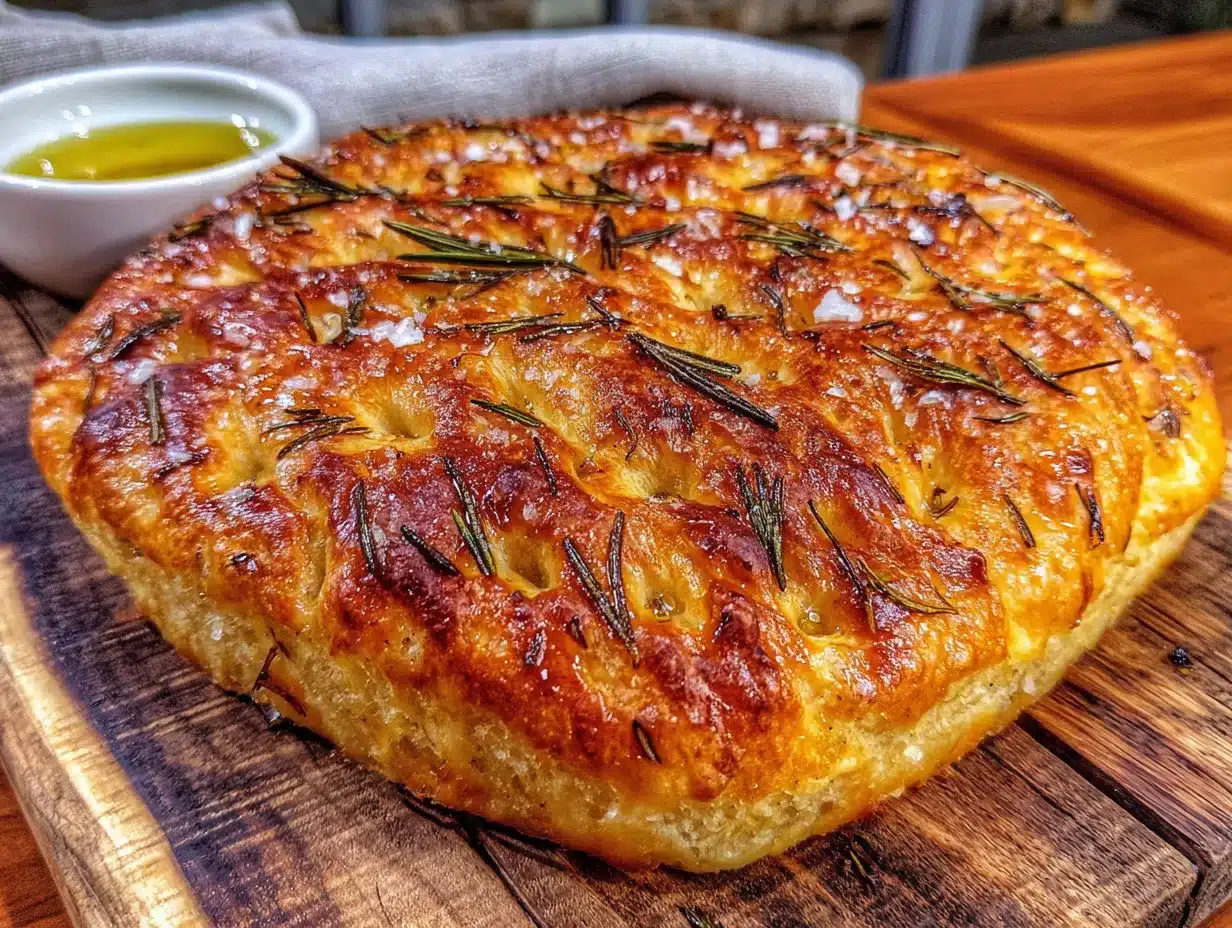
That first focaccia came out of the oven looking like a golden, dimpled landscape. The rosemary had crisped up, and the olive oil had pooled in the little wells I’d poked into the dough. The smell—I mean, it was intoxicating. It filled the whole house. My kids came running, and my husband wandered in from the garage, asking what was for dinner. We ate the whole thing in about ten minutes, tearing off pieces and dipping them in more olive oil and balsamic. It was gone before I could even take a proper picture. That’s why this recipe stayed with me—not because it was fancy or complicated, but because it turned a kitchen full of chaos and a jar of “waste” into a moment of pure, shared happiness. Maybe you’ve been there, staring at a jar of sourdough discard, wondering what to do with it. This is your answer.
Why You’ll Love This Recipe
This isn’t just another focaccia recipe. This is the one you’ll come back to again and again. It’s the one that makes you look like a rockstar with very little effort. Here’s why this sourdough discard focaccia is going to become a staple in your kitchen:
- Uses Up Sourdough Discard: No more throwing away that tangy, bubbly starter. This recipe turns your “waste” into a delicious, crowd-pleasing bread. It’s a win for your wallet and your taste buds.
- Minimal Active Time: The dough does all the work. You only need about 15 minutes of hands-on time. The rest is just waiting and letting the oven do its magic. Perfect for a busy weekday.
- Simple, Pantry Ingredients: You likely already have everything you need. Flour, olive oil, salt, water, and your sourdough discard. No fancy trips to the store required.
- Family-Approved: This is the kind of bread that disappears in minutes. Kids love the soft, pillowy texture, and adults love the tangy, herby flavor. It’s a true crowd-pleaser.
- Incredibly Forgiving: Messed up the timing? Forgot to do a stretch and fold? This dough is remarkably resilient. It’s hard to ruin, which makes it perfect for beginner bakers.
What makes this recipe different from the rest? It’s the technique. Marta’s method of stretching and folding, rather than traditional kneading, creates a focaccia with an incredibly light, airy crumb and a perfectly crisp, golden crust. It’s not just another version—it’s the best version. It’s the kind of bread that makes you close your eyes after the first bite. It’s comfort food reimagined—faster, easier, and using up something you’d otherwise toss.
What Ingredients You Will Need
This recipe uses simple, wholesome ingredients to deliver big flavor and a satisfying texture without any fuss. Most of these are pantry staples, so you can whip up this focaccia whenever the mood strikes.
- Sourdough Discard: This is the star of the show. Use unfed, straight-from-the-fridge discard. It doesn’t need to be active or bubbly. In fact, the tangier it is, the more flavor your focaccia will have. I usually use about 200 grams (about 1 cup) of discard for this recipe. If your discard is very thick, you might need to add a tablespoon or two of water.
- All-Purpose Flour: This gives the focaccia its structure and chewy texture. I prefer unbleached all-purpose flour for the best flavor, but bleached works just fine. You can also use bread flour for an even chewier crumb. Avoid using self-rising flour, as it will throw off the salt and leavening balance.
- Warm Water: The water helps hydrate the flour and activate the natural yeasts in the sourdough discard. The water should be warm to the touch—about 100°F (38°C)—but not hot. If it’s too hot, it can kill the yeast. If it’s too cold, the fermentation will be very slow.
- Extra-Virgin Olive Oil: This is non-negotiable. Good olive oil adds flavor, richness, and helps create that crispy, golden crust. I use a generous amount—about 1/4 cup in the dough and another 1/4 cup for the pan and the top. Don’t skimp! It’s what makes focaccia, well, focaccia. I recommend a brand like California Olive Ranch for a reliable, everyday olive oil.
- Salt: Fine sea salt or kosher salt works best. It enhances the flavor of the flour and the tanginess of the sourdough. I use about 1 1/2 teaspoons. Avoid using table salt, as it can be too salty and has a harsher flavor.
- Fresh Rosemary: This is the classic topping. Fresh rosemary has a piney, aromatic flavor that pairs perfectly with the olive oil and tangy bread. Dried rosemary can be used in a pinch, but use about half the amount, as it’s more potent. You can also substitute with fresh thyme, oregano, or even some flaky sea salt.
- Flaky Sea Salt (Optional): A sprinkle of flaky sea salt like Maldon on top before baking adds a wonderful crunch and burst of salty flavor. It’s a small touch that makes a big difference.
Equipment Needed
You don’t need any fancy equipment to make this focaccia. A few basic kitchen tools will do the trick. Here’s what you’ll need:
- Large Mixing Bowl: A standard 4-quart bowl is perfect for mixing and folding the dough. A glass or ceramic bowl is ideal, but any large bowl will work.
- Baking Pan: A 9×13-inch baking pan is the perfect size for this recipe. It gives the focaccia a nice, thick height. A metal pan is best for browning, but a glass or ceramic dish will also work. Just be aware that it might take a few minutes longer to bake.
- Bench Scraper or Spatula: This is incredibly helpful for stretching and folding the dough. It makes it easy to lift and fold the sticky dough without making a mess. A silicone spatula works well too.
- Plastic Wrap or a Clean Kitchen Towel: You’ll need this to cover the dough while it rises. A damp towel works great to prevent a skin from forming on the dough.
- Measuring Cups and Spoons: For accurate measurements. A kitchen scale is even better for measuring flour and water, but measuring cups are fine.
- Oven: You’ll need an oven that can maintain a steady 425°F (220°C) temperature.
If you don’t have a 9×13-inch pan, you can use a 10-inch cast iron skillet or a 9-inch round cake pan. Just adjust the baking time slightly, as the focaccia will be thicker. I’ve used a cheap metal baking pan for years, and it works perfectly. You don’t need to spend a lot of money on expensive equipment.
Preparation Method
Let’s get to the fun part—making the dough! Follow these steps, and you’ll have a beautiful, golden focaccia in no time.
- Mix the Dough: In your large mixing bowl, combine 200 grams (about 1 cup) of sourdough discard and 1 cup (240 ml) of warm water. Stir until the discard is mostly dissolved. It doesn’t need to be perfectly smooth, just well combined. Add 3 cups (375 grams) of all-purpose flour and 1 1/2 teaspoons of fine sea salt. Pour in 2 tablespoons of olive oil. Use a spatula or a wooden spoon to mix everything together until a shaggy, sticky dough forms. It will look messy—that’s perfectly fine. Don’t overmix it.
- The Stretch and Fold (The Secret Step!): This is where the magic happens. Cover the bowl with plastic wrap or a damp towel and let it rest for 15 minutes. After 15 minutes, uncover the bowl. Wet your hands slightly to prevent sticking. Grab a corner of the dough, stretch it up as high as it will go without tearing, and fold it over the rest of the dough. Give the bowl a quarter turn and repeat. Do this four times total (one for each “corner” of the dough). This is one “set” of folds. Re-cover the bowl and let it rest for another 15 minutes. Repeat this entire process (rest for 15 minutes, do one set of four folds) three more times. So, you’ll do a total of four sets of folds, with 15-minute rests in between. The dough will become smoother, stronger, and more elastic with each fold. It’s really satisfying to watch it transform.
- The First Rise: After the final set of folds, cover the bowl tightly with plastic wrap and let it rise at room temperature for 8-12 hours, or overnight. The dough should double in size and look bubbly and airy. If your kitchen is cold, it might take closer to 12 hours. If it’s warm, it might be ready in 8. The dough is ready when it’s puffy and jiggly when you gently shake the bowl.
- Prepare the Pan: Once the dough has risen, generously coat your 9×13-inch baking pan with 2 tablespoons of olive oil. Make sure the bottom and sides are well covered. This is crucial for that crispy, golden crust.
- Turn Out the Dough: Gently scrape the risen dough out of the bowl and into the oiled pan. It will be very soft and sticky. Don’t deflate it too much. Just coax it out gently.
- The Second Rise: Let the dough rest in the pan, uncovered, for 30 minutes. This allows it to relax and spread out a bit.
- Dimple the Dough: After 30 minutes, preheat your oven to 425°F (220°C). Now for the fun part. Drizzle the top of the dough with another 2 tablespoons of olive oil. Then, using your fingertips, gently press dimples all over the surface of the dough. Press all the way down to the bottom of the pan. This creates those iconic focaccia wells that hold the oil and rosemary. Don’t be shy—really get in there! The dough will feel soft and pillowy.
- Top It Off: Sprinkle the top generously with fresh rosemary leaves and a pinch of flaky sea salt (if using). The rosemary will crisp up beautifully in the oven.
- Bake: Place the pan in the preheated oven and bake for 25-30 minutes, until the top is deep golden brown and the bread sounds hollow when you tap it on the bottom. The edges should be crispy and pulling away from the sides of the pan.
- Cool (The Hardest Part): Let the focaccia cool in the pan for 5 minutes, then transfer it to a wire rack to cool for at least 10-15 minutes before slicing. I know it’s tempting to tear into it right away, but letting it cool allows the steam to redistribute, resulting in a better texture. The bottom will get nice and crispy as it cools.
Cooking Tips & Techniques
I’ve made this focaccia more times than I can count, and I’ve learned a few things along the way. Here are my best tips for getting perfect results every time.
Don’t skip the stretch and fold. I know it seems like an extra step, but it’s the key to that light, airy texture. It builds strength in the dough without making it tough. If you skip it, your focaccia will be dense and flat. Trust the process.
Use a wet bench scraper. When you’re doing the stretch and fold, the dough will be very sticky. A wet bench scraper is a lifesaver. It makes it so much easier to lift and fold the dough without it sticking to your hands. If you don’t have one, just wet your hands well.
Be patient with the first rise. This is not a quick bread. The long, slow fermentation is what develops the complex, tangy flavor. Don’t rush it. If your kitchen is cold, let it rise for a full 12 hours. You can even let it go for 24 hours in the fridge for an even more pronounced sourdough flavor.
Don’t be afraid of the dimpling. I used to be too gentle with my dimples, and my focaccia would come out flat. Now I really press down, almost to the bottom of the pan. Those deep wells are what catch all the olive oil and make the top so deliciously crispy. It’s one of my favorite parts of the process.
Use a hot oven. A hot oven is essential for a good rise and a crispy crust. Make sure your oven is fully preheated to 425°F (220°C) before you put the focaccia in. If your oven runs cool, it might take a few extra minutes to bake.
Check for doneness. The focaccia is done when it’s a deep golden brown and sounds hollow when you tap the bottom. If you’re unsure, you can use an instant-read thermometer. The internal temperature should be around 200°F (93°C).
Variations & Adaptations
This recipe is a fantastic base for all sorts of flavor combinations. Here are a few of my favorite variations to keep things interesting.
- Garlic & Herb Focaccia: After dimpling the dough, press 4-5 thinly sliced garlic cloves into the dimples along with the rosemary. The garlic roasts and becomes sweet and mellow. You can also add a sprinkle of dried oregano or thyme.
- Everything Bagel Focaccia: This is a huge hit with my family. Instead of rosemary, sprinkle the top of the dimpled dough with a generous amount of everything bagel seasoning (sesame seeds, poppy seeds, dried garlic, dried onion, and salt). It’s so good.
- Cheesy Focaccia: For a more decadent version, sprinkle 1/2 cup of freshly grated Parmesan cheese or crumbled feta cheese over the top before baking. The cheese gets all crispy and golden in the oven. You can also add some chopped sun-dried tomatoes or olives.
- Gluten-Free Version: You can make a gluten-free version by substituting the all-purpose flour with a good quality 1-to-1 gluten-free baking flour blend. The texture will be slightly different—a bit more tender and less chewy—but it will still be delicious. You might need to add an extra tablespoon or two of water, as gluten-free flours can be more absorbent.
- Sweet Focaccia: Believe it or not, this dough also works for a sweet version. Omit the rosemary and salt, and after dimpling, drizzle with a little honey and sprinkle with cinnamon sugar and some sliced almonds or raisins. It’s amazing for breakfast or dessert.
Serving & Storage Suggestions
This focaccia is incredibly versatile. Here are my favorite ways to serve and store it.
Serving: Serve this focaccia warm or at room temperature. It’s perfect on its own, but it’s also amazing served alongside a bowl of soup or a big salad. We love it with a simple tomato basil soup on a cold day. It’s also fantastic for making sandwiches—just slice it in half horizontally and fill it with your favorite meats, cheeses, and veggies. For a simple appetizer, cut it into small squares and serve with a dish of good olive oil and balsamic vinegar for dipping.
Storage: Store leftover focaccia in an airtight container at room temperature for up to 2 days. The crust will soften slightly, but it will still be delicious. Do not refrigerate it, as the fridge will dry it out and make it stale.
Reheating: The best way to reheat focaccia is in the oven. Place it on a baking sheet in a 350°F (175°C) oven for 5-7 minutes, until it’s warm and the crust is crispy again. You can also reheat it in a toaster oven. Avoid using the microwave, as it will make the bread soggy and rubbery.
Freezing: This focaccia freezes beautifully. Let it cool completely, then wrap it tightly in plastic wrap and then in a layer of aluminum foil. Freeze for up to 3 months. To thaw, let it sit at room temperature for a few hours, then reheat it in the oven. You can also freeze individual slices for quick lunches or snacks.
Flavor Development: The flavor of this focaccia actually improves after a day. The tanginess from the sourdough becomes more pronounced, and the olive oil soaks into the bread, making it even more delicious. So, if you can resist eating it all in one sitting, it’s even better the next day.
Nutritional Information & Benefits
While this is a treat, it’s made with wholesome ingredients that offer some nutritional benefits. Here’s a rough estimate per serving (1/9th of the recipe):
- Calories: ~280
- Fat: 14g (mostly from heart-healthy olive oil)
- Carbohydrates: 34g
- Protein: 5g
- Fiber: 1g
Key Health Benefits: The sourdough fermentation process breaks down some of the gluten and phytic acid in the flour, making the nutrients more bioavailable and easier to digest. This means your body can actually absorb more of the good stuff from the flour. The olive oil is rich in monounsaturated fats and antioxidants, which are great for heart health. Rosemary is also a powerful antioxidant and anti-inflammatory herb.
Dietary Considerations: This recipe is vegetarian and can be made vegan by ensuring your sourdough starter is vegan (most are). It is not gluten-free, but a gluten-free variation is provided above. It is low in sugar and contains no artificial ingredients. As always, if you have specific dietary concerns or allergies, please consult with a healthcare professional.
Conclusion
This sourdough discard focaccia is more than just a recipe—it’s a little bit of culinary magic. It turns something you’d normally throw away into something truly special. It’s the bread that brings my family to the table, that makes a simple dinner feel like an occasion, and that fills the house with the most incredible smell. It’s forgiving, it’s flexible, and it’s absolutely delicious.
I hope you give it a try. Don’t be intimidated by the long rise time—the hands-on work is minimal. And don’t be afraid to make it your own. Add your favorite toppings, experiment with different herbs, and let your family’s tastes guide you. I’d love to hear how it turns out for you! Leave a comment below and let me know what variations you tried. Did you add cheese? Did you go with the everything bagel seasoning? Share your creations with me—it really makes my day. Happy baking, friends!
Frequently Asked Questions
Can I use active sourdough starter instead of discard?
Yes, you can! If you use active, bubbly starter, the focaccia will rise faster and have a milder tang. You might need to reduce the first rise time by a few hours. The discard version has a more pronounced, complex flavor that I personally prefer.
My dough is very sticky. Is that normal?
Absolutely! Sourdough discard focaccia dough is intentionally very wet and sticky. This high hydration is what creates the light, airy, holey crumb. Don’t be tempted to add more flour. The stretch and fold technique will build enough strength to handle it. Wet hands and a wet bench scraper are your best friends here.
Can I speed up the rise time?
The long, slow rise is what develops the flavor, but you can speed it up a bit. Use warm water (around 80°F or 27°C) and place the bowl in a warm spot in your kitchen, like near a sunny window or on top of the fridge. You can also use a proofing setting on your oven if you have one. It will still take at least 4-6 hours for a good rise.
Why is my focaccia dense and not airy?
This usually happens for one of two reasons. First, you might have skipped or rushed the stretch and fold process. This step is crucial for building the dough’s strength and structure. Second, your sourdough discard might have been too old or weak. Even though it’s discard, it still needs some microbial activity to help the dough rise. If your discard has been sitting in the fridge for months without being fed, it might be too weak.
Can I make this recipe in a different size pan?
Yes, you can! The 9×13-inch pan gives a nice, thick focaccia. If you use a larger pan (like a half-sheet pan), the focaccia will be thinner and will bake faster, in about 15-20 minutes. If you use a smaller pan (like a 9-inch round cake pan), the focaccia will be thicker and will need to bake for 35-40 minutes. Just keep an eye on it and look for that deep golden brown color.
Pin This Recipe!

Easy Family-Favorite Sourdough Discard Focaccia with Rosemary
This sourdough discard focaccia is a forgiving, family-approved bread that turns your starter discard into a golden, dimpled masterpiece with a light, airy crumb and crispy crust.
- Prep Time: 15 minutes
- Cook Time: 25-30 minutes
- Total Time: 9-12.5 hours (including rising time)
- Yield: 9 servings 1x
- Category: Bread
- Cuisine: Italian
Ingredients
- 200 grams (about 1 cup) sourdough discard
- 1 cup (240 ml) warm water (about 100°F / 38°C)
- 3 cups (375 grams) all-purpose flour
- 1 1/2 teaspoons fine sea salt
- 1/4 cup (60 ml) extra-virgin olive oil (divided: 2 tbsp for dough, 2 tbsp for pan, 2 tbsp for top)
- Fresh rosemary leaves (for topping)
- Flaky sea salt (optional, for topping)
Instructions
- Mix the Dough: In a large mixing bowl, combine 200 grams (about 1 cup) of sourdough discard and 1 cup (240 ml) of warm water. Stir until the discard is mostly dissolved. Add 3 cups (375 grams) of all-purpose flour, 1 1/2 teaspoons of fine sea salt, and 2 tablespoons of olive oil. Mix with a spatula or wooden spoon until a shaggy, sticky dough forms. Do not overmix.
- The Stretch and Fold: Cover the bowl with plastic wrap or a damp towel and let it rest for 15 minutes. After 15 minutes, uncover the bowl. Wet your hands slightly. Grab a corner of the dough, stretch it up as high as it will go without tearing, and fold it over the rest of the dough. Give the bowl a quarter turn and repeat. Do this four times total (one for each ‘corner’ of the dough). This is one set of folds. Re-cover and let rest for another 15 minutes. Repeat this entire process (rest 15 min…
- The First Rise: After the final set of folds, cover the bowl tightly with plastic wrap and let it rise at room temperature for 8-12 hours, or overnight, until doubled in size and bubbly.
- Prepare the Pan: Generously coat a 9×13-inch baking pan with 2 tablespoons of olive oil, covering the bottom and sides.
- Turn Out the Dough: Gently scrape the risen dough into the oiled pan. Do not deflate it too much.
- The Second Rise: Let the dough rest in the pan, uncovered, for 30 minutes.
- Dimple the Dough: Preheat the oven to 425°F (220°C). Drizzle the top of the dough with 2 tablespoons of olive oil. Using your fingertips, press dimples all over the surface, pressing all the way down to the bottom of the pan.
- Top It Off: Sprinkle generously with fresh rosemary leaves and a pinch of flaky sea salt (if using).
- Bake: Place the pan in the preheated oven and bake for 25-30 minutes, until deep golden brown and the bread sounds hollow when tapped on the bottom.
- Cool: Let the focaccia cool in the pan for 5 minutes, then transfer to a wire rack to cool for at least 10-15 minutes before slicing.
Notes
Don’t skip the stretch and fold; it’s key to the airy texture. Use a wet bench scraper for easier handling. Be patient with the first rise for best flavor. Press deep dimples for crispy wells. Reheat in the oven for best results.
Nutrition
- Serving Size: 1/9 of recipe
- Calories: 280
- Sodium: 350
- Fat: 14
- Saturated Fat: 2
- Carbohydrates: 34
- Fiber: 1
- Protein: 5
Keywords: sourdough discard, focaccia, rosemary, easy bread, family favorite, sourdough starter, Italian bread