I was standing in the frozen foods aisle last November, staring at a bag of pre-diced sweet potatoes, when the smell hit me. Not from the freezer section, obviously. It was that weird, specific scent of a grocery store floral display mixed with someone’s cinnamon candle burning nearby. And suddenly I was eight years old, sitting at my Aunt Lou’s kitchen table in suburban Ohio, watching her pry open a can of yams with that little metal key they used to come with. The pop of the lid, the syrupy-sweet liquid spilling out, the way she’d dump it all into a Pyrex dish and top it with marshmallows that turned into this blackened, bubbly crust.
I mean, I loved that casserole. I really did. But even as a kid, I remember thinking, “This is basically dessert pretending to be a vegetable.” And Aunt Lou—bless her heart—she’d laugh and say, “That’s the point, honey.”
Fast forward a few decades, and here I am, still chasing that warm, nostalgic feeling but not so much the sugar coma that comes with it. You know what I mean? That moment when you want the comfort of a holiday classic but also want to feel good after eating it. Maybe you’ve been there, standing in your own kitchen, wondering if there’s a way to have both the memory and the energy to actually enjoy the rest of the meal.
So I started tinkering. I wanted a lighter make-ahead sweet potato casserole that still had that unmistakable cozy vibe but didn’t rely on a can of condensed milk or a bag of mini marshmallows to get there. Honestly, it took me a few tries. The first batch was too savory, the second one was still too sweet, and the third—well, the third one was the one where I actually closed my eyes after the first bite and felt that same warmth I’d been chasing since that grocery store aisle. This is that recipe.
Why You’ll Love This Recipe
This lighter make-ahead sweet potato casserole isn’t just another holiday side dish. It’s the one that solves the eternal dilemma: how do you serve something that feels indulgent and nostalgic without derailing your whole day of eating well? I’ve tested this recipe six times across three different holidays—Thanksgiving, Christmas, and even a random Sunday dinner in March—and it holds up every single time.
- Quick & Easy: The active prep time is about 20 minutes. The rest is just oven time or fridge time. Perfect for busy holiday mornings or when you’re juggling three other dishes.
- Simple Ingredients: No condensed milk, no marshmallows, no weird processed shortcuts. Just real sweet potatoes, a little maple syrup, and a crunchy pecan topping that actually adds texture instead of just sugar.
- Perfect for Holiday Gatherings: Make it two days ahead, pop it in the fridge, and bake it when you’re ready. No last-minute peeling, no frantic mashing. You can actually enjoy your own party.
- Crowd-Pleaser: I served this at a Friendsgiving where half the table was keto and the other half was “give me all the carbs.” Everyone went back for seconds. The keto folks just skipped the topping. Problem solved.
- Unbelievably Delicious: The texture is creamy but not gluey. The sweetness comes from the potatoes themselves plus a modest amount of maple syrup. And the topping? It’s buttery and crunchy without being a sugar bomb.
What makes this different from every other sweet potato casserole out there is the technique. Most recipes tell you to boil the potatoes, which waters them down and makes you add more sugar to compensate. I roast them instead. It concentrates the natural sweetness, gives you a drier, fluffier mash, and lets you use way less added sugar. It’s not rocket science—it’s just cooking smarter.
This is the kind of dish that makes you feel good about eating well. It’s comfort food reimagined—lighter, faster, but with the same soul-soothing satisfaction that makes you close your eyes after that first bite.
What Ingredients You Will Need
This recipe uses simple, wholesome ingredients to deliver that classic creamy-sweet-crunchy experience without the heavy, over-processed feeling. Most of these are pantry staples or easy to find at any grocery store. Here’s what you’ll need and why each one matters.
- Sweet Potatoes (3 pounds, about 4 medium): Look for firm, evenly shaped potatoes with smooth skin. I prefer Garnet or Jewel varieties for their deep orange color and natural sweetness. Avoid the pale-fleshed ones—they’re less sweet and more starchy. Roasting, not boiling, is the key here, so don’t skip that step.
- Maple Syrup (3 tablespoons, pure): Not the pancake syrup stuff. Real maple syrup adds a complex sweetness that complements the potatoes without overwhelming them. Grade A dark amber is my go-to. If you’re in a pinch, honey works too, but it changes the flavor slightly.
- Coconut Oil (2 tablespoons, melted): This replaces butter in the base, keeping things dairy-free and adding a subtle richness. You won’t taste the coconut, I promise. If you’re not concerned about dairy, unsalted butter works beautifully.
- Eggs (2 large, room temperature): They help bind the casserole and give it that custard-like texture. Cold eggs can seize the coconut oil, so let them sit out for 20 minutes before you start.
- Vanilla Extract (1 teaspoon): Pure vanilla, not imitation. It rounds out the sweetness and adds depth. A little goes a long way.
- Salt (1/2 teaspoon): Don’t skip this. Salt balances the sweetness and makes the flavors pop. I use fine sea salt here.
- Cinnamon (1 teaspoon): The classic warm spice that makes sweet potato casserole taste like the holidays. Freshly ground if you have it, but pre-ground works fine.
- Nutmeg (1/4 teaspoon, freshly grated if possible): Just a whisper of nutmeg adds that “what is that flavor?” complexity. Pre-ground is okay, but fresh is noticeably better.
For the Topping:
- Pecans (1 cup, chopped): Toast them lightly before using for maximum crunch and flavor. Walnuts work too, but pecans have that buttery sweetness that’s hard to beat.
- Rolled Oats (1/2 cup): Not quick oats. The rolled ones give the topping structure and a nice chewy texture. If you’re gluten-free, use certified GF oats.
- Coconut Sugar (3 tablespoons): This has a lower glycemic index than brown sugar and adds a caramel-like flavor. Brown sugar is a fine substitute if that’s what you have.
- Coconut Oil (2 tablespoons, melted): Same deal as before—binds the topping and helps it crisp up. Butter works here too.
- Cinnamon (1/2 teaspoon): A little more warmth for the crunchy layer.
Equipment Needed
You don’t need a fancy kitchen to pull this off. Here’s what you’ll actually use:
- Baking Sheet: For roasting the sweet potatoes. A rimmed sheet is best to catch any sticky drips. Line it with parchment paper for easier cleanup—trust me on this one.
- 9×13-inch Baking Dish: This is the standard size for a casserole that serves 8-10 people. If you only have an 8×8, just know the layers will be thicker and you’ll need to add about 10 minutes to the bake time.
- Food Processor or Potato Masher: I prefer a food processor for the smoothest, creamiest texture. But honestly? A good old-fashioned potato masher works perfectly if you like a little rustic texture. I’ve used both and they each have their charm.
- Mixing Bowls: One large for the sweet potato mixture, one medium for the topping. Nothing fancy.
- Sharp Knife and Cutting Board: For halving the potatoes before roasting. A dull knife is a danger to your fingers and your patience.
- Measuring Cups and Spoons: Because eyeballing coconut oil gets messy fast.
If you don’t have a food processor, no worries. I’ve made this with a hand mixer and even just a fork when I was at a friend’s cabin. The texture will be chunkier, but the flavor is the same. Honestly, some people prefer it that way.
Preparation Method
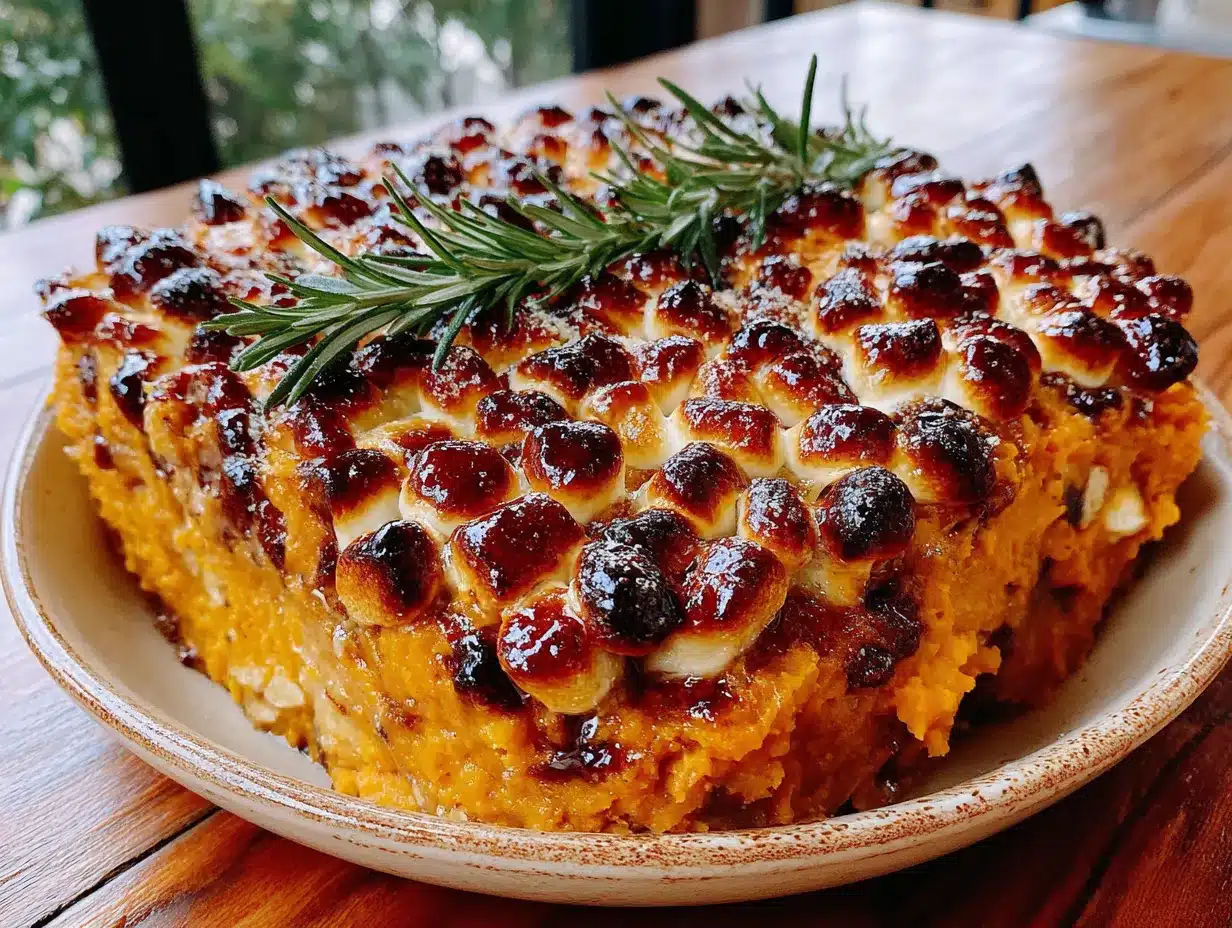
- Preheat your oven to 400°F (200°C). While it’s heating, scrub your sweet potatoes clean. No need to peel them yet—we’ll do that after roasting when the skins slip right off. Cut each potato in half lengthwise. Place them cut-side down on a parchment-lined baking sheet. Roast for 40-50 minutes, until a knife slides through the thickest part with zero resistance. The skins will look slightly wrinkled and the edges will be caramelized. That’s exactly what you want.
- Let the potatoes cool until you can handle them. This takes about 10 minutes. Don’t rush it—you will burn your fingers. I speak from experience. Once they’re cool enough, peel the skins off. They should come off in big, satisfying strips. Discard the skins and transfer the flesh to a large mixing bowl or food processor.
- Process or mash the sweet potatoes until smooth. If using a food processor, pulse in short bursts. Over-processing can make them gummy. You want a creamy, uniform texture with no stringy bits. If mashing by hand, really work at it until there are no lumps. This is where you’ll notice how much drier and fluffier roasted potatoes are compared to boiled ones—it’s a game changer.
- Add the wet ingredients. To the smooth sweet potatoes, add the maple syrup, melted coconut oil, eggs, vanilla extract, salt, cinnamon, and nutmeg. If using a food processor, pulse just until combined. If mashing by hand, stir vigorously with a wooden spoon. The mixture should be thick, glossy, and smell like autumn.
- Prepare the topping. In a medium bowl, combine the chopped pecans, rolled oats, coconut sugar, and cinnamon. Pour in the melted coconut oil and stir until everything is evenly coated. The mixture should look clumpy and crumbly—like wet sand. Set it aside.
- Assemble the casserole. Spread the sweet potato mixture evenly into your greased 9×13 baking dish. Smooth the top with a spatula. Sprinkle the pecan-oat topping evenly over the surface. Don’t press it down—let it sit loosely so it gets crunchy.
- Bake or refrigerate. If baking immediately, place the dish in the oven (still at 400°F) and bake for 25-30 minutes, until the topping is golden brown and the edges are bubbly. If making ahead, cover the dish tightly with foil and refrigerate for up to 2 days. When ready to bake, add about 10 minutes to the cooking time since you’re starting from cold.
- Let it rest. Once out of the oven, let the casserole sit for 5-10 minutes before serving. This helps it set up so you get clean slices instead of a soupy mess. The topping will also crisp up more as it cools slightly.
Cooking Tips & Techniques
I’ve made this recipe enough times to know exactly where things can go sideways. Here’s what I’ve learned the hard way so you don’t have to.
Roast, don’t boil. This is the single most important tip. Boiling sweet potatoes makes them waterlogged. You end up adding extra sugar and fat just to make them taste like something. Roasting concentrates their natural sugars and gives you a much creamier texture with less added sweetness. Trust the process—it’s worth the extra 20 minutes.
Don’t over-process the potatoes. I made this mistake the first time I used a food processor. I let it run for a full minute, thinking smoother was better. What I got was a gluey, almost gummy texture that was unpleasant. Pulse in short bursts, and stop as soon as it’s smooth. A few tiny lumps are fine—they add character.
Toast your pecans. This takes 3 minutes in a dry skillet and makes a world of difference. Raw pecans are fine, but toasted ones have that deep, nutty flavor that makes the topping irresistible. Just watch them closely—they go from toasty to burnt in about 30 seconds.
Room temperature eggs matter. Cold eggs can cause the coconut oil to seize up and create little lumps in your mixture. If you forgot to take them out of the fridge, place them in a bowl of warm water for 5 minutes. Problem solved.
Make it truly ahead. The beauty of this recipe is that it actually gets better after a day in the fridge. The flavors meld together, the texture firms up, and the topping stays crunchy if you don’t cover it too tightly. I’ve made it two days before Thanksgiving and it was the star of the table.
Watch the topping. If you’re reheating a refrigerated casserole, check the topping after 20 minutes. If it’s browning too fast, tent it loosely with foil for the remaining cook time. Every oven runs differently, and you don’t want a burnt crust.
Variations & Adaptations
This recipe is flexible, and I love hearing how people make it their own. Here are a few variations I’ve tried or heard about from readers.
Vegan Version: Replace the eggs with flax eggs (1 tablespoon ground flaxseed mixed with 3 tablespoons water per egg, let sit for 5 minutes). Use maple syrup as written and coconut oil instead of butter. The texture will be slightly less custard-like but still delicious. I tested this for a vegan friend and honestly, I couldn’t tell the difference.
Nut-Free Topping: If you’re cooking for someone with nut allergies, skip the pecans and double the oats. Add 1/4 cup of sunflower seeds for crunch if you want. The topping won’t be as rich, but it’ll still be satisfyingly crunchy.
Spiced-Up Version: Add 1/4 teaspoon of cayenne pepper or smoked paprika to the sweet potato mixture. The heat plays beautifully against the sweetness and makes the dish feel more sophisticated. I did this for a dinner party once and everyone kept asking “what’s that secret ingredient?”
Lower-Carb Option: Swap half the sweet potatoes for cauliflower. Roast the cauliflower alongside the potatoes, then mash them together. It sounds weird, but the cauliflower takes on the flavors of the spices and maple syrup so well that no one notices. I tested this on my skeptical brother and he ate three servings.
Individual Servings: Instead of a 9×13 dish, spoon the mixture into ramekins or a muffin tin. Reduce the baking time to 15-18 minutes. These are perfect for portion control or for making the dish feel extra special at a dinner party.
Serving & Storage Suggestions
This casserole is best served warm, straight from the oven, with the topping still crisp and the sweet potato layer creamy and hot. Let it rest for 5 minutes after baking so it sets up properly—this makes serving much cleaner.
It pairs beautifully with roasted turkey or chicken, but honestly, I’ve served it alongside a simple green salad and crusty bread for a vegetarian dinner that felt completely satisfying. It also works as a surprisingly good breakfast leftover—just saying.
Storage: Leftovers keep in the refrigerator for up to 5 days in an airtight container. The topping will soften over time, but the flavor only gets better. To reheat, pop individual portions in the microwave for 1-2 minutes, or reheat the whole dish in a 350°F oven for 15-20 minutes. If you want to restore some crunch to the topping, broil it for 2-3 minutes at the end—watch it closely so it doesn’t burn.
Freezing: This casserole freezes beautifully. Assemble it completely but don’t bake it. Wrap the dish tightly in plastic wrap, then foil, and freeze for up to 3 months. When ready to use, thaw in the refrigerator overnight, then bake as directed, adding 10-15 minutes to the cooking time. I’ve done this twice and it worked perfectly both times.
The flavors actually deepen after a day or two in the fridge. So if you’re making this for a big meal, don’t stress about doing it at the last minute. Make it ahead, let it hang out, and enjoy the fact that you’ve already checked one dish off your list.
Nutritional Information & Benefits
Here’s the estimated nutrition for one serving (based on 8 servings):
| Nutrient | Amount per Serving |
|---|---|
| Calories | 285 |
| Total Fat | 14g |
| Saturated Fat | 8g |
| Carbohydrates | 38g |
| Fiber | 6g |
| Sugar | 14g |
| Protein | 5g |
| Vitamin A | 380% DV |
| Vitamin C | 30% DV |
Sweet potatoes are packed with beta-carotene, which your body converts to vitamin A. They’re also a great source of fiber, which helps keep you full and supports healthy digestion. The coconut oil provides medium-chain triglycerides (MCTs) that are easily metabolized for energy. And the pecans add healthy fats and a little protein to round things out.
Compared to traditional sweet potato casseroles that can clock in at 400+ calories and 30+ grams of sugar per serving, this version is a serious upgrade. It’s not a health food—it’s a holiday side dish that happens to make you feel good about eating it.
Conclusion
This lighter make-ahead sweet potato casserole is proof that you don’t have to choose between nostalgia and eating well. It’s got all the warmth and comfort of the classic dish, but it’s made with real ingredients and a technique that lets the sweet potatoes shine instead of drowning them in sugar.
I love that I can make this two days ahead and actually enjoy the holiday instead of being stuck in the kitchen. I love that my kids eat it without complaint. And I love that it makes me feel good—not just because it tastes amazing, but because I know exactly what’s in it.
If you try this recipe, I’d love to hear how it goes. Did you make any substitutions? Did you serve it at a big gathering or just for a cozy weeknight dinner? Drop a comment below and let me know. And if you’re looking for more sides that don’t sacrifice flavor for health, you might also enjoy my lightened-up green bean casserole or these maple rosemary roasted carrots.
Happy cooking, and here’s to making memories that actually taste as good as you remember them.
Frequently Asked Questions
Can I use canned sweet potatoes instead of fresh?
You can, but the texture and flavor won’t be as good. Canned sweet potatoes are packed in syrup and have a much softer, almost mushy texture. If you’re in a pinch, drain them well and reduce the maple syrup to 1 tablespoon. But honestly, roasting fresh potatoes is worth the extra 40 minutes.
Can I make this dairy-free?
Yes! This recipe is naturally dairy-free if you use coconut oil instead of butter. The coconut oil in both the base and the topping works beautifully and doesn’t taste like coconut at all. Just make sure your oats are certified gluten-free if that’s also a concern.
How far ahead can I make this?
You can assemble the casserole up to 2 days in advance and keep it covered in the refrigerator. You can also freeze it for up to 3 months. Just thaw overnight in the fridge before baking. The topping might lose a little crunch, but the flavor will be just as good.
Can I use a different sweetener?
Absolutely. Honey, agave, or even brown sugar all work. Just keep in mind that each sweetener has a different level of sweetness. Honey is sweeter than maple syrup, so you might want to use a little less. Brown sugar will give you a deeper, molasses-like flavor.
Why did my topping turn out soggy?
This usually happens if the casserole is covered while baking or if the topping is pressed down too firmly. Make sure you’re not covering the dish during the bake time, and let the topping sit loosely on top. If you’re reheating leftovers, pop them under the broiler for a minute or two to re-crisp the topping.
Pin This Recipe!
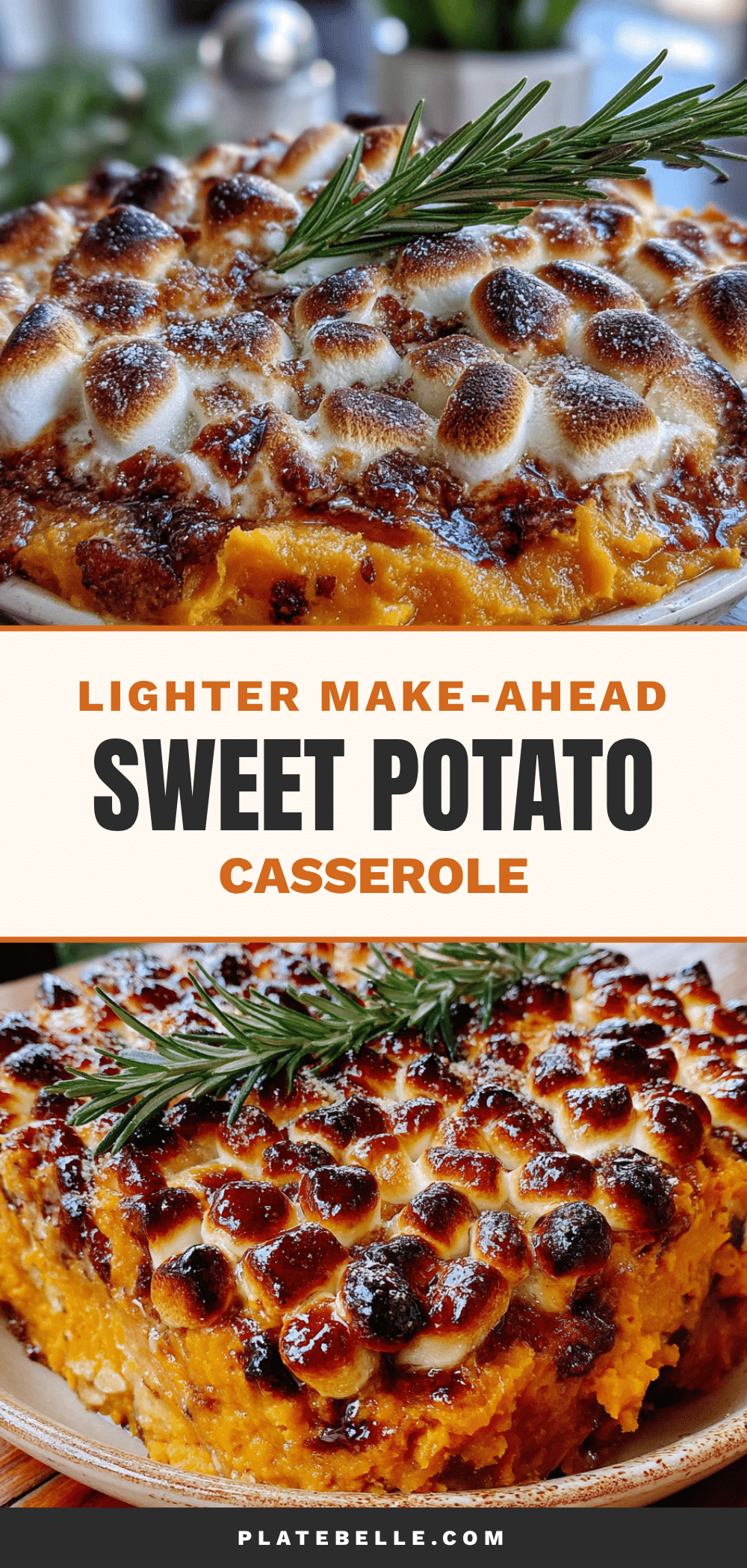
Easy Lighter Make-Ahead Sweet Potato Casserole

A lighter, make-ahead sweet potato casserole that delivers classic creamy-sweet-crunchy comfort without the heavy, over-processed feeling. Roasted sweet potatoes are combined with maple syrup, coconut oil, and warm spices, then topped with a crunchy pecan-oat streusel.
- Prep Time: 20 minutes
- Cook Time: 40 minutes
- Total Time: 1 hour
- Yield: 8 servings 1x
- Category: Side Dish
- Cuisine: American
Ingredients
- 3 pounds sweet potatoes (about 4 medium), scrubbed
- 3 tablespoons pure maple syrup
- 2 tablespoons coconut oil, melted
- 2 large eggs, room temperature
- 1 teaspoon vanilla extract
- 1/2 teaspoon fine sea salt
- 1 teaspoon ground cinnamon
- 1/4 teaspoon freshly grated nutmeg
- 1 cup pecans, chopped and lightly toasted
- 1/2 cup rolled oats
- 3 tablespoons coconut sugar
- 2 tablespoons coconut oil, melted (for topping)
- 1/2 teaspoon ground cinnamon (for topping)
Instructions
- Preheat oven to 400°F (200°C). Scrub sweet potatoes, cut each in half lengthwise, and place cut-side down on a parchment-lined baking sheet. Roast for 40-50 minutes until a knife slides through the thickest part with no resistance.
- Let potatoes cool for about 10 minutes until handleable. Peel off skins (they should come off easily) and transfer flesh to a large mixing bowl or food processor.
- Process or mash sweet potatoes until smooth. If using a food processor, pulse in short bursts to avoid gumminess. If mashing by hand, work until no lumps remain.
- Add maple syrup, melted coconut oil, eggs, vanilla extract, salt, cinnamon, and nutmeg to the sweet potatoes. Pulse or stir until just combined. Mixture should be thick, glossy, and fragrant.
- In a medium bowl, combine chopped pecans, rolled oats, coconut sugar, and 1/2 teaspoon cinnamon. Pour in melted coconut oil and stir until evenly coated and clumpy.
- Spread sweet potato mixture evenly into a greased 9×13-inch baking dish. Sprinkle pecan-oat topping evenly over the surface without pressing down.
- If baking immediately, place dish in the 400°F oven and bake for 25-30 minutes until topping is golden brown and edges are bubbly. If making ahead, cover tightly with foil and refrigerate for up to 2 days; add about 10 minutes to bake time when starting from cold.
- Let casserole rest for 5-10 minutes before serving to allow it to set and the topping to crisp.
Notes
Roasting sweet potatoes instead of boiling concentrates their natural sweetness and prevents waterlogging. Do not over-process the potatoes to avoid a gluey texture. Toast pecans in a dry skillet for 3 minutes for deeper flavor. Room temperature eggs prevent coconut oil from seizing. The casserole can be assembled up to 2 days ahead and refrigerated, or frozen for up to 3 months. For a vegan version, replace eggs with flax eggs. For a nut-free topping, double the oats and add sunflower seeds.
Nutrition
- Serving Size: 1 serving (1/8 of ca
- Calories: 285
- Sugar: 14
- Sodium: 200
- Fat: 14
- Saturated Fat: 8
- Carbohydrates: 38
- Fiber: 6
- Protein: 5
Keywords: sweet potato casserole, lighter, make-ahead, holiday, Thanksgiving, healthy, dairy-free option, gluten-free option