My kitchen counter looks like a crime scene. Peach juice everywhere, orange pulp under my fingernails, and I’m standing here licking a spoon that just about burned my tongue off. Honestly, I’m not even mad. The second spoonful confirms it—this is exactly what I wanted. I wanted a hot sauce that tastes like summer but bites back like late summer, when the heat is real and the peaches are so ripe they bruise if you look at them wrong. I had everything except the patience to make a giant batch.
This is the thing about small-batch canning. You don’t need a pantry full of jars or a water bath setup that takes over your stove for an afternoon. You need maybe four peaches, a handful of habaneros, and an hour where nobody’s asking you for anything. I started making hot sauce this way two summers ago after I bought way too many peaches at the farmers market and got tired of eating them over yogurt. The first batch was too sweet. The second batch was basically pepper spray. But the third batch—the one where I finally stopped guessing and started paying attention—that one worked.
It’s a small-batch habanero peach hot sauce that walks the line between sweet and spicy without falling off on either side. The fruit does the heavy lifting on flavor. The peppers do the talking on heat. And the vinegar ties it all together so it actually tastes like something you’d put on tacos, not something you’d dare your friends to try. I’ve been making this same formula for two years now and I still get excited every time I open a jar. That’s how you know a recipe is worth keeping.
Why You’ll Love This Recipe
Let me tell you what this hot sauce does that other recipes don’t. I’ve tested versions with added sugar, versions with ginger, versions that tried to be too fancy. This one strips it back to what actually matters—fruit, heat, acid, and salt. Nothing more, nothing less. And it works every single time.
- Small-Batch Friendly : This recipe makes about three half-pint jars. No huge pots of boiling water, no processing dozens of jars. Perfect for when you want homemade hot sauce without the all-day commitment.
- Customizable Heat Level : You control how much fire ends up in the bottle. Leave the seeds in for maximum heat, remove them for a milder kick. I’ve made versions both ways and they’re completely different animals.
- Pantry Ingredients : Besides fresh peaches and habaneros, everything else is probably in your kitchen right now. Vinegar, salt, garlic, maybe a little honey. That’s it.
- Water Bath Stable : This sauce is designed for proper small-batch canning. Process the jars and they’ll sit happily in your pantry for up to a year. No refrigeration required until you open one.
- Unbelievably Versatile : I put this stuff on everything. Tacos, eggs, grilled chicken, roasted vegetables, even stirred into mayo for a quick spicy aioli. It’s not a one-trick condiment.
What makes this recipe different from the dozens of peach hot sauces you’ll find online is the balance. Most recipes lean too sweet or too vinegary. This one lands right in the middle because I spent way too many batches figuring out the exact ratio of fruit to pepper to acid. The peaches provide natural sweetness without needing extra sugar. The habaneros bring fruity heat, not just burn. And the vinegar brightens everything without making it taste like pickled fruit. It’s the kind of sauce that makes you close your eyes after the first taste because it just works.
I’m not a chef. I’m not a trained canning expert. I’m just someone who got tired of buying mediocre hot sauce and decided to figure it out at home. This recipe comes from trial and error, from batches that went down the drain and batches that got devoured in a week. It’s tested, it’s trusted, and it’s exactly what I wish I’d found when I started making hot sauce two years ago.
What Ingredients You Will Need
This recipe uses simple, whole ingredients to deliver big flavor without any weird additives or preservatives. The magic happens when ripe summer fruit meets fiery peppers and a splash of vinegar—that’s the whole formula. Here’s what you’ll need to gather before you start.
For the Hot Sauce Base
- Ripe peaches (about 1 pound or 4 medium peaches) — You want them soft and fragrant, not rock-hard. Underripe peaches won’t give you enough sweetness or that velvety texture. I prefer Freestone peaches for easier pitting, but any variety works. If peaches aren’t in season, frozen unsweetened peach slices work surprisingly well here.
- Habanero peppers (4 to 6 medium peppers) — This is where the heat lives. Orange habaneros are my go-to for their fruity, almost floral heat. Red habaneros are slightly hotter. Scotch bonnets work too if that’s what you can find. Wear gloves when handling these. I learned that lesson the hard way after rubbing my eye an hour after chopping peppers.
- White vinegar (5% acidity, 1/2 cup) — Use standard white vinegar for the cleanest flavor. Apple cider vinegar works but changes the final taste. I tested both and prefer white vinegar because it lets the peach and pepper flavors shine without competing.
- Fresh garlic (3 to 4 cloves) — Adds savory depth that balances the sweetness and heat. Don’t skip this. Roasted garlic works beautifully too if you have it on hand.
- Honey or agave (1 to 2 tablespoons) — Optional, but helpful if your peaches aren’t super sweet. I add honey about half the time, depending on the fruit. Local honey adds a nice floral note.
- Salt (1 teaspoon) — Don’t skimp on salt. It brightens the fruit and mellows the heat. I use fine sea salt for even distribution.
For Canning (if processing for shelf stability)
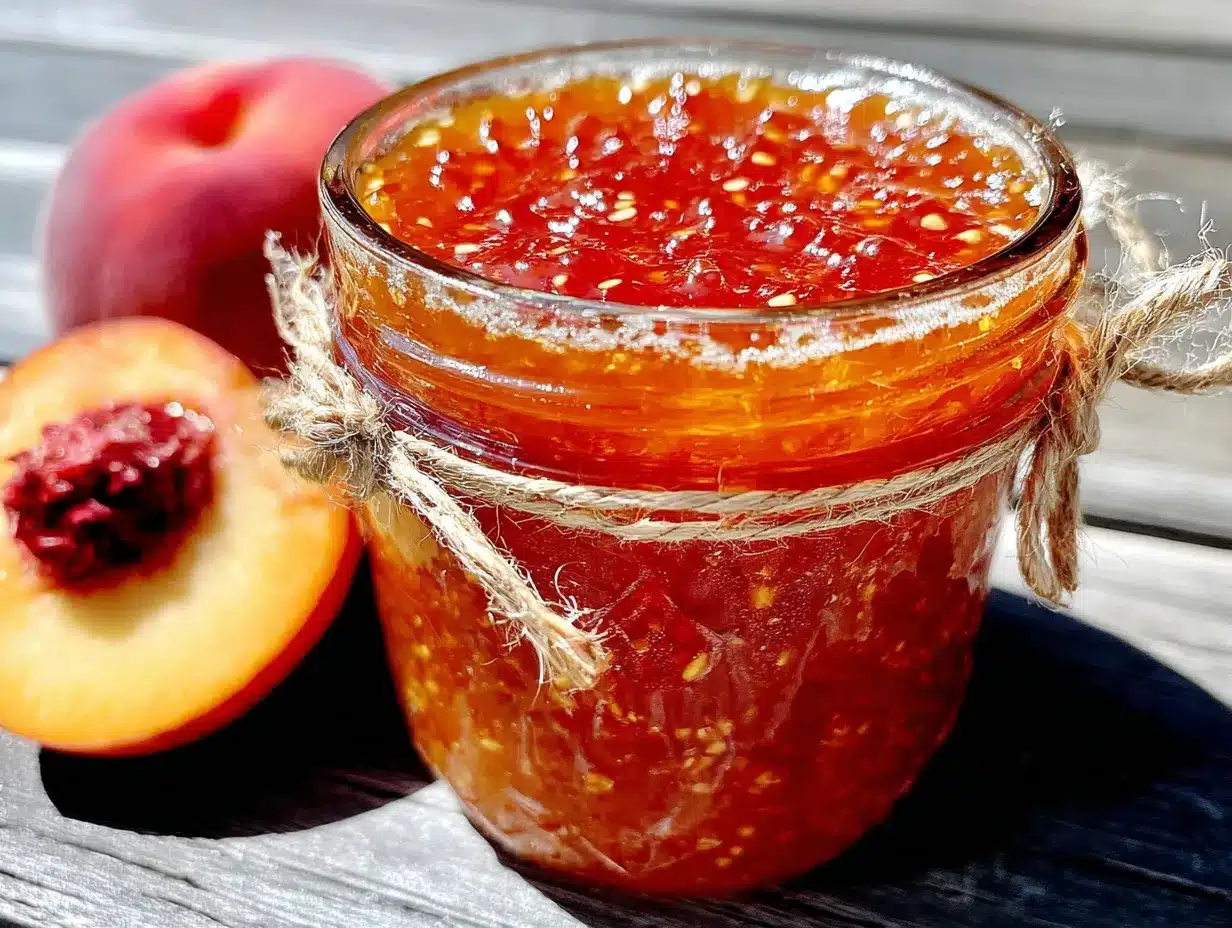
- Half-pint canning jars (3 jars) — Wide mouth is easier to fill. Make sure they’re clean and free of cracks or nicks.
- New lids and bands — Always use fresh lids for proper sealing. Bands can be reused as long as they’re not rusty.
- Water bath canner or large stockpot — Needs to be deep enough to cover jars with at least 1 inch of water.
I recommend using Ball or Kerr jars for canning—they’ve never let me down. If you’re not planning to water bath process, you can store the sauce in any clean bottle or jar in the fridge for up to 3 months. The flavor actually gets better after a week or two as everything melds together.
Equipment Needed
You don’t need a professional kitchen to make this sauce. Most of these tools are probably already in your kitchen drawers. Here’s what you’ll want to have ready before you start.
- Chef’s knife and cutting board — A sharp knife makes quick work of peaches and peppers. Dull knives are dangerous when you’re dealing with slippery fruit and small peppers.
- Medium saucepan (2 to 3 quart) — For simmering the fruit and peppers together. Stainless steel or enameled cast iron works best. Avoid uncoated aluminum—the acidity can react with the metal.
- Immersion blender or countertop blender — An immersion blender is easier for blending hot liquids right in the pot. If using a countertop blender, let the mixture cool slightly first and never fill the blender more than halfway with hot liquid.
- Fine-mesh strainer or food mill — Optional, but useful if you want an extra-smooth sauce without any fibrous bits. I strain about half the time, depending on my mood.
- Canning tools — Jar lifter, magnetic lid wand, and a wide-mouth funnel make the canning process much easier. Not strictly necessary if you’re careful, but they save you from burned fingers.
- Clean kitchen towels — For drying jars and catching inevitable spills. You will spill something. Accept it now.
If you don’t own a water bath canner, any large stockpot with a rack in the bottom works fine. I used a spaghetti pot with a steamer basket for my first two years of canning. It’s not fancy, but it gets the job done.
Preparation Method
This hot sauce comes together faster than you’d expect. The actual hands-on time is about 30 minutes. The rest is simmering and processing. Here’s how to do it without stressing yourself out.
Step 1: Prepare Your Peaches
Bring a small pot of water to a boil. Score an X on the bottom of each peach with a sharp knife. Drop them into the boiling water for 30 to 45 seconds, then transfer them to a bowl of ice water. The skins should slip right off. Peel the peaches, cut them in half, remove the pits, and roughly chop the flesh into chunks. You should end up with about 2 cups of chopped peaches. Don’t worry about perfect cubes—everything gets blended anyway.
Step 2: Handle the Habaneros
Put on disposable gloves. I cannot stress this enough. Slice the habaneros in half lengthwise. For a milder sauce, remove the seeds and white membranes with a small knife. For full heat, leave everything intact. Roughly chop the peppers into small pieces. Remove your gloves carefully and wash your hands with soap afterward. Don’t touch your face until you’ve washed at least twice.
Step 3: Build the Flavor Base
In your medium saucepan, combine the chopped peaches, habaneros, garlic cloves, and white vinegar. Add the salt and honey if you’re using it. Stir everything together. The liquid won’t cover the fruit completely at this point—that’s normal. The peaches will release more juice as they cook.
Step 4: Simmer Until Soft
Bring the mixture to a gentle boil over medium heat, then reduce to a simmer. Cook for 15 to 20 minutes, stirring occasionally, until the peaches are completely soft and falling apart. The peppers should be tender too. Your kitchen will smell incredible at this point—like spicy, fruity, vinegary heaven. If the mixture looks too thick, add a tablespoon of water at a time until it reaches a consistency you like.
Step 5: Blend Until Smooth
Remove the pot from heat. Let it cool for 5 minutes so you don’t splatter hot liquid everywhere. Use an immersion blender directly in the pot to puree the mixture until completely smooth. If using a countertop blender, work in batches and hold the lid down with a towel. Blend for 30 to 60 seconds until the sauce is silky and uniform. Taste it now. This is your chance to adjust. Need more heat? Add another habanero and blend again. Too spicy? Stir in a little more honey or another peach. Too thick? Add a splash of vinegar or water.
Step 6: Strain (Optional)
If you want an ultra-smooth sauce without any fibrous bits, pour the blended mixture through a fine-mesh strainer into a clean bowl or pot. Press on the solids with a spatula to extract as much liquid as possible. I only do this when I’m feeling fancy. Most of the time I leave it rustic and it’s perfectly delicious.
Step 7: Return to a Simmer
Pour the blended sauce back into the saucepan and bring it to a gentle simmer. Cook for 2 to 3 more minutes, stirring constantly. This step ensures the sauce is hot enough for safe canning. If you’re refrigerating instead of canning, you can skip this step and let the sauce cool before bottling.
Step 8: Fill the Jars
If you’re water bath canning, sterilize your jars by boiling them for 10 minutes. Keep them hot until you’re ready to fill. Using your canning funnel, ladle the hot sauce into the jars, leaving 1/4 inch headspace. Run a clean chopstick or bubble remover tool around the inside of each jar to release any trapped air. Wipe the rims clean with a damp paper towel—any residue can prevent a proper seal. Center the lids and screw on the bands until fingertip-tight.
Step 9: Process in Water Bath
Place the filled jars in your water bath canner. Make sure they’re covered by at least 1 inch of water. Bring to a full rolling boil and process for 15 minutes (adjust for altitude if needed—add 5 minutes for 3,000 to 6,000 feet). Turn off the heat, remove the lid, and let the jars sit in the water for 5 minutes. Then use your jar lifter to transfer them to a towel-lined counter. Don’t tighten the bands. Let them cool undisturbed for 12 to 24 hours.
Step 10: Check the Seals
After the jars have cooled, press down on the center of each lid. If it doesn’t flex or pop, the jar is sealed. Remove the bands and try to lift the jar by the lid—if it holds, you’re good. Store sealed jars in a cool, dark pantry for up to 12 months. Refrigerate any jars that didn’t seal and use them within 3 months.
Cooking Tips & Techniques
After making this sauce more times than I can count, I’ve picked up a few tricks that make the process smoother and the final product better. Here’s what I wish someone had told me before my first batch.
Wear gloves and don’t skip it. I know I’ve said this already, but it bears repeating. Habanero oils linger on your skin for hours. You’ll forget about them until you rub your eye or touch something sensitive. I made the mistake once of not wearing gloves and then taking out my contact lenses. I don’t recommend it.
Taste as you go. The flavor changes dramatically during cooking. What tastes overly acidic at the beginning will mellow out after simmering. What seems mild will intensify as the sauce reduces. Taste at the blending stage and again before bottling. Trust your palate more than the recipe.
Don’t over-process the jars. Fifteen minutes at a rolling boil is plenty for half-pint jars. Over-processing can make the sauce darker and cook out some of the bright fruit flavor. Set a timer and stick to it.
Let the sauce rest before judging. Freshly made hot sauce is a liar. It tastes different after a week in the jar. The heat mellows, the sweetness deepens, and everything comes together. If your sauce tastes too sharp right after making it, give it time. I’ve had batches I almost threw away that turned into my favorites after a month on the shelf.
Label your jars. I know you think you’ll remember what’s in each jar and when you made it. You won’t. I have a shelf full of unlabeled jars from two summers ago and I have no idea which is which. Write the date and the heat level on each lid with a permanent marker.
Variations & Adaptations
This recipe is a starting point, not a rule book. Here are some ways I’ve adapted it over the years depending on what I had on hand or what I was craving.
Mango Habanero Hot Sauce — Swap the peaches for equal weight of ripe mangoes. The flavor is more tropical and slightly less sweet. I made this version last winter when peaches were out of season and it was a hit. The texture is silkier than the peach version because mangoes break down more completely.
Smoky Peach Hot Sauce — Grill the peaches and habaneros before simmering them. Cut the peaches in half, remove the pits, and grill cut-side down over medium heat for 3 to 4 minutes until char marks appear. Grill the whole habaneros for 2 to 3 minutes per side until blistered. The smoky flavor adds incredible depth and pairs beautifully with the sweet fruit. This version is amazing on grilled peach flatbread with gorgonzola.
Low-Sugar Version — If you’re watching your sugar intake, use slightly underripe peaches and skip the honey. Add an extra tablespoon of vinegar to balance the acidity. The sauce will be tarter and less sweet, but still delicious. I’ve made this for friends who are diabetic and they loved it.
Extra Garlic Lover’s Version — Double the garlic. Roast the cloves first by wrapping them in foil and baking at 400°F for 20 minutes until soft and golden. The roasted garlic adds a sweet, nutty flavor that complements the peaches beautifully. This is my personal favorite variation.
Thicker Sauce Version — Simmer the blended sauce for an extra 10 to 15 minutes to reduce it further. The result is more like a hot sauce paste or glaze. It’s perfect for brushing onto grilled meats or spreading on sandwiches. I used this thicker version as a glaze for grilled chicken thighs last week and it was incredible.
Serving & Storage Suggestions
This hot sauce is more versatile than you might think. Here’s how I use it and how to keep it at its best.
Serving temperature — Serve at room temperature or slightly chilled. The flavors open up when the sauce isn’t ice cold. I usually take a jar out of the fridge about 15 minutes before I plan to use it.
What to put it on — Tacos are the obvious answer, and they’re a great one. But don’t stop there. Drizzle it over eggs, stir it into soups, brush it onto grilled chicken or fish, mix it into mayonnaise for a quick spicy aioli, or use it as a dipping sauce for crispy parmesan zucchini fritters. I’ve even used it as a pizza topping—just a few drops before serving.
Pairing suggestions — This sauce loves fatty, rich foods. Try it on grilled pork chops, roasted salmon, or creamy scrambled eggs. It also cuts through the richness of cheese beautifully. A few drops on a grilled cheese sandwich takes it to another level.
Refrigerator storage — Once opened, keep the jar in the refrigerator. The sauce will stay good for 3 to 4 months. The flavor actually improves after the first week as the ingredients meld together. If you see any mold or off smells, toss it. But I’ve never had that happen.
Freezer storage — This sauce freezes beautifully. Pour it into ice cube trays, freeze until solid, then pop the cubes into a freezer bag. Each cube is about 2 tablespoons. Thaw in the refrigerator overnight or add frozen cubes directly to soups and stews.
Pantry storage (sealed jars) — Properly processed jars will keep in a cool, dark pantry for up to 12 months. The color may darken slightly over time, but the flavor remains bright and delicious. I always save a jar from the summer batch to open in the middle of winter—it’s like a little taste of sunshine.
Nutritional Information & Benefits
This hot sauce is naturally low in calories and free from artificial ingredients. Here’s a rough breakdown per tablespoon serving.
| Nutrient | Amount per Serving (1 tbsp) |
|---|---|
| Calories | 10 |
| Total Fat | 0g |
| Sodium | 95mg |
| Total Carbohydrates | 2g |
| Dietary Fiber | 0g |
| Sugars | 1.5g |
| Protein | 0g |
The health benefits here come from the ingredients themselves. Peaches are rich in vitamin C and antioxidants, particularly beta-carotene which gives them that beautiful orange color. Habaneros contain capsaicin, the compound responsible for their heat, which has been linked to improved metabolism and reduced inflammation. Garlic is known for its immune-supporting properties. And vinegar has been shown to help with blood sugar regulation.
This sauce is naturally gluten-free, dairy-free, vegan, and contains no added preservatives. The only potential allergen concern is the peaches themselves for those with stone fruit allergies. If you’re watching your sodium intake, you can reduce or omit the salt, though it does help with preservation and flavor balance.
I’m not a nutritionist, and I don’t pretend to be one. But I do believe that making your own condiments at home means you know exactly what’s going into your body. No hidden sugars, no artificial colors, no preservatives you can’t pronounce. Just real food that happens to taste amazing.
Conclusion
This small-batch habanero peach hot sauce has become a staple in my kitchen for good reason. It’s simple enough to make on a weekday afternoon but impressive enough to give as gifts during the holidays. It captures the best of summer in a jar and lets you enjoy it months later when the weather turns cold and you need a reminder of warmer days.
I love this recipe because it taught me that homemade condiments don’t have to be complicated. You don’t need a dozen ingredients or hours of hands-on time. You need good fruit, good peppers, and the willingness to taste and adjust until it tastes right to you. That’s the whole secret. The first time you open a jar you made yourself and drizzle it over something you cooked, you’ll understand why I keep coming back to this recipe year after year.
If you make this hot sauce—and I really hope you do—come back and tell me how it turned out. Did you add extra garlic? Leave the seeds in for more heat? Try it on something unexpected? I genuinely want to know. Drop a comment below or tag me in your photos. And if you’re looking for another way to use up summer peaches, try my brown sugar peach cobbler with buttermilk biscuit topping—it’s the perfect sweet counterpart to this spicy sauce.
Happy canning, friends. Your future self will thank you when you’re drizzling summer heat onto eggs in the middle of January.
Frequently Asked Questions
Can I use frozen peaches instead of fresh?
Absolutely. Frozen unsweetened peach slices work perfectly in this recipe. Thaw them first and drain off any excess liquid before cooking. Frozen peaches are often picked at peak ripeness, so they can actually be more flavorful than out-of-season fresh peaches.
How spicy is this hot sauce?
With 4 habaneros and the seeds left in, this sauce lands at a solid medium-high heat level. It’s hot enough to make your nose run but not so hot that you can’t taste the fruit. Removing the seeds and membranes drops the heat significantly to a mild-medium level. You can always add more heat, but you can’t take it away, so start conservatively.
Do I have to water bath can this recipe?
No. You can absolutely skip the canning process and just refrigerate the sauce. It will keep for 3 to 4 months in the fridge. Water bath canning is only necessary if you want shelf-stable jars that don’t need refrigeration. Both methods produce delicious sauce.
Why did my sauce separate in the jar?
Separation is completely normal and not a sign of spoilage. The solids naturally settle over time while the liquid rises to the top. Just shake the jar vigorously before each use to recombine everything. If you want a more stable emulsion, you can add a teaspoon of xanthan gum when blending, though I prefer the natural separation.
Can I use other types of peppers?
Yes. This recipe works well with other hot peppers. Jalapeños will give you a much milder sauce. Serranos land somewhere in the middle. Ghost peppers or Carolina Reapers will make it extremely hot—use those with caution and in smaller quantities. The cooking method stays the same regardless of which pepper you choose.
Pin This Recipe!
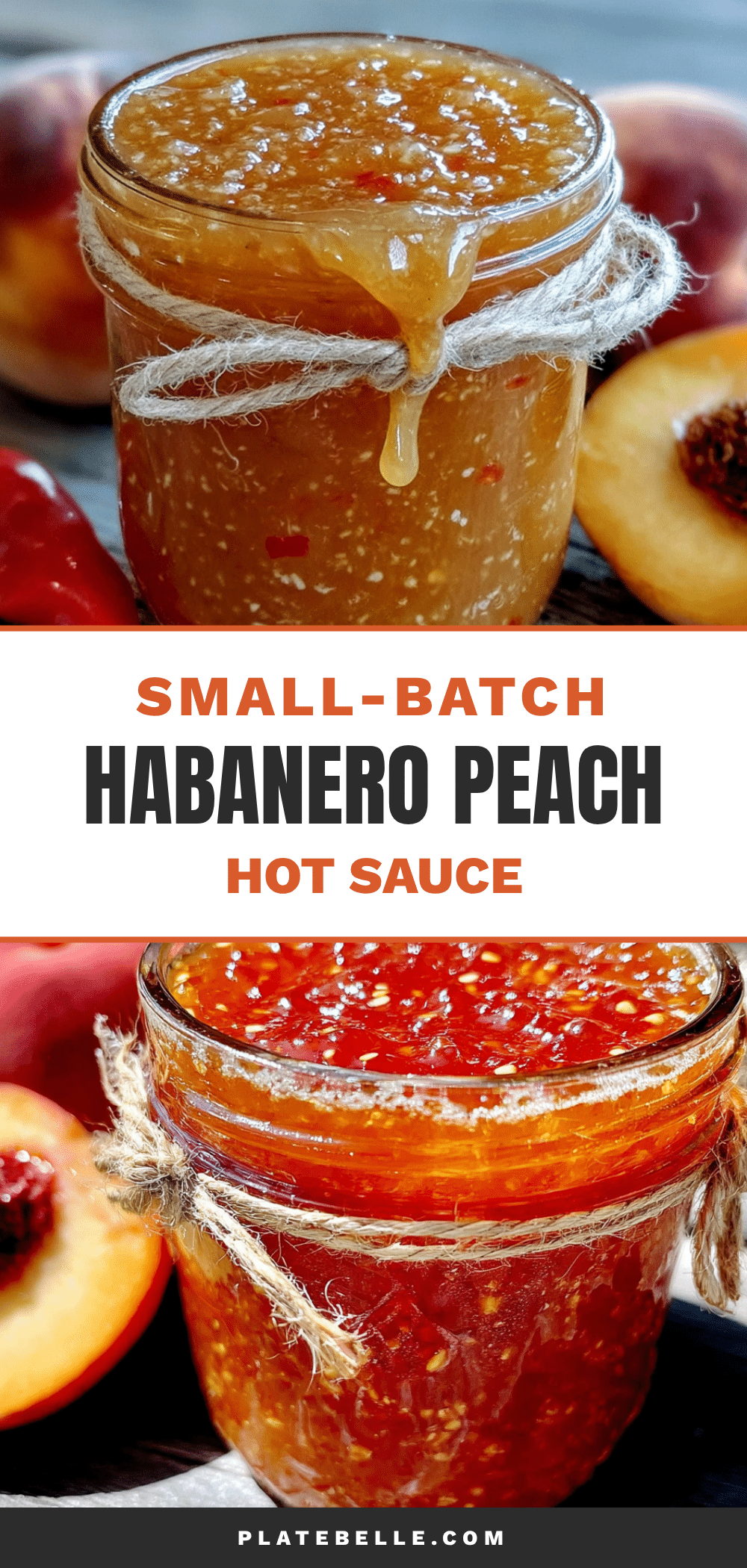
Easy Small-Batch Habanero Peach Hot Sauce Recipe
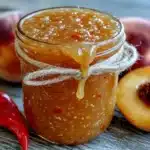
A small-batch habanero peach hot sauce that walks the line between sweet and spicy without falling off on either side. The fruit does the heavy lifting on flavor, the peppers do the talking on heat, and the vinegar ties it all together.
- Prep Time: 30 minutes
- Cook Time: 20 minutes
- Total Time: 50 minutes (plus cooling and processing time for canning)
- Yield: 3 half-pint jars (about 1.5 cups) 1x
- Category: Condiment
- Cuisine: American
Ingredients
- 1 pound ripe peaches (about 4 medium peaches), peeled, pitted, and chopped
- 4 to 6 habanero peppers, stemmed and chopped (seeds removed for milder heat)
- 1/2 cup white vinegar (5% acidity)
- 3 to 4 cloves fresh garlic, peeled
- 1 to 2 tablespoons honey or agave (optional, adjust to taste)
- 1 teaspoon fine sea salt
- For canning (optional): 3 half-pint canning jars with new lids and bands, water bath canner or large stockpot
Instructions
- Prepare the peaches: Bring a small pot of water to a boil. Score an X on the bottom of each peach. Blanch for 30-45 seconds, then transfer to ice water. Peel, halve, pit, and roughly chop. You should have about 2 cups.
- Handle the habaneros: Wearing gloves, slice peppers in half lengthwise. For milder sauce, remove seeds and membranes. Roughly chop.
- Build the flavor base: In a medium saucepan, combine chopped peaches, habaneros, garlic cloves, white vinegar, salt, and honey (if using). Stir.
- Simmer: Bring to a gentle boil over medium heat, then reduce to a simmer. Cook for 15-20 minutes, stirring occasionally, until peaches are soft and falling apart. Add water 1 tablespoon at a time if too thick.
- Blend: Remove from heat and let cool 5 minutes. Use an immersion blender to puree until smooth. Alternatively, blend in batches in a countertop blender (hold lid with a towel). Taste and adjust heat or sweetness.
- Strain (optional): For ultra-smooth sauce, pour through a fine-mesh strainer, pressing on solids.
- Return to a simmer: Pour blended sauce back into saucepan and bring to a gentle simmer for 2-3 minutes, stirring constantly.
- Fill jars (for canning): Sterilize jars by boiling 10 minutes. Using a funnel, ladle hot sauce into jars, leaving 1/4 inch headspace. Remove air bubbles, wipe rims, center lids, and screw bands fingertip-tight.
- Process in water bath: Place jars in canner, cover with at least 1 inch water. Bring to a rolling boil and process for 15 minutes (adjust for altitude). Turn off heat, let jars sit 5 minutes, then transfer to towel-lined counter. Cool undisturbed 12-24 hours.
- Check seals: Press center of each lid. If it doesn’t flex, jar is sealed. Store sealed jars in cool, dark pantry up to 12 months. Refrigerate unsealed jars and use within 3 months.
Notes
Wear gloves when handling habaneros. Taste as you go and adjust heat/sweetness. Let the sauce rest for a week before judging—flavors meld and improve. Label jars with date and heat level. For refrigerator storage only, skip water bath processing and store in clean bottles for up to 3 months.
Nutrition
- Serving Size: 1 tablespoon
- Calories: 10
- Sugar: 1.5
- Sodium: 95
- Carbohydrates: 2
Keywords: habanero peach hot sauce, small batch hot sauce, homemade hot sauce, peach hot sauce, canning recipe, spicy condiment