Lily wasn’t trying to impress anyone. I’d stopped by her place on a rainy Tuesday morning to pick up a book I’d loaned her months ago, and the smell hit me before I even got through the door. Ginger, warm and spicy, mixed with something sweet and coffee-dark. It smelled like Christmas had exploded in her tiny kitchen. She was standing there in her bathrobe, hair still wet from the shower, holding a mug like it was no big deal.
“Oh, that?” she said when I asked. “It’s just a gingerbread latte. I make them all the time.”
Just a gingerbread latte. She said it like it was nothing, like she hadn’t just created something that smelled better than any coffee shop I’d ever walked into. I stood there dripping on her welcome mat, and she handed me a mug without even asking if I wanted one. That’s the thing about Lily — she’s generous without making a production of it.
That first sip stopped me cold. It was smooth and rich, with just the right kick of ginger and molasses sweetness. No artificial syrup taste. No weird aftertaste. Just real, honest flavor that made me close my eyes for a second. Honestly, I think I embarrassed myself with how much I gushed about it.
“It’s really not hard,” she shrugged. “I just use real ingredients instead of that bottled stuff.”
And that was it. She went back to drying her hair, and I stood there drinking my second cup, trying to figure out exactly what she’d done. I pestered her for weeks until she finally wrote down the recipe on a napkin. That napkin is still taped inside my kitchen cabinet, splattered with coffee stains and a little torn at the edges.
Maybe you’ve been there — standing in someone’s kitchen, realizing that the best version of something you love was being made casually, without any fanfare. That’s this recipe. It’s not complicated. It doesn’t require special equipment or a barista certification. It just tastes like the real deal, because it is.
Why You’ll Love This Recipe
Let me tell you why this homemade gingerbread latte has become my go-to, and why I think it’ll become yours too. I’ve tested this recipe about a dozen times — tweaking the spice ratios, trying different milks, figuring out the perfect coffee temperature. What I landed on is something that genuinely rivals what you’d get at a certain green-aproned coffee chain, and it costs a fraction of the price.
- Quick & Easy: You can have this on your mug in under 10 minutes. No complicated steps, no special equipment. Just simple stove-top simmering and a quick whisk.
- Simple Ingredients: You probably already have most of these in your pantry. Ginger, cinnamon, molasses, vanilla — these are staples in any sensible kitchen. No need to hunt down obscure syrups or flavored extracts.
- Perfect for Family Mornings: This is the kind of treat that makes regular Tuesday mornings feel special. The kids can have a version with warm milk and extra whipped cream, while you get the real coffee kick. Everyone wins.
- Crowd-Pleaser: I’ve made this for holiday brunches, playdates, and even book club meetings. Every single time, someone asks for the recipe. It’s that good.
- Unbelievably Delicious: The combination of fresh ginger, warm spices, and rich molasses creates a depth of flavor that no bottled syrup can touch. It’s comfort in a mug.
What makes this different from every other gingerbread latte recipe out there? It’s the technique. Instead of relying on a store-bought syrup with a list of ingredients you can’t pronounce, we’re building the flavor from scratch with real ingredients. The ginger is fresh, not powdered. The molasses is dark and robust. And the coffee — well, you get to use whatever you actually like, instead of whatever the coffee chain decided to brew that day.
This isn’t just another copycat recipe. It’s the version I keep coming back to because it works every single time. It’s the kind of drink that makes you slow down and actually enjoy your morning, even if you only have five minutes before the school run.
What Ingredients You Will Need
This recipe uses simple, honest ingredients to deliver that deep, warming gingerbread flavor without any artificial nonsense. Most of these are pantry staples, which is exactly how I like to cook — or in this case, brew.
For the Gingerbread Syrup
- 1/2 cup water (filtered if you can, but tap works fine)
- 1/2 cup brown sugar, packed (light or dark both work; dark gives a deeper molasses flavor)
- 2 tablespoons molasses (use unsulphured blackstrap for the richest taste — I like Grandma’s brand)
- 1 tablespoon fresh ginger, peeled and thinly sliced (this is key — don’t use powdered here, the fresh stuff makes a real difference)
- 1 teaspoon ground cinnamon
- 1/2 teaspoon ground ginger
- 1/4 teaspoon ground cloves
- 1/4 teaspoon ground nutmeg (freshly grated if you have it)
- 1 teaspoon vanilla extract
For the Latte
- 1 to 2 shots espresso (about 2 ounces, or 1/2 cup strongly brewed coffee)
- 1 cup milk (whole milk gives the creamiest texture, but oat milk or almond milk work beautifully too)
- 2 to 3 tablespoons gingerbread syrup (adjust to your sweetness preference)
- Whipped cream, for topping (optional but highly recommended)
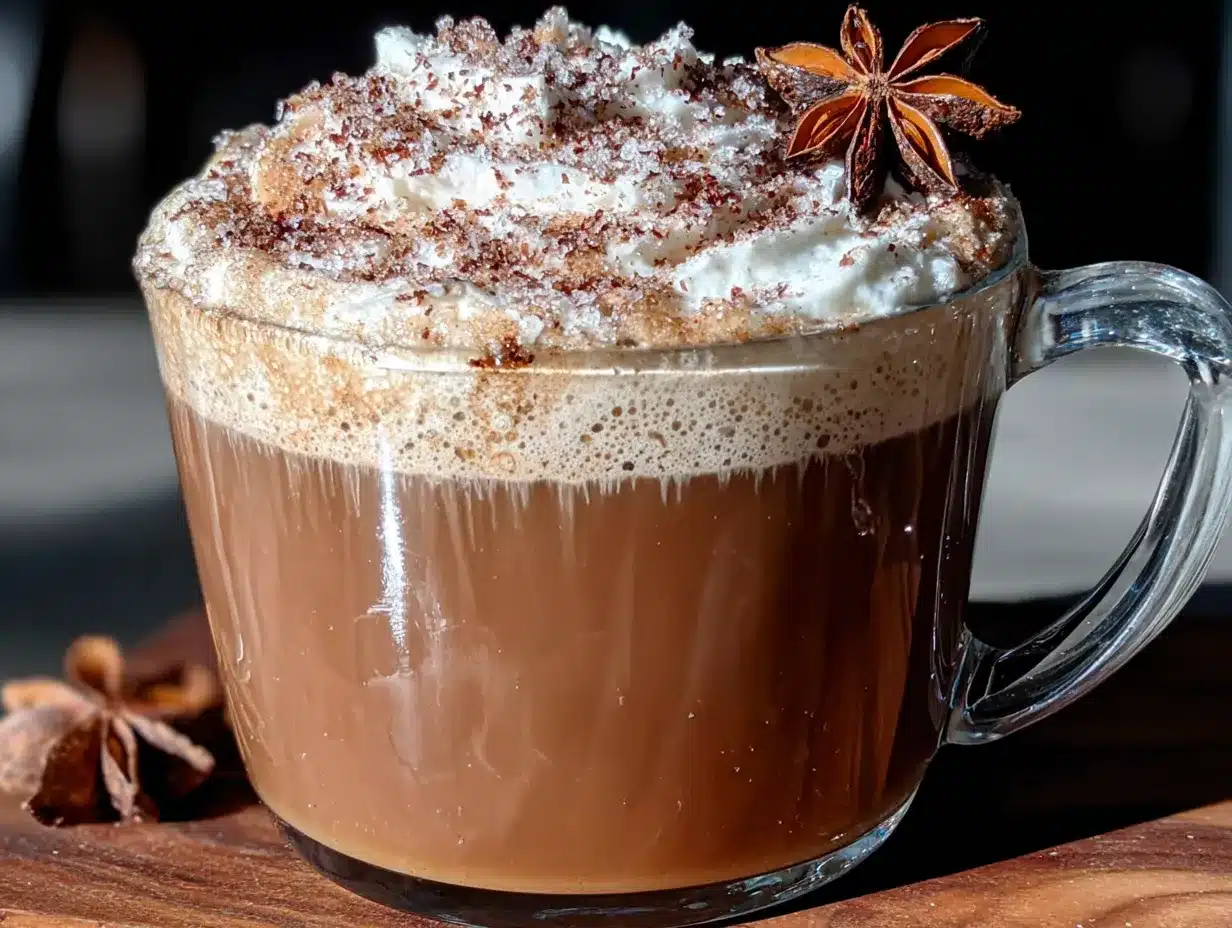
- Ground cinnamon or crushed gingerbread cookies, for garnish (because we’re fancy like that)
A quick note on the molasses — don’t skip it. I know it’s one of those ingredients that sits in the back of your pantry and only gets used once a year for gingerbread cookies, but it’s the backbone of this whole drink. If you try to substitute it with honey or maple syrup, you’ll lose that deep, almost smoky sweetness that makes gingerbread taste like gingerbread.
For the coffee, I recommend using a medium to dark roast. Something with chocolate or caramel notes works really well with the spices. I’ve been using a local roaster’s house blend, but honestly, whatever you have on hand will work. The syrup is strong enough to carry the flavor.
Equipment Needed
You don’t need a fancy espresso machine for this. I promise. Here’s what you’ll actually use:
- A small saucepan (1 to 2 quarts is perfect for making the syrup)
- A fine-mesh strainer (to strain out the ginger slices)
- A glass jar or bottle (for storing the syrup — a mason jar works great)
- A mug (your favorite one, obviously)
- A milk frother (optional, but I love my handheld one from IKEA — it was like $5 and makes the milk feel luxurious)
- A coffee maker, French press, or espresso machine (whatever you use to make your coffee)
If you don’t have a milk frother, don’t sweat it. You can heat the milk in the saucepan and whisk it vigorously, or shake it in a jar with the lid on. It won’t be as foamy, but it’ll still taste amazing. I actually went years without a frother and just used a fork — not ideal, but it got the job done.
Preparation Method
Alright, let’s make this happen. I’ve broken it down into two parts — the syrup and the latte itself. The syrup makes enough for about 4 to 6 lattes, so you can prep it once and enjoy it all week.
Make the Gingerbread Syrup
- In a small saucepan, combine the water, brown sugar, molasses, and fresh ginger slices. Stir everything together with a whisk or spoon.
- Place the saucepan over medium heat and bring the mixture to a gentle simmer. You’ll see small bubbles forming around the edges — that’s what we want. Don’t let it boil vigorously or the sugar might crystallize.
- Once it’s simmering, add the ground cinnamon, ground ginger, cloves, and nutmeg. Whisk until all the spices are fully incorporated and the sugar has completely dissolved. This should take about 2 to 3 minutes.
- Reduce the heat to low and let the syrup simmer gently for another 5 minutes. The kitchen will start smelling incredible at this point — that’s the fresh ginger releasing all its spicy goodness.
- Remove the saucepan from the heat and stir in the vanilla extract. Let the syrup cool for about 5 minutes.
- Place your fine-mesh strainer over a glass jar or bowl, and pour the syrup through it. This catches the ginger slices and any spice clumps. Press down on the ginger with a spoon to squeeze out all that flavorful liquid — don’t waste a drop.
- Let the syrup cool completely before putting the lid on. It will thicken slightly as it cools. Store it in the refrigerator for up to 2 weeks.
Assemble the Latte
- Brew your espresso or strong coffee. If you’re using a regular coffee maker, use about double the amount of grounds you normally would. You want it strong enough to stand up to the syrup and milk.
- While the coffee is brewing, heat your milk. You can do this in a small saucepan over medium heat, or in the microwave for about 45 seconds. You want it hot but not boiling — around 150°F if you’re using a thermometer. If you don’t have one, just heat it until it’s steaming and you see tiny bubbles around the edges.
- If you’re using a milk frother, froth the milk now. I like to tilt the mug slightly and move the frother up and down until the milk doubles in volume and gets all foamy on top. It takes about 30 seconds.
- Pour the gingerbread syrup into your mug. Start with 2 tablespoons — you can always add more if you want it sweeter.
- Pour the hot coffee over the syrup and stir to combine. Take a moment to smell it — this is the good part.
- Slowly pour the frothed milk over the coffee. Hold back the foam with a spoon if you want to layer it, or just dump it all in — I’m not judging.
- Top with whipped cream if you’re feeling indulgent, and sprinkle with cinnamon or crushed gingerbread cookies.
One thing I learned the hard way — don’t add the syrup to cold milk and then try to heat it. The syrup gets all gloppy and doesn’t mix well. Always add it to the hot coffee first. Trust me on this one.
Cooking Tips & Techniques
I’ve made this recipe enough times to know where things can go wrong. Here’s what I’ve learned, often through my own mistakes.
Don’t skip the fresh ginger. I tried using all ground ginger once because I was out of fresh, and the flavor was flat. It had that one-dimensional spiciness that reminds me of cheap ginger ale. The fresh ginger adds a brightness that cuts through the richness of the molasses and coffee. It’s worth the extra 30 seconds it takes to peel and slice it.
Watch your heat with the syrup. The first time I made this, I got distracted by my kids arguing over a toy, and I let the syrup boil for too long. It turned into a sticky, caramelized mess that was impossible to strain. Keep it at a gentle simmer — you should see small bubbles, not a rolling boil.
Temperature matters for the milk. If you overheat the milk, it gets that scorched, unpleasant taste that ruins the whole drink. If it’s not hot enough, your latte will be lukewarm by the time you add the coffee. I aim for steaming hot but not boiling — around 150°F. If you don’t have a thermometer, heat it until you see steam rising and tiny bubbles forming around the edge of the pan.
Make extra syrup. This is one of those things where making a bigger batch is actually easier than making a small one. The proportions are more forgiving, and you’ll thank yourself on a busy morning when you can just pour and go. I usually double the recipe and keep it in a mason jar in the fridge.
Timing is everything. I like to make the syrup while my coffee is brewing. That way, everything is hot and ready at the same time. If you’re making the syrup ahead of time, just reheat it slightly in the microwave for about 10 seconds before using it — it mixes better when it’s warm.
Variations & Adaptations
One of the best things about this recipe is how adaptable it is. Here are some variations I’ve tried and loved.
Dairy-Free Version: Use oat milk or coconut milk instead of regular milk. Oat milk froths surprisingly well and has a creamy texture that works perfectly with the gingerbread flavors. I’ve also used almond milk, but it’s thinner and doesn’t froth as nicely.
Iced Gingerbread Latte: This is my go-to during warmer months. Make the syrup as directed, then let it cool completely. Fill a glass with ice, add the syrup and cold coffee, and top with cold milk. It’s refreshing and still has all that cozy gingerbread flavor.
Extra Spicy Version: If you like your gingerbread with a kick, add a pinch of cayenne pepper or black pepper to the syrup while it’s simmering. It doesn’t make the drink spicy in a hot-sauce way — it just adds a warmth that lingers on your tongue.
Kid-Friendly Version: Skip the coffee and use warm milk instead. Add an extra tablespoon of syrup and top with lots of whipped cream. My kids call this “Christmas milk” and request it year-round.
Vegan Option: Use plant-based milk and skip the whipped cream, or use a coconut-based whipped topping. The syrup itself is already vegan, so you’re halfway there.
Serving & Storage Suggestions
This latte is best enjoyed immediately, while it’s hot and the foam is still fluffy. But I get it — life happens, and sometimes you need to save some for later.
Serving: Pour the latte into your favorite mug and top with a generous swirl of whipped cream. A sprinkle of cinnamon or crushed gingerbread cookies on top makes it feel extra special. If you’re serving it to guests, I like to add a cinnamon stick as a stirrer — it looks pretty and adds a subtle extra layer of flavor.
Storing the Syrup: The gingerbread syrup keeps in the refrigerator for up to 2 weeks in an airtight container. I use a glass mason jar with a tight-fitting lid. The flavors actually deepen after a day or two, so it might taste even better on day two.
Reheating: If you’ve made a full latte and need to reheat it, do it gently. Microwave in 20-second intervals, stirring between each, until it’s hot. Don’t boil it — the milk will separate and get grainy. Honestly, it’s better to just make a fresh one if you can.
Freezing the Syrup: You can freeze the syrup in an ice cube tray for up to 3 months. Pop out a cube or two and let them thaw in the fridge overnight. This is great for making single servings without having to thaw the whole batch.
Nutritional Information & Benefits
I’m not a nutritionist, but I can tell you what’s in this mug and why it’s not the worst thing you could drink.
One serving (using 2 tablespoons syrup and whole milk) contains approximately:
- Calories: 180-220
- Fat: 5-8g (depending on milk choice)
- Carbohydrates: 30-35g
- Protein: 6-8g
- Caffeine: ~100mg (from the coffee)
The ginger in this recipe isn’t just for flavor — it’s known for its anti-inflammatory properties and can help settle an upset stomach. Cinnamon may help regulate blood sugar levels, and molasses contains iron, calcium, and magnesium. So while this isn’t health food, it’s certainly not empty calories either.
If you’re watching your sugar intake, you can reduce the syrup to 1 tablespoon per serving. The flavor will be milder, but you’ll still get that gingerbread taste without the sweetness overload.
Conclusion
Look, I know it’s easy to just swing through the drive-thru and grab a latte. I’ve done it plenty of times. But there’s something special about making it yourself — controlling the ingredients, adjusting the sweetness to exactly what you want, and knowing that every sip is made with real food, not artificial flavors and preservatives.
This homemade gingerbread latte has become a little ritual in my house. On cold mornings, when the windows are fogged up and the kids are still sleepy, I make myself one of these and take a few minutes to just sit and breathe. It’s not fancy or complicated, but it’s mine. And honestly, it tastes better than anything I’ve ever ordered from a coffee shop.
I’d love to hear how yours turns out. Did you add extra ginger? Try it iced? Make a double batch for holiday guests? Drop a comment below and let me know — I read every single one, and I’m always looking for new variations to try.
Go ahead, treat yourself. You deserve a good cup of coffee.
Frequently Asked Questions
Can I use ground ginger instead of fresh?
You can, but the flavor won’t be as bright and vibrant. Fresh ginger adds a peppery kick that ground ginger just can’t replicate. If you’re in a pinch, use 1 teaspoon of ground ginger instead of the fresh slices, but I really recommend using fresh if you can.
How long does the gingerbread syrup last?
Stored in an airtight container in the refrigerator, the syrup stays fresh for up to 2 weeks. The flavors actually deepen and meld together after a day or two, so don’t be surprised if it tastes even better on day three.
Can I make this without an espresso machine?
Absolutely. Use strongly brewed coffee from a regular coffee maker, French press, or even instant coffee in a pinch. Just make sure it’s about twice as strong as you’d normally drink, so the coffee flavor doesn’t get lost in the syrup and milk.
Is this recipe gluten-free?
Yes, all the ingredients in this recipe are naturally gluten-free. Just double-check your vanilla extract and any store-bought whipped cream to make sure they don’t contain gluten-based additives.
Can I reduce the sugar in this recipe?
You can definitely cut back on the syrup. Start with 1 tablespoon instead of 2, and add more if you need it. The flavor will be a little less sweet, but you’ll still get all the gingerbread spice. You can also try using a sugar substitute like monk fruit sweetener, though the texture might be slightly different.
Pin This Recipe!
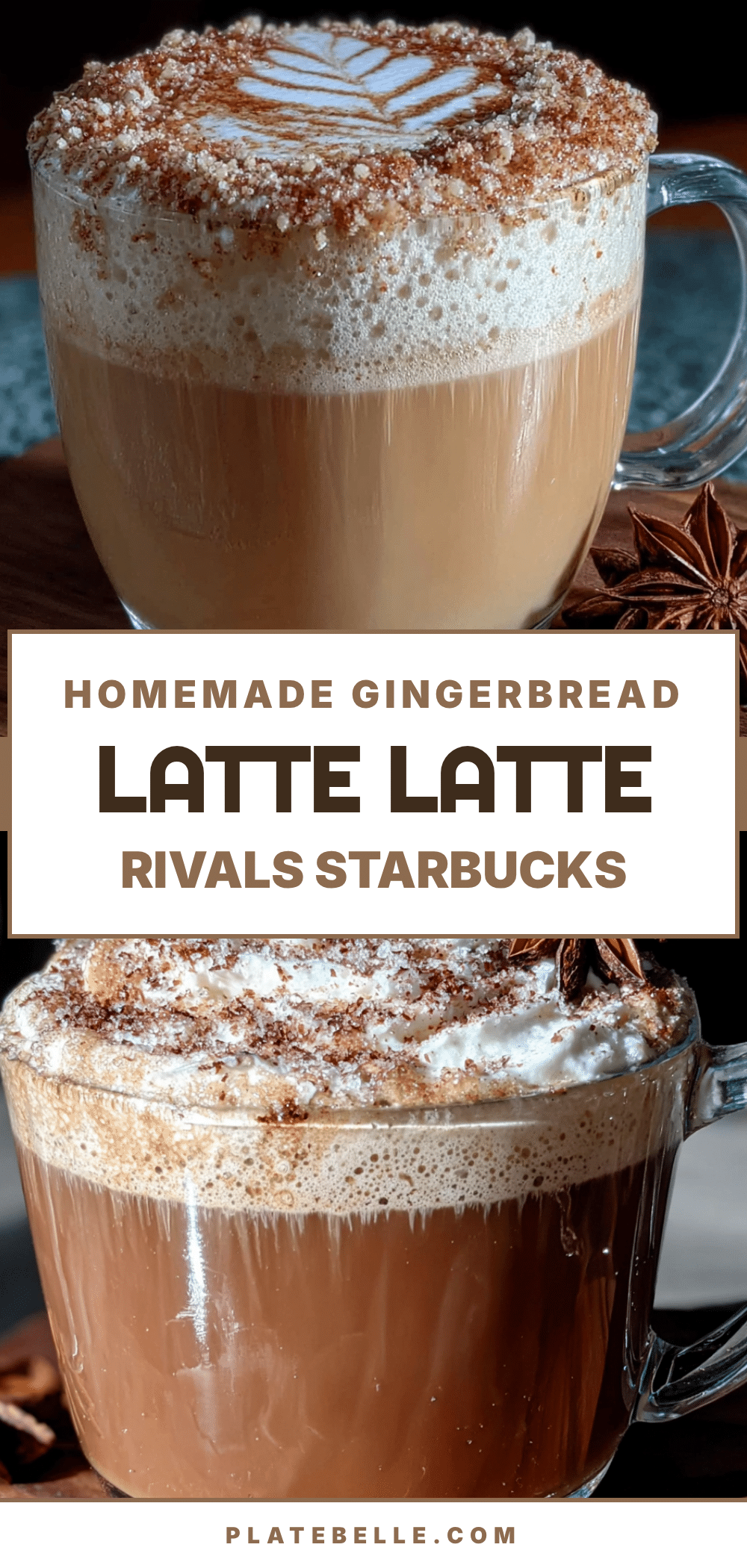
Homemade Gingerbread Latte That Tastes Better Than Starbucks

A rich, spicy gingerbread latte made from scratch with real ingredients like fresh ginger, molasses, and warm spices. This quick and easy recipe rivals any coffee shop version and costs a fraction of the price.
- Prep Time: 5 minutes
- Cook Time: 10 minutes
- Total Time: 15 minutes
- Yield: 1 serving 1x
- Category: Beverage
- Cuisine: American
Ingredients
- 1/2 cup water
- 1/2 cup brown sugar, packed
- 2 tablespoons molasses (unsulphured blackstrap recommended)
- 1 tablespoon fresh ginger, peeled and thinly sliced
- 1 teaspoon ground cinnamon
- 1/2 teaspoon ground ginger
- 1/4 teaspoon ground cloves
- 1/4 teaspoon ground nutmeg
- 1 teaspoon vanilla extract
- 1 to 2 shots espresso (about 2 ounces, or 1/2 cup strongly brewed coffee)
- 1 cup milk (whole milk, oat milk, or almond milk)
- 2 to 3 tablespoons gingerbread syrup
- Whipped cream, for topping (optional)
- Ground cinnamon or crushed gingerbread cookies, for garnish
Instructions
- In a small saucepan, combine the water, brown sugar, molasses, and fresh ginger slices. Stir together.
- Place the saucepan over medium heat and bring to a gentle simmer. Do not let it boil vigorously.
- Once simmering, add the ground cinnamon, ground ginger, cloves, and nutmeg. Whisk until spices are incorporated and sugar has dissolved, about 2 to 3 minutes.
- Reduce heat to low and let the syrup simmer gently for another 5 minutes.
- Remove from heat and stir in the vanilla extract. Let cool for about 5 minutes.
- Place a fine-mesh strainer over a glass jar or bowl and pour the syrup through it to remove ginger slices and spice clumps. Press down on the ginger with a spoon to extract all liquid.
- Let the syrup cool completely before sealing. Store in the refrigerator for up to 2 weeks.
- Brew your espresso or strong coffee (use double the grounds if using a regular coffee maker).
- Heat the milk in a small saucepan over medium heat or in the microwave for about 45 seconds until steaming but not boiling (around 150°F).
- If using a milk frother, froth the milk until doubled in volume and foamy, about 30 seconds.
- Pour 2 to 3 tablespoons of gingerbread syrup into a mug.
- Pour the hot coffee over the syrup and stir to combine.
- Slowly pour the frothed milk over the coffee, holding back foam with a spoon if desired.
- Top with whipped cream and sprinkle with cinnamon or crushed gingerbread cookies.
Notes
Don’t skip the fresh ginger—it adds brightness. Keep syrup at a gentle simmer to avoid crystallization. Add syrup to hot coffee first, not cold milk. Syrup can be doubled and stored for up to 2 weeks. For iced version, cool syrup completely and serve over ice with cold coffee and milk.
Nutrition
- Serving Size: 1 latte
- Calories: 180220
- Sugar: 2832
- Sodium: 100150
- Fat: 58
- Saturated Fat: 35
- Carbohydrates: 3035
- Protein: 68
Keywords: gingerbread latte, homemade latte, Starbucks copycat, gingerbread coffee, holiday drink, gingerbread syrup