My brother-in-law Mark swore he hated cranberry sauce for thirty-seven years. Thirty-seven years, you guys. He’d push it around his plate every Thanksgiving like it was a punishment someone snuck onto his dinner. Then last November, I made this version “just for myself” — a little batch on the side, not even meant for the main table — and caught him standing at the kitchen counter at 10 p.m., eating it straight from the jar with a soup spoon. He didn’t even try to hide it. “This is different,” he said, mouth full. “This isn’t cranberry sauce.”
And honestly? He was kind of right. This isn’t the wobbly, can-shaped stuff of childhood nightmares. It’s something else entirely — deep, dark, almost jammy, with this little hit of rosemary that makes you stop and go, “Wait, what is that?” The orange zest brightens everything up just enough that it doesn’t feel heavy. I mean, I wasn’t even trying to convert anyone. I was just craving something cozy on a cold Tuesday and happened to have a bag of cranberries sitting in the fridge.
Maybe you’ve been there — the person who insists they don’t like something, only to find the one version that proves them wrong. That’s this sauce. It’s the recipe that quietly changes minds without even trying. And now I make it for everything, not just the holidays. Pork chops on a random Wednesday? Yes. Brie toast for lunch? Absolutely. That moment when you need something that tastes like warmth in a bowl? This is it.
Why You’ll Love This Recipe
This isn’t just another cranberry sauce recipe floating around the internet. I’ve tested this one at least eight times — adjusting the rosemary amount, playing with the orange ratio, figuring out exactly when to pull it off the heat so it sets up perfectly without turning into cranberry cement. Here’s why this version is the one you’ll come back to:
- Quick & Easy : Comes together in about 20 minutes, which is faster than most side dishes. You don’t even have to stand there stirring the whole time.
- Simple Ingredients : You probably already have sugar, water, and an orange in your kitchen right now. The rosemary is the only “special” thing, and it’s not hard to find.
- Perfect for the Holidays : Obviously, it’s a Thanksgiving star. But honestly, it’s also great for Christmas brunch, Easter ham, or just a random Tuesday when you need something bright.
- Crowd-Pleaser : I’ve watched people who “don’t like cranberry sauce” go back for seconds. It’s the rosemary. It tricks them every time.
- Unbelievably Delicious : The texture is this perfect middle ground — not too runny, not too stiff. It coats the back of a spoon just right.
What makes this recipe different from the other ones out there is the balance. Most cranberry sauces are either too sweet or too tart. This one hits that sweet spot where the orange mellows the cranberry bite, the rosemary adds this unexpected savory note, and everything just works together. It’s comfort food in a saucepan — the kind that makes you close your eyes after that first taste.
What Ingredients You Will Need
This recipe uses simple, wholesome ingredients to deliver big flavor without any fuss. Most of these are pantry staples, which means you can whip this up even when the stores are crazy busy the day before Thanksgiving.
- Fresh cranberries (12 ounces) — Look for bags that feel firm and bounce when you drop them. Fresh is best here; frozen cranberries can get a little mushy. (I prefer Ocean Spray bags, but any brand works fine.)
- Granulated sugar (1 cup) — This balances the tartness of the cranberries. You can reduce it to 3/4 cup if you like things less sweet, but don’t go lower than that or it gets too sharp.
- Fresh orange juice (1/2 cup) — Squeeze it yourself if you can. The bottled stuff is fine in a pinch, but fresh really does make a difference here. (You’ll need about 2 medium oranges.)
- Orange zest (2 tablespoons) — This is where the real orange flavor lives. Use a microplane if you have one, and be careful not to get the white pith — it’s bitter.
- Fresh rosemary (2 sprigs) — The star of the show. Use whole sprigs that you can fish out later, not chopped rosemary. It infuses the sauce without leaving weird little needles in your teeth.
- Water (1/4 cup) — Helps everything come together and prevents the sugar from burning before the cranberries pop.
- Pinch of salt — Just a tiny one. It sounds weird, but salt makes the sweetness pop and balances the rosemary.
- Vanilla extract (1 teaspoon, optional) — I started adding this on a whim one year and never looked back. It rounds out the flavors somehow. Skip it if you want a cleaner taste.
For the rosemary, I recommend buying a fresh bunch from the produce section rather than using dried. Dried rosemary is too intense and woody for this recipe. You want the fresh stuff that smells like a pine forest when you crush it between your fingers. If you’re growing rosemary in your garden, even better — just wash it well first.
Equipment Needed
You don’t need anything fancy here, which is part of why I love this recipe. No stand mixers, no food processors, no special gadgets. Just basic kitchen stuff you already own.
- Medium saucepan — A 2-quart or 3-quart size works perfectly. Something with a heavy bottom helps the heat distribute evenly so nothing scorches.
- Wooden spoon or silicone spatula — For stirring. I prefer a wooden spoon because it feels right for something this rustic, but a spatula works too.
- Microplane or zester — For getting that orange zest without the bitter white pith. A box grater works in a pinch, but it’s harder to control.
- Citrus juicer — Not strictly necessary, but it makes juicing oranges way less messy. I use a simple handheld one that cost like five bucks.
- Fine-mesh strainer — For fishing out the rosemary sprigs and any rogue bits of zest. You can also use tongs if you’re careful.
- Glass jar or bowl — For storing the finished sauce. A 16-ounce mason jar is perfect.
Pro tip: If you don’t have a microplane, you can peel the orange with a vegetable peeler and then chop the peel super fine. It takes a little longer, but it works. I’ve done it that way when my microplane was mysteriously missing (it was in the dishwasher, of course).
Preparation Method
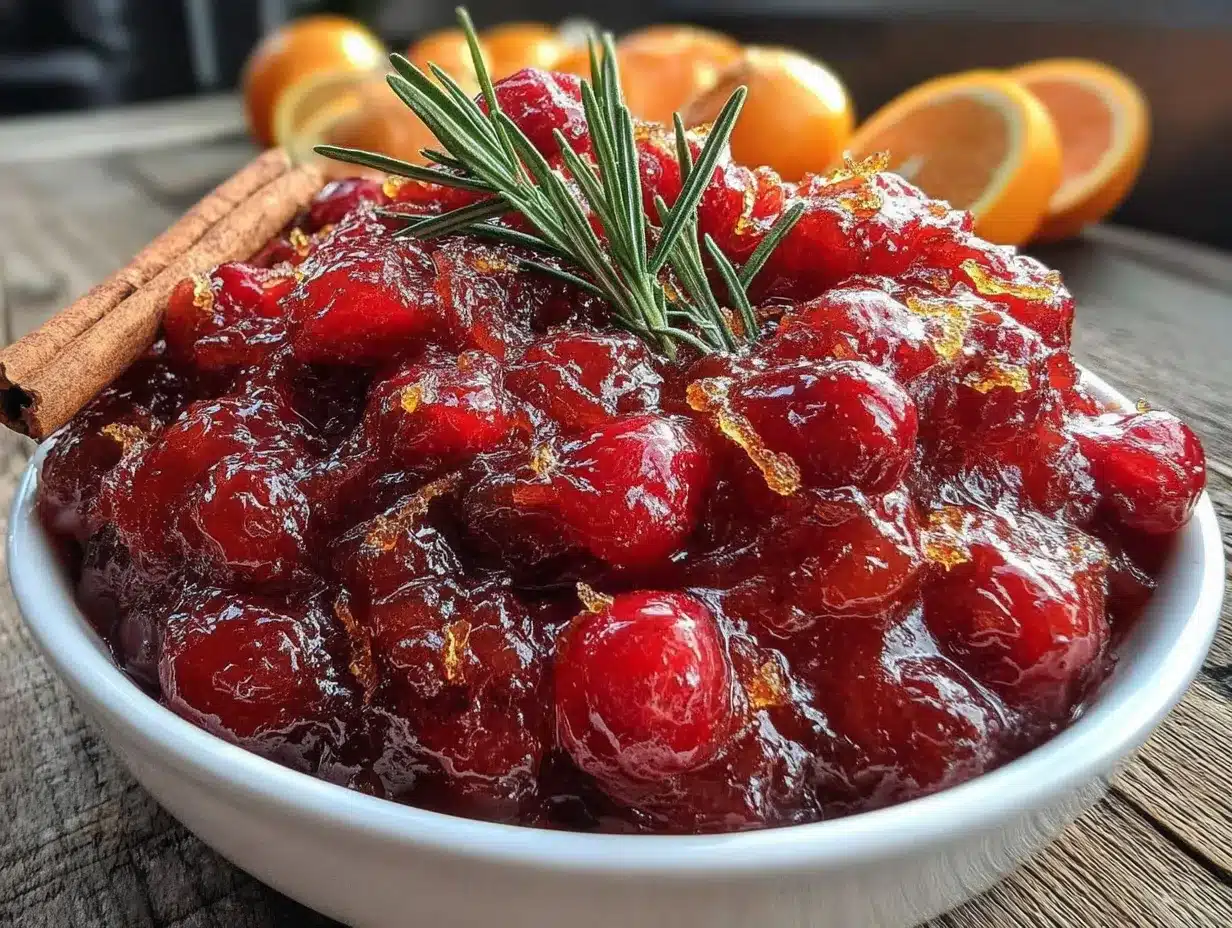
This comes together fast, so I like to have everything measured out and ready to go before I start. It takes about 20 minutes from start to finish, and most of that is just letting the cranberries do their popping thing.
- Zest and juice your oranges first. Wash the oranges well, then use your microplane to get about 2 tablespoons of zest. Be patient — this is the most tedious part. After zesting, cut the oranges in half and juice them until you have 1/2 cup. Set both aside.
- Combine the sugar, water, and orange juice in your saucepan. Place it over medium heat and stir gently until the sugar dissolves completely. This takes about 2-3 minutes. You’ll see the mixture go from cloudy to clear — that’s how you know it’s ready.
- Add the fresh cranberries and rosemary sprigs. Rinse the cranberries first and pick out any soft or shriveled ones. Drop them into the pot along with the whole rosemary sprigs. Don’t chop the rosemary! You want to be able to pull them out later.
- Bring the mixture to a boil. Turn the heat up to medium-high and wait for it to start bubbling. You’ll hear the cranberries start to pop — that satisfying little sound is the signal that things are happening. This takes about 4-5 minutes.
- Reduce the heat and simmer. Once it’s boiling, turn it down to medium-low so it’s gently bubbling, not splattering everywhere. Let it cook for 8-10 minutes, stirring occasionally. The cranberries will continue to pop and break down, and the liquid will thicken into a syrupy consistency.
- Test the thickness. Dip a spoon into the sauce and run your finger down the back. If the line holds and doesn’t immediately fill in, you’re done. Remember that it will thicken more as it cools, so don’t overcook it.
- Remove from heat and fish out the rosemary sprigs. Use tongs or a slotted spoon to grab the rosemary sprigs. Some leaves might fall off — that’s fine. If you want a smoother sauce, you can strain it through a fine-mesh strainer, but I like leaving some texture.
- Stir in the orange zest and vanilla. This is the last step. The zest adds that fresh pop of flavor that cooking can dull, so adding it at the end keeps it bright. If you’re using vanilla, stir it in now.
- Let it cool completely. Transfer the sauce to a jar or bowl and let it come to room temperature. It will continue to set up as it cools. Don’t put the lid on until it’s completely cool, or condensation will make it watery.
A quick note: If you forget to add the zest at the end (I’ve done this more than once), don’t panic. Just stir it in before serving. The flavor won’t be quite as integrated, but it’ll still be delicious.
Cooking Tips & Techniques
I’ve made this recipe enough times to learn a few things the hard way. Here’s what I wish someone had told me the first time:
Don’t walk away from the pot. Cranberries have a sneaky way of going from perfectly bubbly to scorched on the bottom in about thirty seconds. Stay nearby and give it a stir every couple of minutes. I learned this lesson when I got distracted by a phone call and ended up with a smoky kitchen and a very sad saucepan.
Use whole rosemary sprigs, not chopped. I know it’s tempting to chop it up for even distribution, but trust me — biting into a needle of rosemary is not the experience you want. Whole sprigs infuse the sauce beautifully and come out clean at the end. Plus, they look pretty floating in the pot while it cooks.
The pop test is real. When cranberries are done, they stop making that popping sound. Listen for it. Once the popping slows down to almost nothing, you’re close to done. The sauce should still look a little loose — it’ll firm up as it cools.
Scale up carefully. If you’re making a double batch for a crowd, don’t just double everything and walk away. The cooking time changes, and you need a bigger pot. I made this mistake one year and ended up with cranberry sauce all over my stovetop. Use a 5-quart pot for double batches and expect the cooking time to increase by about 5 minutes.
Make it ahead of time. This sauce actually gets better after a day or two in the fridge. The flavors meld together, the rosemary gets more integrated, and the texture sets up perfectly. I always make mine the day before Thanksgiving. It’s one less thing to worry about on the big day.
Variations & Adaptations
Once you’ve made the basic version a few times, try mixing things up. Here are some variations I’ve played with:
Spiced Cranberry Orange Sauce — Add a cinnamon stick and two star anise along with the rosemary. It gives the sauce this warm, holiday-bakery vibe that’s perfect for Christmas. Just remember to fish out the whole spices at the end.
Maple Rosemary Version — Swap half the sugar for maple syrup. It makes the sauce a little thinner (maple syrup is liquid, after all) and adds this deep, almost smoky sweetness that pairs beautifully with the rosemary. Cook it for an extra 2-3 minutes to help it thicken up.
Low-Sugar Adaptation — Use 1/2 cup of sugar and add 2 tablespoons of honey or agave instead. The texture will be slightly different — a little looser — but the flavor is still fantastic. I’ve made this for friends who are watching their sugar intake, and nobody complained.
Spicy Kick Version — Add a small jalapeño, seeded and halved, along with the rosemary. It gives the sauce this subtle heat that sneaks up on you. I tried this on a whim after seeing a similar idea on a food blog, and it’s surprisingly good with roasted pork.
Bourbon Cranberry Sauce — Stir in 2 tablespoons of bourbon right at the end, after you remove the pot from the heat. The alcohol cooks off, but the flavor lingers. This is my go-to for adult-only gatherings. Just don’t tell the kids what’s in it.
Serving & Storage Suggestions
This sauce is versatile in ways you might not expect. Here’s how I use it throughout the holiday season and beyond:
Serving temperature — I prefer it at room temperature or slightly chilled. Straight from the fridge is fine too, but let it sit out for about 15 minutes first so the flavors open up. If you’re serving it alongside hot dishes, the temperature contrast is actually really nice.
Classic pairings — Obviously, it’s amazing with turkey. But don’t stop there. Try it on roasted pork chops, spread it on a turkey and brie sandwich, or dollop it on a cheese board with sharp cheddar and crackers. I’ve even put it on vanilla ice cream — don’t knock it till you try it.
Storage instructions — Keep it in an airtight container in the refrigerator for up to two weeks. It actually gets better after a few days as the flavors meld. I’ve never had it last longer than two weeks because it gets eaten, but it should be fine for at least that long.
Freezing tips — This sauce freezes beautifully. Pour it into a freezer-safe container, leaving about an inch of headroom for expansion, and freeze for up to three months. Thaw it overnight in the fridge, then stir well before serving. The texture might be slightly different, but the flavor is still spot-on.
Reheating method — If you want to serve it warm, just microwave it in 30-second bursts, stirring in between. Or transfer it to a small saucepan and warm it over low heat. Don’t boil it again, or it might get too thick.
One last thing — the flavors really do develop over time. I made a batch last week and accidentally forgot about it in the fridge for three days. When I finally tried it, it was even better than the day I made it. So don’t stress about making it at the last minute. Your future self will thank you.
Nutritional Information & Benefits
Here’s the thing about cranberry sauce — it’s not health food, but it’s not junk food either. It’s somewhere in the middle, and that’s okay. Here’s what you’re getting:
- Calories — About 110 calories per 1/4 cup serving. Not bad for something that feels this indulgent.
- Vitamin C — Cranberries and oranges are both packed with it. One serving gives you about 15% of your daily needs.
- Antioxidants — Cranberries are loaded with compounds that help fight inflammation. The rosemary adds even more.
- Fiber — About 2 grams per serving, which is decent for a sauce.
- Sugar — This is the one to watch. There’s about 22 grams per serving, mostly from the added sugar. If you’re watching your sugar intake, try the low-sugar variation above.
Cranberries have been studied for their potential benefits for urinary tract health, and the antioxidants in rosemary are thought to support brain function. I’m not a doctor, and I’m not making any claims here — just sharing what I’ve read. What I can tell you is that this sauce makes me feel good when I eat it, and that counts for something.
If you’re gluten-free, dairy-free, or vegan, this recipe is naturally all of those things. Just skip the optional vanilla extract if you’re avoiding alcohol, or use alcohol-free vanilla.
Conclusion
This cozy cranberry orange sauce with fresh rosemary is the kind of recipe that quietly becomes a tradition. You make it once, maybe for Thanksgiving, and then suddenly you’re making it for Christmas brunch, for Easter dinner, for no reason at all on a random Tuesday in January. It’s that good.
The best part? You can tweak it to make it your own. Add more rosemary if you’re feeling adventurous. Throw in a cinnamon stick for warmth. Swap the sugar for maple syrup. This recipe is a starting point, not a rulebook. I’ve made it at least a dozen different ways, and every single one was delicious.
I’d love to hear how it turns out for you. Leave a comment below and let me know if you tried any variations — or if you, like my brother-in-law Mark, ended up eating it straight from the jar at 10 p.m. No judgment here. That’s how you know it’s good.
Happy cooking, friends. Make something that feels like a hug.
Frequently Asked Questions
Can I use frozen cranberries instead of fresh?
Yes, you can. Frozen cranberries work fine, but they release more water as they thaw, so your sauce might be a little thinner. Cook it for an extra 2-3 minutes to help it thicken up. No need to thaw them first — just toss them in frozen.
How long does homemade cranberry sauce last in the fridge?
It lasts up to two weeks in an airtight container in the refrigerator. The flavor actually gets better after a few days as the rosemary and orange meld together. Just make sure it’s completely cool before you put the lid on.
Can I make this recipe without rosemary?
Absolutely. If you’re not a rosemary fan, just leave it out. You’ll end up with a classic cranberry orange sauce that’s still delicious. You could also try adding a cinnamon stick or a vanilla bean instead for a different flavor profile.
Why did my cranberry sauce turn out too thick?
You probably cooked it too long. Cranberries have natural pectin that thickens the sauce as it cools, so you want to pull it off the heat when it’s still slightly loose. If it’s already too thick, stir in a tablespoon of water or orange juice to loosen it up.
Can I double this recipe for a crowd?
Yes, but use a bigger pot and expect the cooking time to increase by about 5 minutes. A 5-quart pot works well for a double batch. Don’t just double everything and use the same pot — you’ll end up with cranberry sauce all over your stovetop, and nobody wants that.
Pin This Recipe!
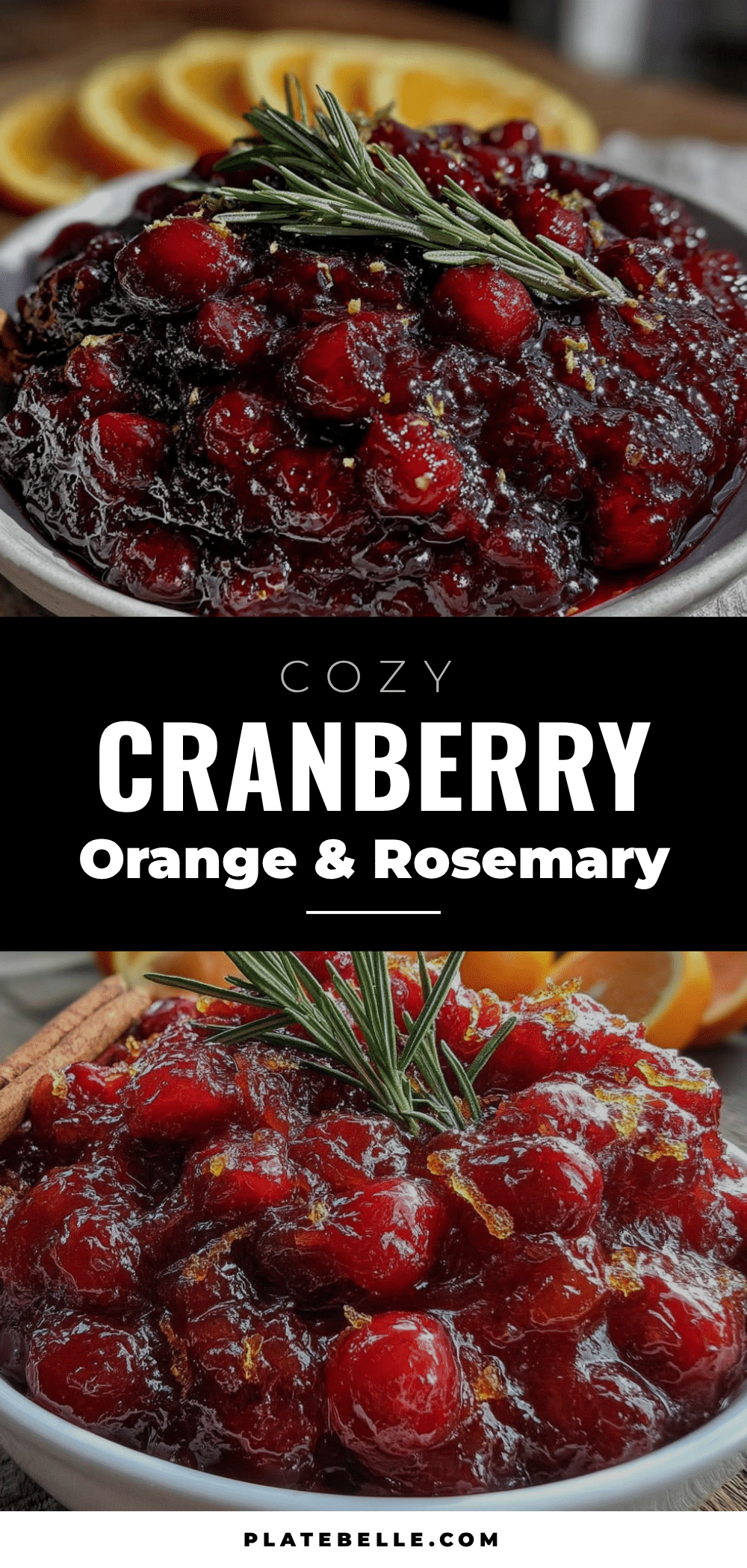
Cozy Cranberry Orange Sauce with Fresh Rosemary

This isn’t the wobbly, can-shaped stuff of childhood nightmares. It’s deep, dark, almost jammy, with a hit of rosemary and bright orange zest that makes it perfect for holidays or any cozy occasion.
- Prep Time: 5 minutes
- Cook Time: 15 minutes
- Total Time: 20 minutes
- Yield: 8 servings 1x
- Category: Side Dish
- Cuisine: American
Ingredients
- 12 ounces fresh cranberries
- 1 cup granulated sugar
- 1/2 cup fresh orange juice (about 2 medium oranges)
- 2 tablespoons orange zest
- 2 sprigs fresh rosemary
- 1/4 cup water
- Pinch of salt
- 1 teaspoon vanilla extract (optional)
Instructions
- Zest and juice your oranges first. Wash the oranges well, then use a microplane to get about 2 tablespoons of zest. After zesting, cut the oranges in half and juice them until you have 1/2 cup. Set both aside.
- Combine the sugar, water, and orange juice in a medium saucepan. Place it over medium heat and stir gently until the sugar dissolves completely, about 2-3 minutes.
- Add the fresh cranberries and rosemary sprigs. Rinse the cranberries first and pick out any soft or shriveled ones. Drop them into the pot along with the whole rosemary sprigs. Do not chop the rosemary.
- Bring the mixture to a boil over medium-high heat. You’ll hear the cranberries start to pop, about 4-5 minutes.
- Reduce the heat to medium-low and simmer for 8-10 minutes, stirring occasionally, until the cranberries have broken down and the liquid has thickened into a syrupy consistency.
- Test the thickness by dipping a spoon into the sauce and running your finger down the back. If the line holds and doesn’t immediately fill in, it’s done. Remember it will thicken more as it cools.
- Remove from heat and fish out the rosemary sprigs using tongs or a slotted spoon. Some leaves might fall off—that’s fine.
- Stir in the orange zest and vanilla extract (if using).
- Let the sauce cool completely in a jar or bowl. Do not put the lid on until it’s completely cool to prevent condensation.
Notes
This sauce actually gets better after a day or two in the fridge as the flavors meld. For a spiced version, add a cinnamon stick and two star anise along with the rosemary. For a maple version, swap half the sugar for maple syrup and cook an extra 2-3 minutes. For a low-sugar version, use 1/2 cup sugar and 2 tablespoons honey or agave. For a spicy kick, add a seeded jalapeño half. For a bourbon version, stir in 2 tablespoons bourbon after removing from heat. The sauce freezes well for up to 3 months.
Nutrition
- Serving Size: 1/4 cup
- Calories: 110
- Sugar: 22
- Sodium: 10
- Carbohydrates: 28
- Fiber: 2
Keywords: cranberry sauce, cranberry orange sauce, rosemary cranberry sauce, homemade cranberry sauce, Thanksgiving side dish, holiday recipe