For years, my husband claimed he hated butternut squash. Not just disliked—hated. He’d make a face whenever I mentioned roasting one, and let me tell you, it became a bit of a running joke in our house. I’d be chopping one up for a salad, and he’d dramatically leave the room. Then, last Thanksgiving, I made this lasagna for a small gathering of friends. I didn’t tell him what was in it. I just put the baking dish on the table, all golden and bubbling, and watched him go back for thirds. Caught in the act, fork in hand, he finally admitted, “Okay, this is actually incredible.” That moment—that quiet, smug victory—is exactly why this recipe exists.
You see, this isn’t just any lasagna. It’s the one that changes minds. It’s layers of tender pasta, a velvety roasted butternut squash filling, and a sage brown butter sauce that smells like autumn in a pan. I won’t pretend I didn’t feel a little proud when he asked for the recipe. Honestly, I think that’s the best kind of compliment a cook can get. If you’ve got a skeptic at your table, or you just want a dish that feels special without being fussy, this is your move. It’s become my go-to for dinner parties and cozy Sunday dinners, and I have a feeling it’ll become yours too.
The first time I made it, I forgot to save some of the pasta cooking water—a rookie mistake that left the sauce a little thick. But you know what? It still worked. That’s the beauty of this recipe. It’s forgiving. It’s built on simple, real ingredients that come together to create something that feels far more complicated than it actually is. Maybe you’ve been there, standing in a messy kitchen, wondering if it’s all worth it. I promise you, with this lasagna, it always is.
Why You’ll Love This Recipe
I’ve tested this lasagna more times than I can count, tweaking the ratio of squash to sauce, the thickness of the béchamel, even the type of pasta sheets. What I landed on is a version that’s both indulgent and approachable—a dish that feels like a warm hug on a cold evening. Here’s why it stands out:
- Rich, Autumnal Flavor: The sweetness of roasted butternut squash pairs perfectly with the nutty, aromatic sage brown butter. It’s a flavor combination that screams “cozy season.”
- Impressive Yet Simple: This looks like a showstopper on the table—golden, bubbly, and layered beautifully—but the steps are straightforward. No complicated techniques required.
- Crowd-Pleaser: Even picky eaters (like my husband) fall for this one. It’s creamy, savory, and just a little sweet. Kids and adults alike ask for seconds.
- Make-Ahead Friendly: You can assemble the whole thing a day in advance and bake it off when your guests arrive. Perfect for hosting without the stress.
- Vegetarian Star: This lasagna is hearty enough to be the main event. Serve it with a simple salad, and you’ve got a meal that satisfies everyone.
What makes this recipe different from other butternut squash lasagnas is the sage brown butter. Instead of a heavy tomato sauce or a plain béchamel, the brown butter adds a deep, toasty richness that elevates every bite. It’s not just another version—it’s the best version. I’ve had friends tell me it’s the best lasagna they’ve ever eaten, and I won’t argue with that.
What Ingredients You Will Need
This recipe uses simple, wholesome ingredients to deliver bold flavor and satisfying texture. Most of these are pantry staples or easy to find at any grocery store, especially in the fall. Let’s break down what you’ll need and why each one matters.
- For the Roasted Butternut Squash:
- 1 large butternut squash (about 3 pounds / 1.4 kg), peeled, seeded, and cubed into 1-inch pieces. (Look for a squash that feels heavy for its size—that means it’s fresh and moist.)
- 2 tablespoons olive oil (adds richness and helps caramelization)
- 1/2 teaspoon salt
- 1/4 teaspoon black pepper
- For the Sage Brown Butter Sauce:
- 1/2 cup (1 stick / 113 g) unsalted butter (I prefer Kerrygold for its rich flavor, but any good-quality butter works)
- 10-12 fresh sage leaves (plus a few extra for garnish)
- 3 tablespoons all-purpose flour (for thickening the sauce)
- 3 cups (720 ml) whole milk, warmed (cold milk can cause lumps)
- 1/2 cup (50 g) grated Parmesan cheese (freshly grated is non-negotiable here—it melts so much better than pre-shredded)
- 1/4 teaspoon ground nutmeg (adds warmth and depth)
- Salt and pepper to taste
- For the Lasagna Assembly:
- 12 no-boil lasagna noodles (I use Barilla no-boil sheets—they’re a lifesaver and save you a step)
- 2 cups (225 g) shredded whole-milk mozzarella cheese (low-moisture works best to avoid a watery lasagna)
- 1 cup (240 g) ricotta cheese (full-fat for creaminess)
- 1 large egg (to bind the ricotta)
- 1/2 cup (50 g) grated Parmesan cheese (for layering and topping)
Ingredient selection tips: When choosing butternut squash, pick one with a long, straight neck—it’s easier to peel and cube. If you’re short on time, you can buy pre-cubed squash from the store, but I find roasting whole squash gives you a better, deeper flavor. For the sage, use fresh leaves if you can; dried sage just doesn’t have the same aromatic punch. And please, please use whole milk for the sauce. It makes the béchamel silky and luxurious. If you’re dairy-free, you can substitute unsweetened oat milk and a dairy-free butter, but the texture will be slightly less rich.
Equipment Needed
You don’t need a fancy kitchen to make this lasagna, but a few key tools will make the process smoother. Here’s what I use:
- 9×13-inch (23×33 cm) baking dish: This is the standard size for a lasagna. Glass or ceramic works great—metal can sometimes react with acidic ingredients.
- Large baking sheet: For roasting the squash. A rimmed sheet prevents any juices from spilling.
- Medium saucepan: For making the sage brown butter sauce.
- Whisk: Essential for a lump-free béchamel.
- Mixing bowls: One for the ricotta mixture, one for the roasted squash.
- Chef’s knife and cutting board: For prepping the squash and sage.
- Vegetable peeler: A sturdy one makes peeling squash a breeze.
If you don’t have a 9×13-inch dish, you can use two smaller dishes and adjust the layers. I’ve also used a cast-iron skillet for a smaller, rustic version—just cut the recipe in half. For the no-boil noodles, you’ll need a tight-fitting lid or foil to cover the dish while baking. Budget tip: A good whisk and a sharp knife are worth investing in. They’ll last for years and make cooking so much more enjoyable.
Preparation Method

Let’s get cooking! This recipe takes about 1 hour 15 minutes of active time, plus 45 minutes to bake. Plan ahead, and you’ll have a stunning dish ready to serve.
- Roast the Butternut Squash (30 minutes)
Preheat your oven to 400°F (200°C). Toss the cubed squash with olive oil, salt, and pepper on a baking sheet. Spread it in a single layer—crowding the pan will steam it instead of roasting. Roast for 25-30 minutes, flipping halfway, until the squash is tender and lightly caramelized. Let it cool slightly, then mash it with a fork or potato masher. You want a chunky puree, not a smooth one. Set aside. - Make the Sage Brown Butter Sauce (15 minutes)
In a medium saucepan over medium heat, melt the butter. Once it’s melted, add the sage leaves. Cook, stirring occasionally, until the butter turns a deep golden brown and smells nutty—about 5-7 minutes. Watch closely; it can go from brown to burnt quickly. Remove the sage leaves and set them aside for garnish. Whisk in the flour and cook for 1 minute to get rid of the raw taste. Slowly pour in the warm milk, whisking constantly to prevent lumps. Bring the sauce to a simmer, then reduce heat and cook for 3-4 minutes until thickened. Stir in the Parmesan, nutmeg, salt, and pepper. Taste and adjust seasoning. The sauce should be smooth and creamy. - Prepare the Ricotta Mixture (5 minutes)
In a small bowl, combine the ricotta cheese, egg, and a pinch of salt and pepper. Mix until smooth. This will add a creamy layer to your lasagna. - Assemble the Lasagna (20 minutes)
Spread a thin layer of sage brown butter sauce (about 1/2 cup) on the bottom of your 9×13-inch baking dish. This prevents the noodles from sticking. Layer 3 no-boil lasagna noodles on top, breaking them to fit if needed. Spread 1/3 of the mashed squash over the noodles, then dollop 1/3 of the ricotta mixture. Sprinkle 1/3 of the mozzarella and 1/4 cup of Parmesan. Drizzle 1/3 of the remaining sauce. Repeat this layering process two more times: noodles, squash, ricotta, mozzarella, Parmesan, and sauce. For the final layer, top with the remaining noodles, the last of the sauce, and the remaining mozzarella and Parmesan. Press down gently with a spatula to even everything out. - Bake the Lasagna (45 minutes)
Cover the dish tightly with foil and bake at 375°F (190°C) for 30 minutes. The foil traps steam and cooks the noodles perfectly. Remove the foil and bake for another 15-20 minutes, until the top is golden and bubbly. Let the lasagna rest for 10-15 minutes before slicing—this is crucial for clean, neat slices. Garnish with the reserved crispy sage leaves.
Troubleshooting tip: If the top is browning too quickly, tent it loosely with foil for the last 10 minutes. If the sauce seems too thin after baking, let it rest a little longer—it will thicken as it cools.
Cooking Tips & Techniques
Over the years, I’ve learned a few tricks that make this lasagna foolproof. Here are my best tips:
- Don’t skip roasting the squash. I know it’s tempting to boil or microwave it, but roasting concentrates the natural sugars and gives you that deep, caramelized flavor. It’s non-negotiable.
- Watch the brown butter like a hawk. The first time I made it, I got distracted and ended up with burnt butter that tasted bitter. The secret is to swirl the pan constantly and remove it from heat the moment it turns amber. You’ll smell it—like toasted nuts and honey.
- Warm your milk. Cold milk can seize the flour and create lumps in your sauce. I microwave mine for 45 seconds before adding it to the pan. It’s a small step that makes a big difference.
- Let the lasagna rest. I know you’ll want to dig in right away, but resting allows the layers to set. If you cut into it too soon, you’ll end up with a soupy mess. Trust me, I’ve learned this the hard way at a dinner party.
- Use a sharp knife to cut. A dull blade will squash the delicate layers. Run your knife under hot water between cuts for the cleanest slices.
Multitasking tip: While the squash roasts, you can make the sauce and prep the ricotta. This saves you about 15 minutes of active time. I also like to grate all my cheese before I start—it keeps the process flowing smoothly.
Variations & Adaptations
This lasagna is wonderfully adaptable. Here are a few ways to make it your own:
- Vegetarian & Gluten-Free: Use gluten-free lasagna noodles and a gluten-free flour blend for the sauce. The rest of the ingredients are naturally gluten-free. I’ve tried this with chickpea pasta sheets, and they work beautifully.
- Add Protein: For a heartier dish, add a layer of cooked, crumbled Italian sausage or shredded rotisserie chicken between the squash and ricotta. I’ve done this for a holiday dinner, and it was a hit.
- Seasonal Twist: In the summer, swap the butternut squash for roasted zucchini or eggplant. The sage brown butter still works beautifully. In the spring, try roasted asparagus and peas.
- Spice It Up: Add a pinch of red pepper flakes to the sage brown butter for a subtle kick. Or mix some chopped fresh rosemary into the ricotta for an herbal note.
- Vegan Version: Use a vegan butter, unsweetened oat milk, and dairy-free cheeses. The texture will be a bit different, but the flavor is still fantastic. I’ve made this for a vegan friend, and she asked for the recipe.
My personal favorite variation is adding a layer of sautéed mushrooms. The earthy flavor pairs perfectly with the squash and sage. Just slice 8 ounces of cremini mushrooms, sauté them in a little butter until golden, and layer them in with the squash. It’s a game-changer.
Serving & Storage Suggestions
This lasagna is best served warm, straight from the oven, with the top still bubbling. I like to let it rest for 10 minutes, then cut it into generous squares. The crispy sage leaves on top add a lovely crunch and a pop of color.
What to serve alongside: A simple green salad with a lemon vinaigrette cuts through the richness beautifully. I also love serving it with crusty bread to soak up any extra sauce. For a holiday meal, pair it with roasted Brussels sprouts or a cranberry-apple slaw. If you’re hosting, this lasagna is the star—let it shine.
Storage instructions: Leftovers keep well in the fridge for up to 4 days. Store them in an airtight container. The flavors actually deepen overnight, so it might taste even better the next day. To reheat, pop individual slices in the oven at 350°F (175°C) for 10-15 minutes, or microwave for 2-3 minutes. The microwave is faster, but the oven keeps the texture better.
Freezer-friendly: You can freeze the assembled but unbaked lasagna for up to 3 months. Wrap the dish tightly in plastic wrap, then foil. When you’re ready to bake, thaw it in the fridge overnight, then bake as directed, adding 10-15 minutes to the covered baking time. I’ve done this for busy weeks, and it’s a lifesaver.
Nutritional Information & Benefits
This lasagna is indulgent, but it also has some surprising health benefits. Here’s a rough estimate per serving (based on 8 servings):
- Calories: 480
- Protein: 18g
- Fat: 28g
- Carbohydrates: 42g
- Fiber: 4g
- Sugar: 8g
Health benefits: Butternut squash is packed with vitamin A (great for eye health) and vitamin C (supports your immune system). It’s also a good source of fiber, which helps with digestion. The sage in the brown butter has anti-inflammatory properties, and the calcium from the cheese is good for your bones. Is this a health food? No. But it’s a meal that nourishes you while making you feel good—and that counts for something.
Dietary considerations: This recipe is vegetarian. It contains dairy and gluten. For a gluten-free version, use gluten-free noodles and flour. For a dairy-free version, use plant-based alternatives. Always check labels if you have specific allergies.
I believe in balance. This lasagna is a special-occasion dish, not an everyday meal. But when you make it, you’re treating yourself and your loved ones to something truly delicious. That’s a kind of wellness, too.
Conclusion
This butternut squash lasagna with sage brown butter is more than a recipe—it’s a story. It’s the dish that won over a skeptic, the one that makes guests ask for the recipe, and the one that fills your kitchen with the most incredible aroma. It’s rich, comforting, and surprisingly simple to pull off. Whether you’re making it for a holiday dinner, a cozy night in, or to impress someone special, it never disappoints.
I love this recipe because it reminds me that cooking is about connection. It’s about finding that one dish that brings people together, makes them pause, and maybe even changes a mind or two. I hope you’ll make it your own—add your favorite herbs, swap in seasonal veggies, or keep it exactly as written. Either way, I’d love to hear how it turns out. Drop a comment below, share a photo, or tell me about the skeptic you won over. Happy cooking!
Frequently Asked Questions
Can I use pre-cut butternut squash?
Yes, you can! Pre-cut squash from the store saves time. Just make sure the pieces are uniform in size so they roast evenly. I find they sometimes need a few extra minutes in the oven.
Do I really need to use no-boil noodles?
No-boil noodles are a huge time-saver, but you can use regular lasagna noodles if you prefer. Just boil them according to the package directions until al dente, then drain and layer as directed. You might need to reduce the covered baking time slightly.
Can I make this lasagna ahead of time?
Absolutely! Assemble the lasagna up to 24 hours in advance, cover it tightly, and refrigerate. When you’re ready to bake, let it sit at room temperature for 20 minutes, then follow the baking instructions. You may need to add 5-10 minutes to the covered baking time.
Why is my sauce lumpy?
Lumpy sauce usually happens when you add cold milk to the flour mixture. Always warm your milk before whisking it in. If you do get lumps, you can strain the sauce through a fine-mesh sieve or use an immersion blender to smooth it out.
Can I freeze the leftovers?
Yes! Let the lasagna cool completely, then cut it into individual portions. Wrap each piece in plastic wrap and store in a freezer-safe bag for up to 3 months. Reheat in the oven or microwave directly from frozen.
Pin This Recipe!
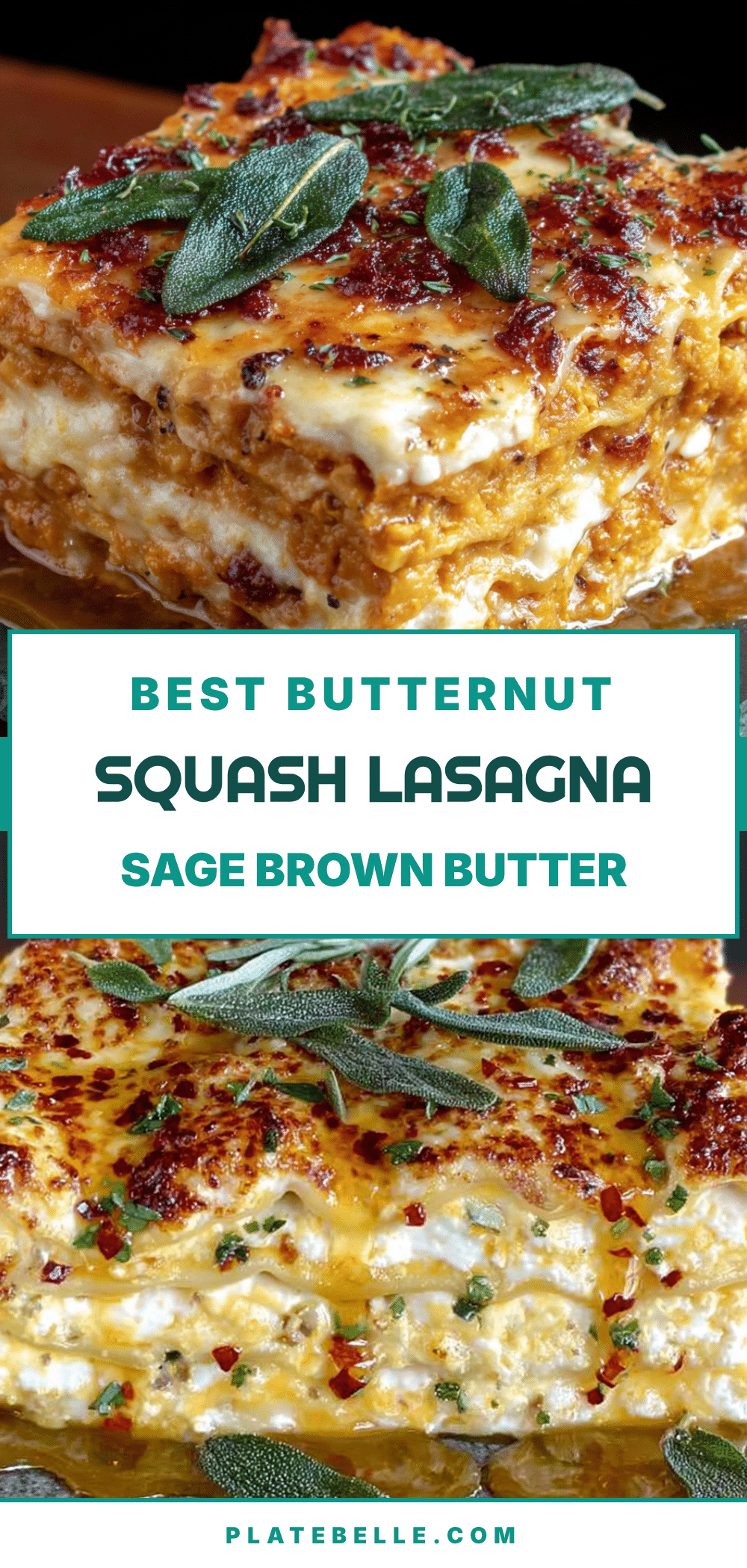
Best Homemade Butternut Squash Lasagna with Sage Brown Butter
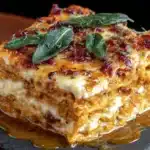
A rich and comforting lasagna featuring velvety roasted butternut squash, a nutty sage brown butter sauce, and layers of tender pasta. This dish is a crowd-pleaser that even skeptics will love, perfect for cozy dinners or holiday gatherings.
- Prep Time: 1 hour 15 minutes
- Cook Time: 45 minutes
- Total Time: 2 hours
- Yield: 8 servings 1x
- Category: Main Course
- Cuisine: Italian-American
Ingredients
- 1 large butternut squash (about 3 pounds / 1.4 kg), peeled, seeded, and cubed into 1-inch pieces
- 2 tablespoons olive oil
- 1/2 teaspoon salt
- 1/4 teaspoon black pepper
- 1/2 cup (1 stick / 113 g) unsalted butter
- 10–12 fresh sage leaves (plus a few extra for garnish)
- 3 tablespoons all-purpose flour
- 3 cups (720 ml) whole milk, warmed
- 1/2 cup (50 g) grated Parmesan cheese (freshly grated)
- 1/4 teaspoon ground nutmeg
- Salt and pepper to taste
- 12 no-boil lasagna noodles
- 2 cups (225 g) shredded whole-milk mozzarella cheese (low-moisture)
- 1 cup (240 g) ricotta cheese (full-fat)
- 1 large egg
- 1/2 cup (50 g) grated Parmesan cheese (for layering and topping)
Instructions
- Preheat oven to 400°F (200°C). Toss cubed squash with olive oil, salt, and pepper on a baking sheet. Spread in a single layer and roast for 25-30 minutes, flipping halfway, until tender and lightly caramelized. Let cool slightly, then mash with a fork or potato masher to a chunky puree. Set aside.
- In a medium saucepan over medium heat, melt the butter. Add sage leaves and cook, stirring occasionally, until butter turns deep golden brown and smells nutty, about 5-7 minutes. Remove sage leaves and set aside for garnish. Whisk in flour and cook for 1 minute. Slowly pour in warm milk, whisking constantly. Bring to a simmer, then reduce heat and cook for 3-4 minutes until thickened. Stir in 1/2 cup Parmesan, nutmeg, salt, and pepper. Adjust seasoning.
- In a small bowl, combine ricotta cheese, egg, and a pinch of salt and pepper. Mix until smooth.
- Spread a thin layer of sage brown butter sauce (about 1/2 cup) on the bottom of a 9×13-inch baking dish. Layer 3 no-boil lasagna noodles on top. Spread 1/3 of the mashed squash over the noodles, then dollop 1/3 of the ricotta mixture. Sprinkle 1/3 of the mozzarella and 1/4 cup Parmesan. Drizzle 1/3 of the remaining sauce. Repeat layering two more times: noodles, squash, ricotta, mozzarella, Parmesan, sauce. For the final layer, top with remaining noodles, last of the sauce, and remaining mozzare…
- Cover dish tightly with foil and bake at 375°F (190°C) for 30 minutes. Remove foil and bake for another 15-20 minutes, until top is golden and bubbly. Let rest for 10-15 minutes before slicing. Garnish with reserved crispy sage leaves.
Notes
For best results, use fresh sage and whole milk. Watch the brown butter closely to avoid burning. Let the lasagna rest before slicing to ensure clean cuts. The lasagna can be assembled up to 24 hours in advance and refrigerated. To freeze, assemble unbaked, wrap tightly, and freeze for up to 3 months; thaw overnight in the fridge before baking.
Nutrition
- Serving Size: 1 slice (1/8 of lasa
- Calories: 480
- Sugar: 8
- Sodium: 680
- Fat: 28
- Saturated Fat: 16
- Carbohydrates: 42
- Fiber: 4
- Protein: 18
Keywords: butternut squash lasagna, sage brown butter, vegetarian lasagna, fall recipe, holiday lasagna, easy lasagna, make-ahead lasagna