I was standing in the parking lot of a hardware store last Tuesday—just trying to find the right lightbulb—when the cold air hit me with this specific smell. Wet pavement, fallen leaves, and someone’s exhaust carrying a faint, rich scent of browned meat and thyme. And suddenly I was eight years old, standing in my neighbor Mrs. Gable’s kitchen doorway, watching her lift the lid off a cast iron pot that looked way too heavy for her small frame. That steam. That smell. It was a Wednesday in late October, and I remember thinking, this is what cozy feels like.
Mrs. Gable wasn’t related to me. She was just the older lady next door who let me sit on her counter while she cooked, mostly because I kept asking questions. She’d say, “You stir it slow, honey. Meat needs patience.” I didn’t really get it then. I was too busy watching the carrots turn soft and the broth go dark. I moved away two years later, and I never saw her again. But every time the air gets that cold, wet-leaf-and-thyme smell, I’m right back in her kitchen.
That’s the thing about this Dutch oven beef stew with root vegetables. It’s not just dinner. It’s a time machine. A bowl of it on a chilly evening, and suddenly you’re somewhere warm, watched over by someone who knew exactly what you needed. I’ve made this recipe a hundred times since—tweaked the broth, swapped the potatoes, burned the bottom of the pot more than once (honestly, it happens). But the heart of it? That’s still Mrs. Gable’s. And maybe you’ve been there too—chasing a taste you can’t quite name. This is that taste.
Why You’ll Love This Recipe
Let me tell you why this Dutch oven beef stew with root vegetables has become my absolute go-to for cold nights, rough days, and any time I need a meal that feels like a hug. I’ve tested this one about seven times over the last two years. I burnt the first attempt. The second was too salty. The third? That was the one where I finally understood what Mrs. Gable meant about patience.
- One Pot Wonder: Everything cooks in a single Dutch oven. Less cleanup, more flavor. The pot does the work while you relax.
- Simple Ingredients: You don’t need a specialty grocery store. Beef chuck, carrots, potatoes, onions, garlic—stuff you probably already have or can grab easily.
- Perfect for Cold Weather: This is the meal you want when the wind is howling and you just want to stay under a blanket. It warms you from the inside out.
- Crowd-Pleaser: I’ve served this to picky kids, skeptical in-laws, and friends who “don’t really like stew.” Empty bowls every single time.
- Unbelievably Tender: The beef gets so soft it falls apart with a fork. The vegetables soak up all that rich, savory broth. It’s comfort food at its finest.
What makes this version different? It’s the layering of flavors. Most stews just dump everything in and hope for the best. But here, we brown the beef in batches, we deglaze the pot with a splash of red wine, and we let the root vegetables caramelize just a little before adding the liquid. It takes an extra ten minutes, but honestly? That ten minutes is the difference between “good” and “I need this recipe in my life forever.”
This isn’t just another stew recipe. It’s the one that makes you close your eyes after the first bite. It’s the one you’ll make for yourself on a hard Tuesday, and for your family on a Sunday that needs a little magic. It’s comfort food reimagined—richer, deeper, and with the same soul-soothing satisfaction that only a really good bowl of stew can give.
What Ingredients You Will Need
This recipe uses humble ingredients, but each one plays a role in building that deep, cozy flavor. These are mostly pantry staples, and I’ve included a few notes on what to look for so you get the best result every time.
For the Stew Base
- 2 pounds beef chuck, cut into 1.5-inch cubes (look for well-marbled pieces—fat equals flavor)
- 2 tablespoons olive oil, divided (use a good quality one for browning)
- 1 large yellow onion, diced (about 1.5 cups)
- 4 cloves garlic, minced (fresh only, don’t use the jarred stuff here)
- 3 tablespoons tomato paste (I prefer double-concentrated in a tube—it adds more depth)
- 1/2 cup dry red wine (like Cabernet Sauvignon or Merlot—use something you’d drink)
- 4 cups beef broth, low sodium (I like Better Than Bouillon roasted beef base mixed with water)
- 2 cups water
- 2 bay leaves
- 1 teaspoon dried thyme
- 1 teaspoon dried rosemary
- 1 teaspoon salt, plus more to taste
- 1/2 teaspoon black pepper
For the Root Vegetables
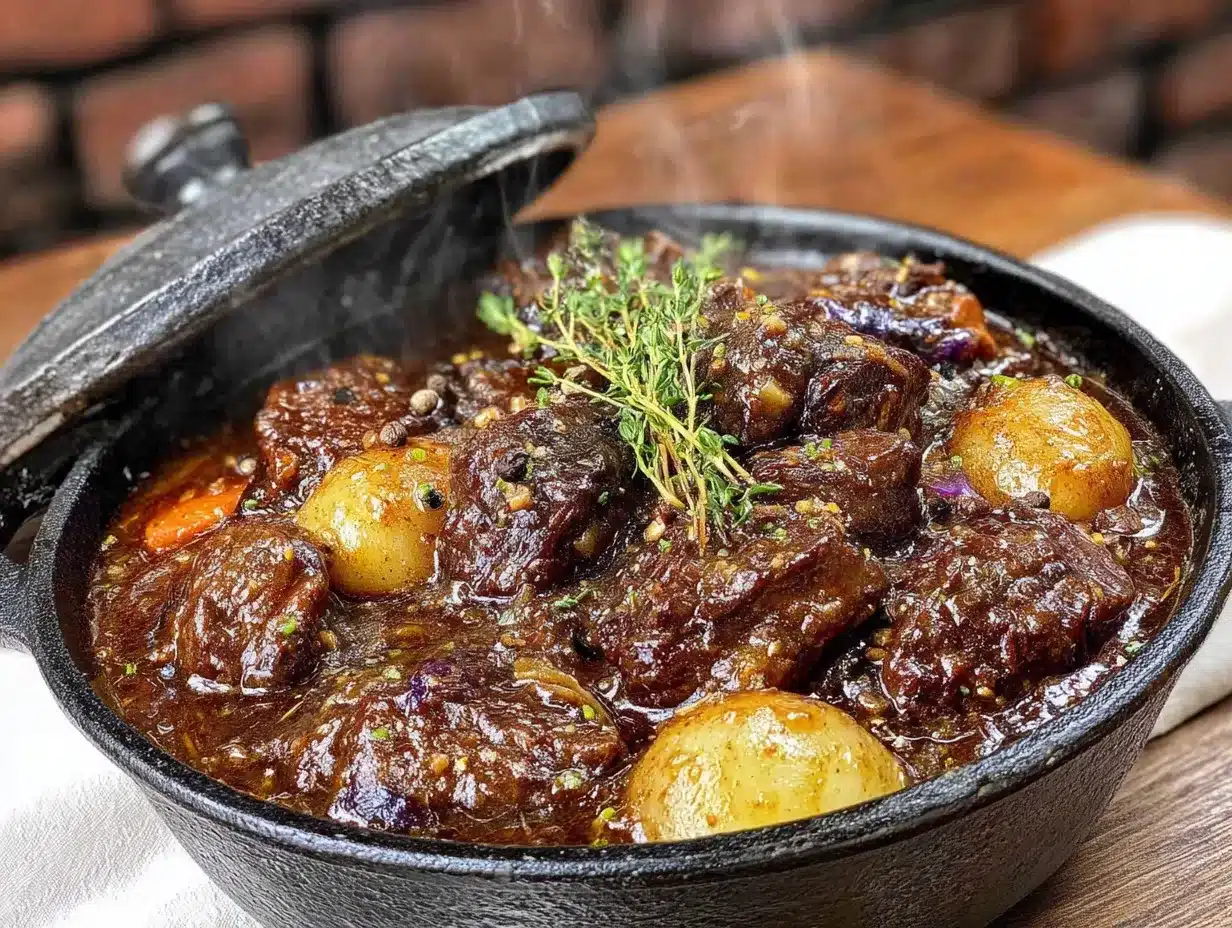
- 3 large carrots, peeled and cut into 1-inch chunks (about 1.5 cups)
- 2 large parsnips, peeled and cut into 1-inch chunks (optional but highly recommended—they add a subtle sweetness)
- 1 pound Yukon Gold potatoes, cut into 1-inch chunks (they hold their shape better than Russets)
- 2 celery stalks, cut into 1-inch pieces
For the Thickening
- 2 tablespoons all-purpose flour (or cornstarch mixed with 2 tablespoons cold water for gluten-free)
Ingredient Tips: For the beef, I really recommend chuck over stew meat from the store. Stew meat is often cut from random scraps and can be chewy. Chuck has enough marbling to break down into tender perfection during the long simmer. For the wine, don’t use cooking wine—it’s too salty. A decent $10 bottle is perfect. And if you can find parsnips, grab them. They add this almost floral sweetness that carrots alone don’t quite match. If you can’t find them, just use an extra carrot.
Substitutions: No wine? Skip it and add an extra 1/2 cup of beef broth with a tablespoon of balsamic vinegar for acidity. Need it gluten-free? Use the cornstarch slurry instead of flour. Want more vegetables? Throw in some turnips or sweet potatoes—just cut them the same size so they cook evenly.
Equipment Needed
You don’t need a fancy kitchen for this one. Here’s what you’ll actually use:
- Dutch Oven (5 to 6 quarts): This is the star. I use a Lodge enameled cast iron pot that I got on sale for $50, and it works beautifully. If you don’t have one, a heavy-bottomed stockpot or a slow cooker will work, but the Dutch oven gives you the best browning and even heat.
- Chef’s Knife: A sharp 8-inch knife makes cutting beef and vegetables so much easier. I learned the hard way that a dull knife is actually more dangerous.
- Cutting Board: Wood or plastic, doesn’t matter. Just make sure it’s stable.
- Wooden Spoon or Spatula: For scraping up those browned bits from the bottom of the pot—that’s where the flavor lives.
- Measuring Cups and Spoons: For accuracy, especially with the broth and seasonings.
- Tongs: For flipping the beef while browning. A fork will pierce the meat and let juices escape.
Budget-Friendly Tip: If you don’t have a Dutch oven, check thrift stores or online marketplaces. I found my first one for $15. It had a tiny chip, but it worked perfectly for years.
Preparation Method
Alright, let’s get cooking. Take your time with the first few steps—they’re what make this stew special.
- Prep the beef: Pat the beef cubes dry with paper towels. This is non-negotiable. Wet beef won’t brown—it’ll steam. Season generously with salt and pepper. Let it sit at room temperature for 15 minutes while you chop the vegetables.
- Brown the beef (in batches): Heat 1 tablespoon of olive oil in your Dutch oven over medium-high heat. Add the beef in a single layer—don’t crowd the pot. If you add too much at once, the temperature drops and you’ll get gray meat instead of golden-brown. Cook for 3-4 minutes per side, until a deep crust forms. Transfer the browned beef to a plate. Repeat with the remaining beef, adding more oil if needed. This takes about 10-12 minutes total. Don’t rush it.
- Sauté the aromatics: Reduce the heat to medium. Add the remaining 1 tablespoon of olive oil. Toss in the diced onion and cook for 4-5 minutes, stirring occasionally, until softened and translucent. Scrape up any browned bits from the bottom of the pot as you stir—that’s pure flavor. Add the minced garlic and cook for 30 seconds until fragrant.
- Add the tomato paste: Stir in the tomato paste and cook for 2 minutes, stirring constantly. It will darken and smell richer. This step removes the raw, tinny taste and deepens the umami.
- Deglaze with wine: Pour in the red wine and use your wooden spoon to scrape up all the browned bits from the bottom of the pot. Let it simmer for 2-3 minutes until reduced by about half. The alcohol cooks off, leaving behind a rich, fruity depth.
- Return the beef and add liquids: Put the browned beef back into the pot (along with any juices that collected on the plate). Pour in the beef broth and water. Add the bay leaves, thyme, rosemary, salt, and pepper. Stir everything together.
- Bring to a simmer: Increase the heat to high and bring the liquid to a gentle boil. Then reduce the heat to low, cover the pot with the lid slightly ajar, and let it simmer. This is the patience part. Let it cook for 1 hour, undisturbed. The liquid should be at a gentle bubble—not a rolling boil.
- Add the root vegetables: After 1 hour, add the carrots, parsnips, potatoes, and celery. Stir them in gently. Cover again and continue simmering for another 45 minutes to 1 hour, until the vegetables are tender and the beef is fork-tender. The broth will have thickened slightly from the flour coating on the beef and the natural starches from the potatoes.
- Thicken if needed: If you prefer a thicker stew, mix 2 tablespoons of flour with 1/4 cup cold water until smooth. Stir this slurry into the stew and let it simmer for 5 more minutes. The broth will thicken as it cools slightly.
- Finish and rest: Remove the bay leaves. Taste the stew and adjust salt and pepper. Here’s a tip I learned the hard way: let the stew rest off the heat for 10-15 minutes before serving. The flavors meld together and the texture improves. It’s worth the wait.
Sensory Cues: When the beef is browning, you should hear a steady sizzle—if it’s silent, the pot isn’t hot enough. The kitchen should smell like roasted meat and caramelizing onions. When you add the wine, the steam will smell sharp at first, then mellow into something sweet and savory. When the stew is done, the beef should offer no resistance when pierced with a fork.
Cooking Tips & Techniques
I’ve made enough mistakes with this stew to fill a small cookbook. Here’s what I’ve learned so you don’t have to repeat my errors.
Don’t skip the browning. I know it’s tempting to just dump everything in the pot and walk away. I did that once. The result was gray, flavorless beef that tasted more like boiled meat than stew. That deep brown crust is where the flavor lives. It’s called the Maillard reaction, and it’s basically magic. Take the extra 10 minutes.
Low and slow is the way to go. This isn’t a recipe you can rush by cranking up the heat. High heat will make the beef tough and the vegetables mushy. A gentle simmer—where you see small bubbles breaking the surface—is perfect. If you’re using a slow cooker, cook on low for 8 hours.
Season as you go. A common mistake is only seasoning at the end. Season the beef before browning, add salt with the onions, and taste the broth before adding the vegetables. Layers of seasoning create depth. Just be careful not to over-salt—you can always add more at the end.
Let it rest. This is the hardest lesson for me. I always want to eat immediately. But stew that sits for 15-20 minutes after cooking tastes noticeably better. The flavors settle, the broth thickens slightly, and the texture improves. Use that time to set the table or pour yourself a glass of wine.
Make it ahead. Honestly, this stew is even better the next day. The flavors continue to develop overnight in the fridge. I often make it a day ahead, refrigerate it, and then reheat gently on the stove. The fat solidifies on top and is easy to skim off, leaving a cleaner, richer broth.
Variations & Adaptations
One of the best things about this stew is how adaptable it is. Here are a few ways I’ve changed it up depending on what I have on hand or who I’m feeding.
Slow Cooker Version
Brown the beef and sauté the onions in a skillet first (don’t skip this step), then transfer everything to a slow cooker. Cook on low for 7-8 hours or on high for 4-5 hours. Add the vegetables in the last 2 hours so they don’t turn to mush.
Herb Swap
If you don’t have thyme and rosemary, try a teaspoon of dried oregano or marjoram. Or use a bundle of fresh herbs tied with kitchen twine—a few sprigs of parsley, thyme, and a bay leaf. Remove the bundle before serving.
Root Vegetable Mix
Swap out the parsnips for celery root or rutabaga. Add sweet potatoes for a slightly sweeter stew. In the fall, I like to add a diced apple along with the potatoes—it adds a subtle sweetness that pairs beautifully with the beef.
Dairy-Free and Gluten-Free
This recipe is naturally dairy-free. For gluten-free, use the cornstarch slurry instead of flour, or skip the thickener entirely—the potatoes will naturally thicken the broth as they cook.
Add Some Greens
Stir in a handful of chopped kale or spinach in the last 10 minutes of cooking. It adds color and nutrients without overpowering the stew.
Serving & Storage Suggestions
This stew is a meal in itself, but a few simple sides can make it feel extra special.
Serving: Ladle the stew into deep bowls. I like to serve it with crusty bread for dipping—sourdough or a good French baguette works perfectly. A sprinkle of fresh parsley on top adds a pop of color. For a heartier meal, serve over egg noodles, mashed potatoes, or rice.
Storage: Let the stew cool completely before storing. Transfer to an airtight container and refrigerate for up to 4 days. The flavors actually get better after a day or two. To freeze, portion the stew into freezer-safe bags or containers, leaving some room for expansion. It will keep for up to 3 months.
Reheating: The best way to reheat is on the stovetop over medium-low heat, stirring occasionally. Add a splash of beef broth or water if the stew has thickened too much. You can also microwave individual portions in 30-second bursts, stirring in between.
Flavor Development: Here’s something I love about this stew—it tastes even better on day two. The beef continues to absorb the broth, and the flavors meld together into something deeper and more complex. I often make it a day ahead just for this reason.
Nutritional Information & Benefits
This stew is packed with good stuff. Here’s an approximate breakdown per serving (based on 6 servings):
| Nutrient | Amount per Serving |
|---|---|
| Calories | 420 |
| Protein | 35g |
| Fat | 18g |
| Carbohydrates | 28g |
| Fiber | 5g |
| Sugar | 8g |
| Sodium | 680mg |
Beef is an excellent source of protein, iron, and B vitamins, which support energy and red blood cell health. Carrots and parsnips are rich in vitamin A and fiber, while potatoes provide potassium and vitamin C. This stew is naturally gluten-free if you use the cornstarch thickener, and it’s dairy-free as written.
Dietary Considerations: This recipe is low in added sugar and can be adapted for low-carb diets by reducing the potatoes and adding more non-starchy vegetables like celery or mushrooms. It’s also a great option for those following a paleo diet if you skip the flour and use arrowroot starch instead.
FAQs
Can I use a different cut of beef?
Yes, but chuck is best. You can also use brisket, bottom round, or top round. Just avoid lean cuts like sirloin—they’ll turn tough and dry during the long simmer.
Why is my stew broth thin?
This usually happens if you didn’t brown the beef enough or if you added too much liquid. To fix it, mix 1 tablespoon of cornstarch with 2 tablespoons of cold water and stir it into the simmering stew. Let it cook for 5 minutes to thicken.
Can I make this in an Instant Pot?
Absolutely. Use the sauté function for browning and cooking the onions. Then pressure cook on high for 35 minutes with a natural release. Add the vegetables and cook for another 5 minutes under pressure. It’s faster, but you lose a bit of that slow-cooked depth.
How do I prevent the potatoes from getting mushy?
Cut them into 1-inch chunks and add them halfway through the cooking time. Yukon Gold potatoes hold their shape better than Russets. If you’re making it ahead, cook the potatoes separately and add them when reheating.
Can I skip the wine?
Yes. Replace it with an extra 1/2 cup of beef broth and 1 tablespoon of balsamic vinegar. The vinegar adds acidity and depth without the alcohol.
Conclusion
This Dutch oven beef stew with root vegetables is more than just a recipe—it’s a ritual. It’s the pot simmering on the stove while the rain taps against the window. It’s the smell that fills your kitchen and makes everyone ask, “What’s for dinner?” It’s the bowl you hold in your hands on a cold night, feeling the warmth seep through the ceramic.
I’ve made this stew for quiet dinners alone, for family gatherings, and for friends who needed a little comfort. Every time, it delivers. The beef is tender, the vegetables are soft, and the broth is so rich you’ll want to drink it with a spoon. But more than that, it’s the feeling it gives you—like everything is going to be okay, at least for a little while.
I hope you make this your own. Add more garlic if you like. Throw in some mushrooms. Serve it over mashed potatoes if that’s your thing. The best recipes are the ones you tweak until they feel like yours. And when you do, I’d love to hear about it. Leave a comment below, share your photo, or tell me what you changed. That’s what makes cooking so special—it’s never the same twice.
So go ahead. Pull out that Dutch oven. Brown that beef. Let the magic happen. You’ve got this.
Pin This Recipe!
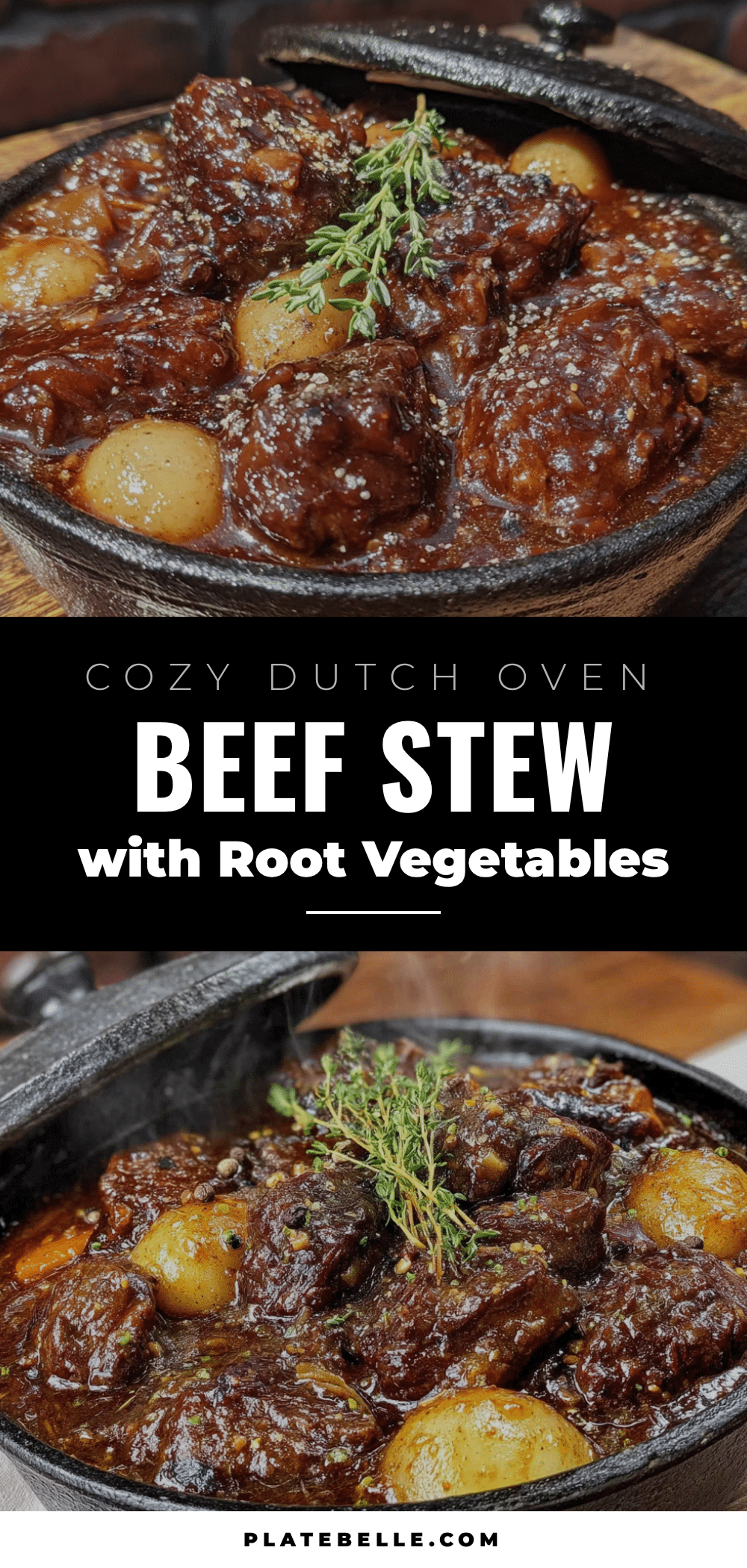
Easy Dutch Oven Beef Stew with Root Vegetables
A rich, hearty beef stew with tender root vegetables, slow-cooked in a Dutch oven for deep, comforting flavor. Perfect for cold nights and cozy dinners.
- Prep Time: 20 minutes
- Cook Time: 2 hours 15 minutes
- Total Time: 2 hours 35 minutes
- Yield: 6 servings 1x
- Category: Main Course
- Cuisine: American
Ingredients
- 2 pounds beef chuck, cut into 1.5-inch cubes
- 2 tablespoons olive oil, divided
- 1 large yellow onion, diced (about 1.5 cups)
- 4 cloves garlic, minced
- 3 tablespoons tomato paste
- 1/2 cup dry red wine (like Cabernet Sauvignon or Merlot)
- 4 cups low-sodium beef broth
- 2 cups water
- 2 bay leaves
- 1 teaspoon dried thyme
- 1 teaspoon dried rosemary
- 1 teaspoon salt, plus more to taste
- 1/2 teaspoon black pepper
- 3 large carrots, peeled and cut into 1-inch chunks (about 1.5 cups)
- 2 large parsnips, peeled and cut into 1-inch chunks (optional)
- 1 pound Yukon Gold potatoes, cut into 1-inch chunks
- 2 celery stalks, cut into 1-inch pieces
- 2 tablespoons all-purpose flour (or cornstarch mixed with 2 tablespoons cold water for gluten-free)
Instructions
- Prep the beef: Pat the beef cubes dry with paper towels. Season generously with salt and pepper. Let sit at room temperature for 15 minutes while you chop the vegetables.
- Brown the beef (in batches): Heat 1 tablespoon of olive oil in your Dutch oven over medium-high heat. Add the beef in a single layer—don’t crowd the pot. Cook for 3-4 minutes per side, until a deep crust forms. Transfer the browned beef to a plate. Repeat with the remaining beef, adding more oil if needed. This takes about 10-12 minutes total.
- Sauté the aromatics: Reduce the heat to medium. Add the remaining 1 tablespoon of olive oil. Toss in the diced onion and cook for 4-5 minutes, stirring occasionally, until softened and translucent. Scrape up any browned bits from the bottom of the pot as you stir. Add the minced garlic and cook for 30 seconds until fragrant.
- Add the tomato paste: Stir in the tomato paste and cook for 2 minutes, stirring constantly. It will darken and smell richer.
- Deglaze with wine: Pour in the red wine and use your wooden spoon to scrape up all the browned bits from the bottom of the pot. Let it simmer for 2-3 minutes until reduced by about half.
- Return the beef and add liquids: Put the browned beef back into the pot (along with any juices that collected on the plate). Pour in the beef broth and water. Add the bay leaves, thyme, rosemary, salt, and pepper. Stir everything together.
- Bring to a simmer: Increase the heat to high and bring the liquid to a gentle boil. Then reduce the heat to low, cover the pot with the lid slightly ajar, and let it simmer for 1 hour, undisturbed.
- Add the root vegetables: After 1 hour, add the carrots, parsnips, potatoes, and celery. Stir them in gently. Cover again and continue simmering for another 45 minutes to 1 hour, until the vegetables are tender and the beef is fork-tender.
- Thicken if needed: If you prefer a thicker stew, mix 2 tablespoons of flour with 1/4 cup cold water until smooth. Stir this slurry into the stew and let it simmer for 5 more minutes.
- Finish and rest: Remove the bay leaves. Taste the stew and adjust salt and pepper. Let the stew rest off the heat for 10-15 minutes before serving.
Notes
For best results, brown the beef in batches and don’t rush the process. The stew tastes even better the next day. For a gluten-free version, use a cornstarch slurry instead of flour. If you don’t have a Dutch oven, a heavy-bottomed stockpot or slow cooker will work.
Nutrition
- Serving Size: 1 serving (about 1.5
- Calories: 420
- Sugar: 8
- Sodium: 680
- Fat: 18
- Saturated Fat: 6
- Carbohydrates: 28
- Fiber: 5
- Protein: 35
Keywords: beef stew, Dutch oven, root vegetables, comfort food, one-pot meal, winter recipe