I was digging through a box of old sheet music at a dusty estate sale last October when the woman running it—a tiny, no-nonsense lady named Gladys who looked like she’d been running estate sales since before I was born—started talking about soup. Not the usual small talk about the weather or the price of the vintage Pyrex. She was squatting next to me, sorting through a pile of stained cookbooks, and she said, completely out of nowhere, “You know what makes a house feel like a home? The smell of chicken noodle soup on a Tuesday.”
I laughed, honestly, because who expects life advice from the person you’re haggling with over a $3 casserole dish? But she didn’t laugh. She just handed me a spiral notebook, the kind with a cow on the cover, and said, “My mother’s recipe. She made it from scratch every single week. No shortcuts, no cans. Just a whole chicken, some vegetables, and a lot of patience.” I bought the notebook for a dollar. I didn’t even look at the recipe until I got home, and when I did, I realized it was the real deal—handwritten, splattered with what I hoped was broth, and missing half the measurements. Classic.
That notebook sat on my counter for three weeks before I got the nerve to try it. I mean, making chicken noodle soup from scratch feels intimidating if you’ve only ever opened a can or dumped a bouillon cube into boiling water. But let me tell you—once you taste the real thing, there’s no going back. This isn’t just soup. It’s the kind of meal that wraps around you like a worn-out blanket on a cold day. It’s the kind of soup that makes you close your eyes after the first spoonful and remember something good. Maybe you’ve been there, standing over a pot on a gray afternoon, hoping for something that feels like comfort. This is that recipe. I’ve made it at least twenty times since that estate sale, tweaking it just enough to make it mine, but keeping Gladys’s mother’s soul intact. Let me show you how it’s done.
Why You’ll Love This Recipe
Let me be honest with you—I’ve made a lot of chicken soups in my life. Some were good, some were forgettable, and a few were downright sad. But this one? This one is different. It’s the one I make when I’m sick, when I’m sad, when I need to feel like someone is taking care of me even if that someone is just me and a stockpot. Here’s why this recipe works:
- Made from scratch, but not complicated: You don’t need to be a chef to pull this off. If you can chop a carrot and simmer water, you can make this soup. The process is straightforward, and most of the time is hands-off. You’re just letting the chicken and vegetables do their thing.
- Simple, real ingredients: No cans, no boxes, no mysterious seasoning packets. You’ll use a whole chicken, fresh vegetables, herbs, and good egg noodles. Your grocery list is short, and you probably have most of it already.
- Perfect for cold days and rough days: This is the soup you make when the weather turns gray, or when you’ve had a week that just won’t quit. It’s warming, filling, and somehow makes everything feel a little more manageable.
- Crowd-pleaser through and through: My picky-eating nephew, my health-conscious sister, and my dad who “doesn’t like soup” all went back for seconds. Kids love the noodles, adults love the rich broth, and everyone loves how good the kitchen smells.
- It gets better with time: This is one of those soups that tastes even better the next day. The flavors meld together, the noodles soak up the broth, and it becomes something deeply comforting. Make a big batch—you’ll thank yourself later.
What makes this recipe stand out from the dozens of other chicken noodle soup recipes out there? It’s the broth. Most recipes rush this step, using pre-made stock or cutting corners. But this one takes the time to build flavor from the very beginning—roasting the chicken first, simmering it with aromatics, and letting everything develop slowly. The result is a broth that’s golden, rich, and so full of flavor you’ll never look at canned soup the same way again. It’s comfort food made the right way, and it’s absolutely worth every minute.
What Ingredients You Will Need
This recipe uses simple, wholesome ingredients to deliver bold flavor and satisfying texture without the fuss. Most of these are pantry staples or easy to find at any grocery store. I’ll walk you through each one so you know exactly what to look for and why it matters.
For the Broth:
- 1 whole chicken (about 4-5 pounds / 1.8-2.3 kg): This is the heart of the soup. Using a whole chicken gives you both meat and bones, which means a much richer broth. I prefer a good-quality, air-chilled chicken if you can find one. (I’ve had great luck with Bell & Evans.) The bones add collagen and body to the broth, making it silky and satisfying.
- 2 tablespoons olive oil (30 ml): For roasting the chicken and vegetables. Adds a subtle richness and helps everything brown beautifully.
- 2 large yellow onions, quartered: Onions are the backbone of any good broth. Yellow onions are mellow and sweet when cooked, perfect for this.
- 4 large carrots, peeled and cut into large chunks: Carrots add natural sweetness and a lovely color to the broth. Save the prettiest ones for the final soup.
- 4 celery stalks, cut into large chunks: Celery adds a savory, slightly bitter note that balances the sweetness of the carrots.
- 6 cloves garlic, smashed: Garlic adds depth without being overpowering. Smashing them releases more flavor than slicing.
- 1 bunch fresh parsley: Adds a fresh, herbaceous note to the broth. You’ll use the stems for simmering and the leaves for garnish later.
- 3 fresh thyme sprigs: Thyme is classic in chicken soup. It’s earthy and slightly floral, and it holds up well to long simmering.
- 2 bay leaves: Adds a subtle, almost tea-like flavor that rounds out the broth.
- 1 tablespoon whole black peppercorns (about 15 grams): Whole peppercorns infuse the broth with gentle heat without making it cloudy, unlike ground pepper.
- 2 teaspoons salt (10 grams), plus more to taste: Salt is crucial for bringing out the flavors. Start with less and adjust at the end.
- 12 cups cold water (2.8 liters): Use cold water to start. It helps extract more flavor from the bones and vegetables as it comes to a simmer.
For the Final Soup:
- Shredded chicken from the broth: You’ll use all the meat from the cooked chicken. Shred it while it’s warm—it’s easier and the texture is better.
- 3 medium carrots, peeled and diced (about 1 cup / 130 grams): These are for the finished soup, so dice them into bite-sized pieces. They’ll cook quickly and stay slightly firm.
- 3 celery stalks, diced (about 1 cup / 100 grams): Same as the carrots—diced small so they cook evenly.
- 1 medium yellow onion, diced (about 1 cup / 150 grams): Adds fresh onion flavor to the finished soup.
- 2 cloves garlic, minced: A little fresh garlic at the end brightens everything up.
- 8 cups strained broth (1.9 liters): You’ll strain the broth from the first step. Reserve the rest for another use or freeze it.
- 8 ounces wide egg noodles (225 grams): Wide noodles are classic for chicken noodle soup. They hold up well and catch the broth. I like Reames or Mrs. Miller’s for texture. (Gluten-free option: use gluten-free egg noodles or rice noodles.)
- Fresh parsley, chopped, for garnish: A sprinkle of fresh parsley at the end adds color and freshness.
- Salt and black pepper to taste: Adjust the seasoning at the very end—the broth will have already absorbed some salt from the initial cooking.
Equipment Needed
You don’t need a fancy kitchen to make this soup, but a few key tools will make the process smoother. Here’s what you’ll need:
- Large stockpot or Dutch oven (at least 8 quarts / 7.5 liters): You need a big pot for simmering the whole chicken and vegetables. A Dutch oven works beautifully because it retains heat well. I use my trusty Le Creuset, but any heavy-bottomed pot will do.
- Fine-mesh strainer: For straining the broth after simmering. This removes all the solids and gives you a clear, beautiful broth. If you don’t have one, you can use a colander lined with cheesecloth.
- Tongs: For handling the hot chicken when it’s time to shred it. A pair of sturdy tongs makes this much safer and easier.
- Cutting board and chef’s knife: A sharp knife makes all the difference when dicing vegetables. Take your time and keep your fingers safe.
- Measuring cups and spoons: For accuracy, especially with the salt and spices. I like stainless steel ones—they last forever.
- Large bowl: For holding the shredded chicken and strained broth.
- Wooden spoon: For stirring the soup and scraping up any bits from the bottom of the pot.
- Ladle: For serving. A deep ladle is best for getting plenty of broth, noodles, and vegetables in each bowl.
If you don’t have a Dutch oven, a large stainless steel stockpot works just fine. I’ve made this soup in a cheap pot from a discount store, and it still turned out amazing. The key is having enough capacity—don’t try to cram everything into a small pot or you’ll end up with a mess.
Preparation Method
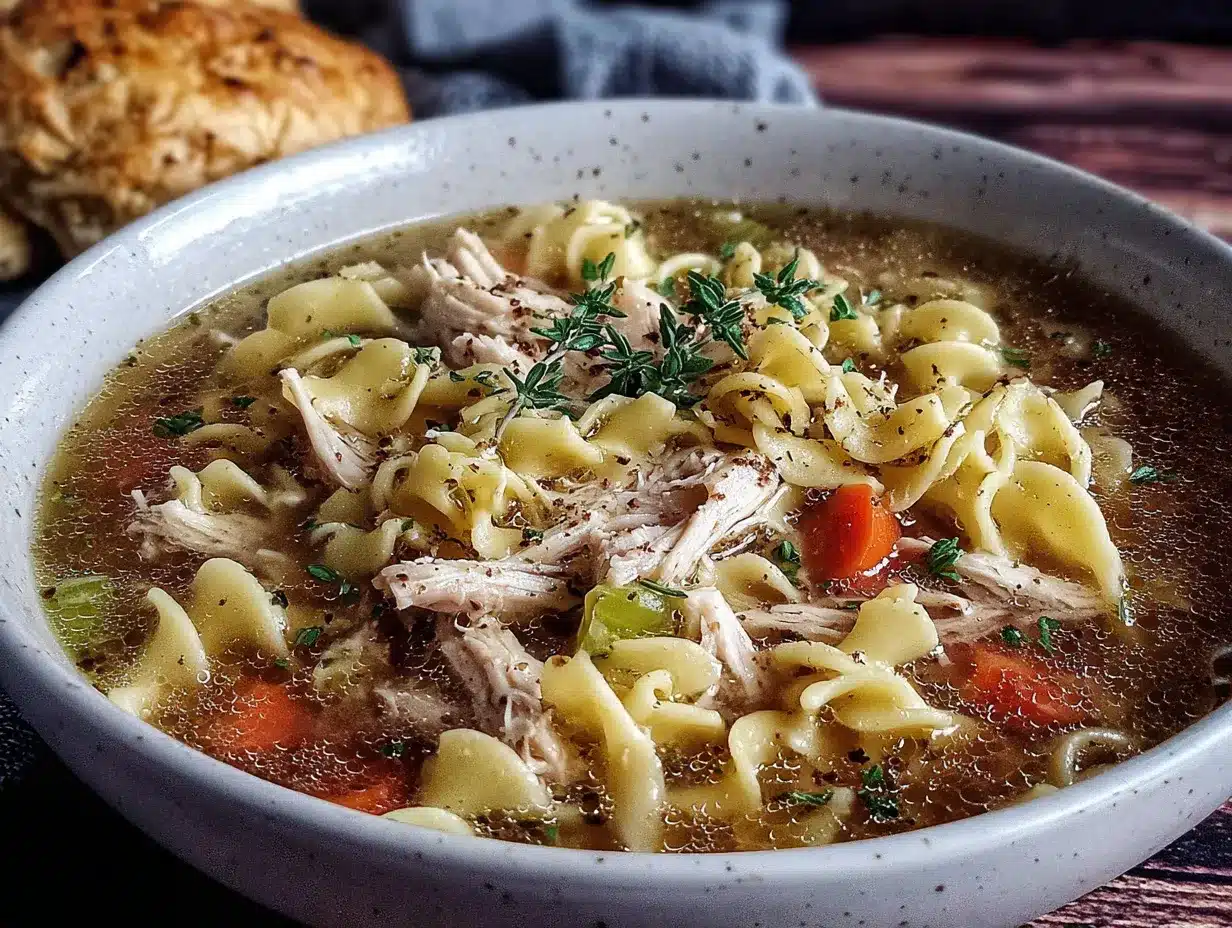
Alright, let’s get cooking. This recipe has two main parts: making the broth and then assembling the soup. The broth takes about 2 hours, but most of that is hands-off. Plan for about 45 minutes of active work total. Here’s the step-by-step.
Step 1: Roast the Chicken and Vegetables
Preheat your oven to 425°F (220°C). While it heats, rinse the whole chicken inside and out with cold water and pat it dry with paper towels. Don’t skip this—drying the skin helps it brown. Place the chicken in a large roasting pan or on a rimmed baking sheet. Drizzle with 1 tablespoon of olive oil and rub it all over the skin. Season generously with salt and pepper. Scatter the quartered onions, large carrot chunks, celery chunks, and smashed garlic cloves around the chicken. Roast for 45 minutes, or until the chicken skin is golden brown and crispy. The internal temperature should reach 165°F (74°C) in the thickest part of the thigh. This step adds so much flavor—don’t skip it.
Step 2: Start the Broth
Transfer the roasted chicken and all the vegetables from the pan to your large stockpot. Pour off any excess fat from the roasting pan, but leave the browned bits—those are pure flavor. Place the roasting pan on the stovetop over medium heat, add about 1 cup of water, and scrape up all the browned bits with a wooden spoon. Pour this liquid into the stockpot along with the chicken and vegetables. Add the parsley stems, thyme sprigs, bay leaves, whole peppercorns, 2 teaspoons of salt, and 12 cups of cold water. Bring everything to a gentle simmer over medium-high heat, then reduce the heat to low so it’s barely bubbling. Skim off any foam that rises to the surface during the first 15 minutes—this keeps the broth clear. Let it simmer uncovered for 1 hour and 30 minutes.
Step 3: Strain the Broth and Shred the Chicken
After 1.5 hours, the broth will be deeply golden and fragrant. Carefully remove the chicken from the pot using tongs and place it on a large cutting board. Let it cool for about 10 minutes—just enough so you can handle it without burning your fingers. While it cools, set a fine-mesh strainer over a large bowl or another pot and strain the broth. Discard the vegetables and herbs. You should have about 8-10 cups of broth. If you have more, that’s fine—you can use it all or save some for later. Once the chicken is cool enough to handle, shred the meat, discarding the skin and bones. You’ll get about 4-5 cups of shredded chicken. Set it aside.
Step 4: Build the Soup
Rinse out your stockpot (or use a clean one) and place it over medium heat. Add the remaining 1 tablespoon of olive oil. Once it shimmers, add the diced onion, carrots, and celery. Cook, stirring occasionally, for about 5 minutes, until the vegetables start to soften and the onion becomes translucent. Add the minced garlic and cook for 30 seconds more—until it smells amazing. Pour in 8 cups of the strained broth and bring it to a boil. Add the egg noodles and cook according to the package directions, usually about 6-8 minutes for wide noodles. Stir occasionally to prevent sticking.
Step 5: Add the Chicken and Finish
Once the noodles are tender, reduce the heat to low. Stir in the shredded chicken and let it warm through for about 2 minutes. Taste the soup and adjust the seasoning with salt and black pepper. Remember, the broth was already salted, so go slowly. Stir in the fresh parsley just before serving.
Step 6: Serve and Enjoy
Ladle the soup into deep bowls, making sure each serving gets plenty of noodles, chicken, and vegetables. Garnish with extra parsley if you like. Serve immediately, with crusty bread or crackers on the side. That first spoonful is going to be everything you hoped for.
Cooking Tips & Techniques
I’ve made this soup enough times to learn a few things the hard way. Here are my best tips to help you avoid my mistakes and get perfect results every time.
Don’t rush the broth. I know it’s tempting to cut the simmering time short, but the broth is where all the magic happens. A full 1.5 hours gives the bones time to release collagen and gelatin, which gives the broth that silky, satisfying texture. If you’re in a hurry, you can use pre-made stock, but honestly, it won’t be the same. Make this on a Sunday when you have time to let it do its thing.
Skim the foam. During the first 15 minutes of simmering, you’ll see foam rise to the surface. This is just impurities and proteins from the chicken. Skim it off with a spoon or a small ladle. It takes two minutes and makes a huge difference in the clarity of your broth. I forgot to do this once, and my soup looked like dishwater. Never again.
Roast the chicken first. This is the step that separates good chicken soup from great chicken soup. Roasting caramelizes the skin and vegetables, adding a deep, almost nutty flavor to the broth. It also renders out some of the fat, so your soup isn’t greasy. Trust me on this—the extra 45 minutes are worth it.
Cook the noodles separately if you’re meal-prepping. If you plan to have leftovers, cook the noodles separately and add them to each bowl when serving. Noodles left in the soup overnight absorb all the broth and turn into mushy, bloated noodles. It’s not a good look. Keep them separate, and your leftovers will taste almost as good as the first serving.
Season at the end. The broth will already have some salt from the initial cooking, and the noodles will absorb some as well. Always taste the finished soup before adding more salt. I’ve over-salted more pots of soup than I care to admit. A little patience goes a long way.
Let it rest. If you have time, let the soup sit for 10-15 minutes after you turn off the heat. The flavors continue to meld, and the soup becomes even more cohesive. It’s like a final meditation before the feast.
Variations & Adaptations
One of the best things about this soup is how flexible it is. Here are some ways to make it your own, depending on your dietary needs, what’s in your fridge, or just your mood.
Gluten-Free Version: Swap the egg noodles for gluten-free noodles, rice noodles, or even cooked quinoa. I’ve used brown rice pasta before, and it worked beautifully. Just be careful not to overcook it—gluten-free pasta can get mushy fast. You can also add extra vegetables like zucchini noodles (zoodles) for a low-carb twist.
Vegetarian or Vegan Version: Omit the chicken entirely and use vegetable broth instead. To build depth, roast the vegetables with a bit of smoked paprika and nutritional yeast. Add chickpeas or white beans for protein, and use wide ribbons of carrot and zucchini instead of chicken. It’s a completely different soup, but still deeply comforting.
Spicy Chicken Noodle Soup: Add 1-2 teaspoons of red pepper flakes or a diced jalapeño (seeds removed if you want less heat) when you sauté the vegetables. You can also stir in a tablespoon of sriracha or chili crisp at the end. The heat cuts through the richness of the broth beautifully, especially if you’re fighting a cold.
Herb-Forward Version: Add a handful of fresh dill or tarragon along with the parsley at the end. Dill is especially good in chicken soup—it adds a bright, almost anise-like flavor that feels fresh and uplifting. I tried this on a whim one day when I had leftover dill from another recipe, and now I do it half the time.
Slow Cooker or Instant Pot Adaptation: For the slow cooker, skip the roasting step (though you’ll lose some flavor) and add all the broth ingredients directly to the slow cooker. Cook on low for 6-8 hours or high for 4-5 hours. Strain, shred, and proceed with the soup. For the Instant Pot, sauté the vegetables first using the sauté function, then add the broth ingredients and cook on high pressure for 25 minutes with a natural release. It’s faster, but the broth won’t be quite as rich.
Seasonal Vegetable Swap: In the summer, add diced zucchini, yellow squash, and fresh corn. In the fall, swap in cubed butternut squash or sweet potatoes. In the winter, add chopped kale or Swiss chard in the last 5 minutes of cooking. The soup is a great canvas for whatever vegetables you have on hand.
Serving & Storage Suggestions
This soup is a meal in itself, but a few thoughtful accompaniments can make it even more special. Here’s how I like to serve and store it.
Serving Suggestions: Serve the soup piping hot in deep bowls. A side of crusty bread, buttered and toasted, is perfect for dipping. I also love a simple green salad with a lemony vinaigrette on the side—it cuts through the richness of the broth. For a truly cozy meal, pair it with a grilled cheese sandwich. The combination of crunchy, buttery bread and warm, savory soup is unbeatable on a cold day.
Garnish Ideas: A sprinkle of fresh parsley is classic, but you can also add a squeeze of lemon juice (it brightens everything), a dash of hot sauce, or a few cracks of black pepper. If you want extra richness, float a pat of butter on top of each serving. It melts into the broth and makes it even more luxurious.
Storage Instructions: Store leftover soup in an airtight container in the refrigerator for up to 4 days. Remember my tip about the noodles? If you’ve already added them, the noodles will continue to absorb broth and soften. It’s still edible, just not as nice. For best results, store the broth, chicken, and vegetables separately from the noodles, and combine them when reheating.
Freezing Instructions: This soup freezes beautifully for up to 3 months. Again, freeze the broth and solids without the noodles. Let the soup cool completely, then transfer it to freezer-safe containers or zip-top bags. Leave about an inch of headspace for expansion. To reheat, thaw overnight in the refrigerator, then warm it in a pot over medium heat. Cook fresh noodles and add them just before serving. The broth will taste just as good as the day you made it.
How Flavors Develop: Like many soups, this one tastes even better the next day. The flavors meld together, and the broth becomes even more cohesive. I often make it a day ahead on purpose. Just reheat gently—don’t boil it, or the chicken can become tough.
Nutritional Information & Benefits
This soup is not just delicious—it’s also packed with nutrients that make it a genuinely healthy choice. Here’s a rough estimate per serving (based on 8 servings, including noodles):
- Calories: Approximately 350-400
- Protein: 30-35 grams
- Fat: 12-15 grams
- Carbohydrates: 30-35 grams
- Fiber: 4-5 grams
- Sodium: 600-800 mg (varies based on salt added)
Health Benefits: Chicken is an excellent source of lean protein, which is essential for muscle repair and keeping you full. The broth, made from bones and vegetables, is rich in collagen, gelatin, and minerals like calcium and magnesium, which support joint health and digestion. Carrots provide a hefty dose of vitamin A (from beta-carotene), which is great for your eyes and immune system. Celery is low in calories but high in antioxidants and vitamin K. And the garlic and onions offer anti-inflammatory and immune-boosting properties. Honestly, this soup is practically medicine in a bowl.
Dietary Considerations: This recipe is naturally dairy-free and nut-free. For a gluten-free version, simply swap the noodles. It’s also relatively low in saturated fat if you skim off the fat from the broth (which I recommend). If you’re watching your sodium, use less salt in the initial broth and season sparingly at the end. The soup is hearty enough to be a complete meal on its own, especially with a side of whole-grain bread.
Conclusion
There’s a reason chicken noodle soup is the universal comfort food. It’s warm, it’s nourishing, and it carries a sense of care that’s hard to replicate with any other dish. This recipe, born from a handwritten notebook I found at an estate sale, has become a staple in my kitchen. It’s the soup I make when I’m feeling under the weather, when the weather outside matches my mood, or when I just need something that feels like a hug in a bowl.
What I love most about this recipe is how forgiving it is. You can tweak the vegetables, swap the herbs, or adjust the spice level to your liking. It’s a blueprint for comfort, not a rigid set of rules. So don’t be afraid to make it your own. Add a little extra garlic. Throw in some fresh dill. Use whatever noodles you have in the pantry. The soul of this soup is the broth, and as long as you take the time to build that deep, golden flavor, everything else will fall into place.
I’d love to hear how this soup turns out for you. Did you make any changes? Did it remind you of something from your childhood? Drop a comment below and let me know. And if you share a photo on Pinterest or Instagram, tag me—I want to see your cozy bowls of comfort. Until next time, happy cooking, and may your kitchen always smell like home.
Frequently Asked Questions
Can I use chicken breasts or thighs instead of a whole chicken?
Yes, you can. Using bone-in, skin-on chicken thighs or a mix of breasts and thighs will still give you good flavor. However, you’ll miss the richness that comes from the bones and skin of a whole chicken. If you’re short on time, it works—just know the broth won’t be quite as deep. I’d recommend adding a few chicken wings or a backbone if you have them to boost the flavor.
How do I make the broth less greasy?
After roasting the chicken, pour off any excess fat from the pan before adding it to the pot. During simmering, you can also skim off any fat that rises to the surface. For an even cleaner broth, let the strained broth cool completely, then refrigerate it. The fat will solidify on top, and you can easily lift it off. This is the method I use when I want a perfectly clear, non-greasy soup.
Can I use dried herbs instead of fresh?
Absolutely, but the flavor won’t be as bright. If you’re using dried thyme, use about 1 teaspoon instead of 3 sprigs. For dried parsley, use 1 tablespoon. Add dried herbs at the beginning of simmering so they have time to rehydrate and release their flavor. Fresh herbs really do make a difference here, but dried will work in a pinch.
Why is my broth cloudy?
Cloudy broth usually happens when you boil it too vigorously instead of keeping it at a gentle simmer. High heat breaks down the fat and particles into tiny droplets that stay suspended in the liquid, making it look murky. Also, if you didn’t skim the foam during the first 15 minutes, that can contribute. Don’t stress too much—cloudy broth still tastes great. But for a clearer broth, keep the heat low and skim diligently.
How do I thicken the soup if I want it heartier?
If you prefer a thicker, more stew-like consistency, you have a few options. You can mash some of the cooked vegetables (like the carrots) against the side of the pot before adding the noodles. Alternatively, mix 2 tablespoons of cornstarch with 2 tablespoons of cold water to make a slurry, then stir it into the simmering soup. Cook for another 2-3 minutes until it thickens. I personally like the soup brothy, but you do you.
Pin This Recipe!
Easy Homemade Chicken Noodle Soup from Scratch

A deeply comforting chicken noodle soup made entirely from scratch with a whole roasted chicken, fresh vegetables, and a rich, golden broth. This recipe, inspired by a handwritten notebook from an estate sale, delivers the ultimate comfort food experience.
- Prep Time: 45 minutes
- Cook Time: 2 hours 15 minutes
- Total Time: 3 hours
- Yield: 8 servings 1x
- Category: Main Course
- Cuisine: American
Ingredients
- 1 whole chicken (about 4–5 pounds / 1.8–2.3 kg)
- 2 tablespoons olive oil (30 ml)
- 2 large yellow onions, quartered
- 4 large carrots, peeled and cut into large chunks
- 4 celery stalks, cut into large chunks
- 6 cloves garlic, smashed
- 1 bunch fresh parsley
- 3 fresh thyme sprigs
- 2 bay leaves
- 1 tablespoon whole black peppercorns (about 15 grams)
- 2 teaspoons salt (10 grams), plus more to taste
- 12 cups cold water (2.8 liters)
- Shredded chicken from the broth
- 3 medium carrots, peeled and diced (about 1 cup / 130 grams)
- 3 celery stalks, diced (about 1 cup / 100 grams)
- 1 medium yellow onion, diced (about 1 cup / 150 grams)
- 2 cloves garlic, minced
- 8 cups strained broth (1.9 liters)
- 8 ounces wide egg noodles (225 grams)
- Fresh parsley, chopped, for garnish
- Salt and black pepper to taste
Instructions
- Preheat oven to 425°F (220°C). Rinse the whole chicken inside and out with cold water and pat dry with paper towels. Place chicken in a large roasting pan or rimmed baking sheet. Drizzle with 1 tablespoon olive oil and rub all over the skin. Season generously with salt and pepper. Scatter quartered onions, large carrot chunks, celery chunks, and smashed garlic cloves around the chicken. Roast for 45 minutes, until skin is golden brown and internal temperature reaches 165°F (74°C) in the thickest…
- Transfer roasted chicken and all vegetables to a large stockpot. Pour off excess fat from the roasting pan, leaving browned bits. Place roasting pan on stovetop over medium heat, add about 1 cup of water, and scrape up browned bits with a wooden spoon. Pour this liquid into the stockpot with chicken and vegetables. Add parsley stems, thyme sprigs, bay leaves, whole peppercorns, 2 teaspoons salt, and 12 cups cold water. Bring to a gentle simmer over medium-high heat, then reduce heat to low. Skim…
- Carefully remove chicken from pot using tongs and place on a large cutting board. Let cool for about 10 minutes. While cooling, set a fine-mesh strainer over a large bowl or pot and strain the broth. Discard vegetables and herbs. You should have about 8-10 cups of broth. Once chicken is cool enough to handle, shred the meat, discarding skin and bones. Set aside about 4-5 cups of shredded chicken.
- Rinse out stockpot and place over medium heat. Add remaining 1 tablespoon olive oil. Once shimmering, add diced onion, carrots, and celery. Cook, stirring occasionally, for about 5 minutes until vegetables start to soften and onion is translucent. Add minced garlic and cook for 30 seconds more. Pour in 8 cups of strained broth and bring to a boil. Add egg noodles and cook according to package directions, usually 6-8 minutes for wide noodles. Stir occasionally to prevent sticking.
- Once noodles are tender, reduce heat to low. Stir in shredded chicken and let warm through for about 2 minutes. Taste and adjust seasoning with salt and black pepper. Stir in fresh parsley just before serving.
- Ladle soup into deep bowls, ensuring each serving gets plenty of noodles, chicken, and vegetables. Garnish with extra parsley if desired. Serve immediately with crusty bread or crackers on the side.
Notes
For best results, cook noodles separately if meal-prepping to prevent them from becoming mushy. The soup tastes even better the next day as flavors meld. For a clearer broth, skim foam during the first 15 minutes of simmering. Roasting the chicken first adds deep flavor to the broth.
Nutrition
- Serving Size: 1 bowl (about 2 cups
- Calories: 375
- Sugar: 6
- Sodium: 700
- Fat: 14
- Saturated Fat: 3.5
- Carbohydrates: 33
- Fiber: 4.5
- Protein: 32
Keywords: chicken noodle soup, homemade soup, comfort food, chicken soup from scratch, easy chicken soup, winter soup, cold remedy